

What Size Solar Battery Do I Need?UK Guide
If you have solar panels or are considering battery storage, one of the first questions is: what size solar battery do I need?
The right size depends on how much electricity your home uses, when you use it and how much excess solar energy your panels generate.
A battery can store surplus solar power during the day for use later, helping you make better use of the electricity your solar panels produce. This guide explains how to work out the right battery size for your home.

What Size Solar Battery Do I Need?
There is no single battery size that suits every UK home. A typical home battery system is around 10kWh, while battery systems are available in a range of capacities to suit different levels of electricity use and solar generation.
As a starting point, consider how much electricity your home uses and how much of your solar generation is available to store:
| Battery capacity | Typical application |
|---|---|
| 5kWh | Lower household electricity use and smaller solar storage needs |
| 8kWh | Moderate electricity use and greater evening energy demand |
| 10kWh | Typical home battery storage |
| 13.5kWh | Higher electricity use and larger storage requirements |
| 16kWh | Higher-capacity residential energy storage |
These capacities are examples of battery sizes available for residential use, rather than fixed recommendations for particular homes. The right choice depends on your electricity consumption, solar generation and when you use electricity.
For example, if your solar panels generate more electricity during the day than your home uses, a battery can store some of that surplus for use in the evening or at night. If your household has higher electricity demand, a larger battery may provide more usable storage.
The next step is therefore to look at your electricity consumption, solar surplus and evening demand rather than choosing a battery based on capacity alone.
How Do I Calculate the Right Solar Battery Size?
The right solar battery size depends on how much electricity your home uses, how much surplus solar energy you generate and when you use electricity.
Check Your Electricity Use
Start with your electricity bills or smart meter data. Look at both your total consumption and when you use electricity.
Your total daily electricity use is useful for understanding household demand, but it should not be treated as your required battery capacity. A battery only needs to store the electricity you want to use later.
Calculate Your Solar Surplus
Next, compare your solar generation with your daytime electricity use:
Solar generation − daytime electricity use = potential surplus for storage
This surplus is the electricity that could be stored and used later instead of being exported to the grid. However, solar generation varies with the weather and season, so the amount available to charge your battery will change throughout the year.
Check Your Evening and Overnight Use
Finally, look at how much electricity your home uses after solar generation falls.
If you use most of your electricity during the evening and overnight, a battery can store surplus solar from the day and make it available when you need it. This is often more useful for sizing than simply looking at your total daily consumption.
For example, if your home uses 8kWh per day but 4kWh is consumed while your solar panels are generating, you do not necessarily need an 8kWh battery. The relevant figure is the amount of electricity you want to shift to later in the day.
Remember that solar panels are measured in kW, while battery storage is measured in kWh. They should not simply be matched by number.
If you use a smart time-of-use tariff, also consider whether you want to charge your battery from the grid during cheaper periods.
What Should I Consider Before Choosing a Solar Battery?
Battery capacity is only one part of choosing the right solar battery. You should also consider usable capacity, power output, efficiency, charging options and compatibility with your existing or planned solar system.
First, check the battery’s usable capacity, rather than relying only on its headline kWh rating. A battery may not make its full rated capacity available for everyday use, and some energy is lost during charging and discharging. Energy Saving Trust notes that using stored energy is less efficient than using electricity directly from the grid or solar panels.
You should also check power output. Battery capacity is measured in kWh and tells you how much energy can be stored, while power output is measured in kW and determines how much electricity the battery can deliver at one time. This is important if you want to run several appliances or high-power equipment simultaneously.
Consider how you will charge the battery, too. If you have solar panels, check that the battery can accept an appropriate amount of solar power. With a smart time-of-use tariff, you may also be able to charge the battery when electricity is cheaper and use the stored energy later.
Finally, think about your future electricity use. Adding a heat pump or EV can increase household electricity demand, while an expandable battery system may give you more flexibility as your needs change. Also check inverter compatibility, warranty terms and installation requirements. For a permanent installation, Energy Saving Trust recommends comparing quotes from MCS-certified installers.
Can a Portable Power Station Replace a Home Battery?
If you mainly want backup power for essential appliances during a power cut, a portable power station can be a practical alternative to a permanently installed home battery. It can be used without the same level of fixed installation and can also be moved when you need power elsewhere.
This makes it useful for households that want to keep essentials such as a fridge, Wi-Fi router, lights, laptops and other electronics running during an outage, rather than powering every circuit in the home. A portable power station can also be used for camping, caravanning or other situations away from the mains, giving the battery a purpose beyond emergency backup.
For example, the AFERIY P180 Pro Portable Power Station is suited to essential-load backup where portability is important. Its 1,024Wh capacity and 1,800W output provide enough power for a range of household electronics, while its expandable capacity allows additional storage to be added if backup requirements increase. Its UPS function can also help maintain power to compatible equipment during a mains interruption.

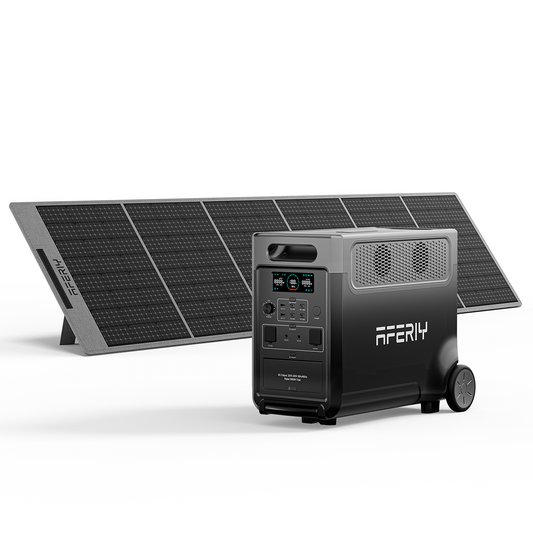
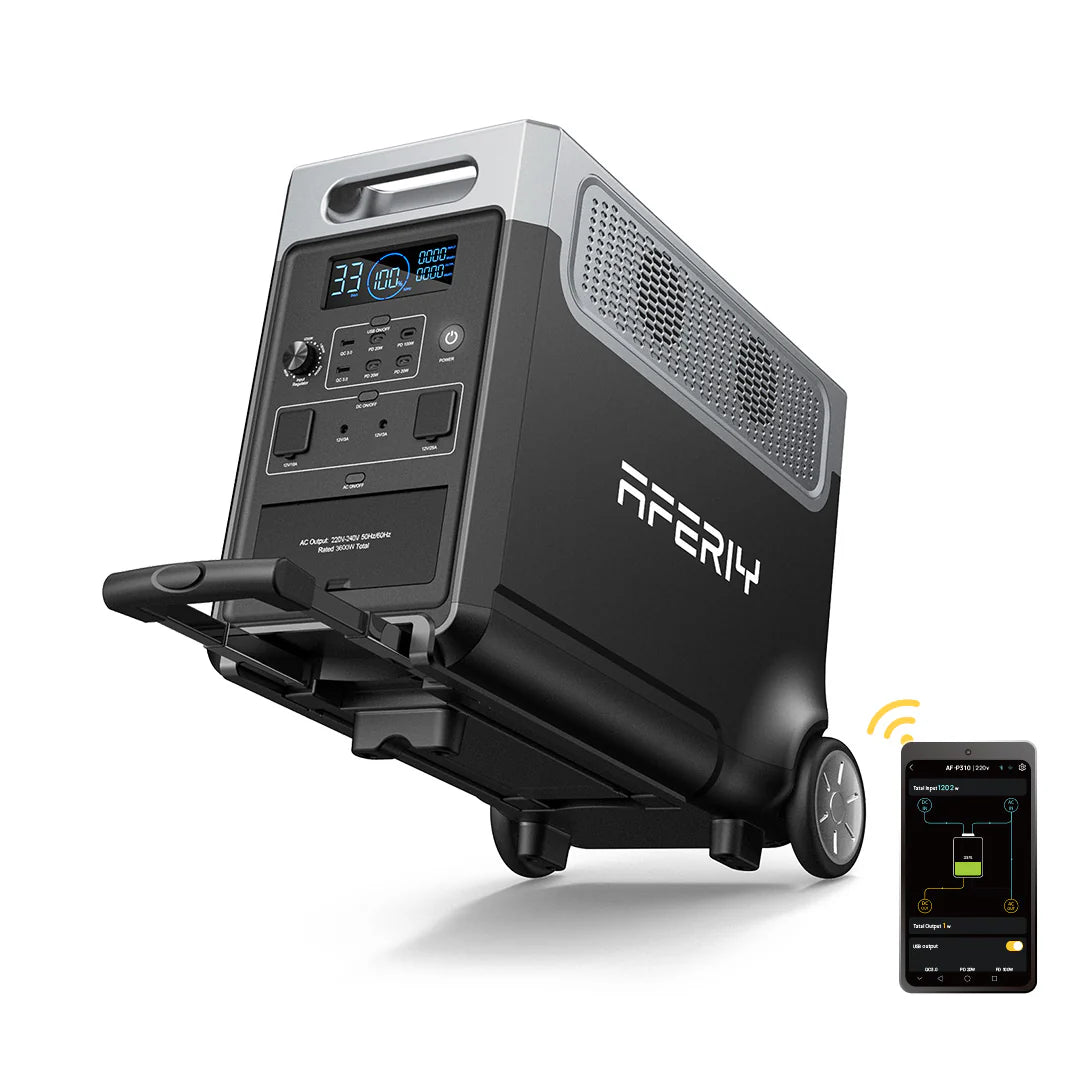
If you need more power or longer home backup, the AFERIY P300 Portable Power Station offers 2,048Wh of capacity and 3,000W output, with expansion up to 10,240Wh. Its solar input also makes it possible to replenish the battery from compatible solar panels, which can be useful during longer outages or when using the unit away from the grid.

A portable power station is not a like-for-like replacement for a fixed home battery. A permanently installed system is better suited to automatic backup, household circuit integration and long-term solar energy management. For flexible, appliance-level backup, however, a portable power station can be a simpler and more versatile option.
FAQs
What size solar battery do I need for a 3-bedroom house?
The number of bedrooms is not enough to determine battery size. A three-bedroom home with relatively low electricity use may need less storage than a smaller property with a heat pump, EV or high evening demand. Base your choice on electricity consumption, solar generation and when you use electricity, rather than floor area or bedroom count.
Is a 5kWh battery enough for solar panels?
It can be. A 5kWh battery may suit a home with lower electricity consumption and enough daytime solar surplus to charge it. The key question is how much electricity you need to store for use after your solar generation falls.
Is 10kWh enough for a UK home?
A 10kWh battery can be suitable for many UK homes. Energy Saving Trust currently describes 10kWh as a typical home battery system, but there is no exact formula for determining the right capacity. Your electricity use, solar generation and usage pattern all matter.
Do I need a bigger battery if I have a heat pump or EV?
Not necessarily. Both can increase electricity demand, but they do not automatically mean you need a larger battery. Consider how much additional electricity they use, when that electricity is needed and how much solar energy is available to charge the battery. Energy Saving Trust recommends considering future electricity use when planning battery storage.
Can I charge a solar battery from the grid?
Yes, some battery systems can charge from the grid as well as solar generation. This can be useful with a time-of-use tariff, allowing you to charge when electricity is cheaper and use the stored energy later.
Should I store excess solar electricity or export it?
It depends on how much of the electricity you can use yourself and the export rate available to you. In Great Britain, eligible solar generators can receive payments through the Smart Export Guarantee (SEG) for electricity exported to the grid. Comparing the value of self-consumption with your available export tariff can help determine whether additional battery storage is worthwhile.
Is a bigger solar battery always better?
No. A larger battery is only useful if there is enough electricity to charge it and enough household demand to use the stored energy. A battery that is consistently underused may provide little additional value. The aim is to choose enough usable storage for your repeatable evening and overnight demand, rather than simply choosing the largest available capacity.
Conclusion
So, what size solar battery do I need? There is no single battery size that suits every UK home. A 10kWh battery is around the size of a typical home battery system, but the right capacity depends on your electricity consumption, surplus solar generation and how much energy you use after solar production falls.
Rather than matching your battery directly to your solar panel capacity, consider how much energy you can realistically store and use. Usable capacity, power output, electricity tariffs and future energy needs can also affect your choice.
The best solar battery is not necessarily the largest one. Choose a system that provides enough usable energy for your household while making effective use of your available solar generation.