

Home Battery Storage Without Solar: Is It Worth in the UK?
Home batteries are often associated with solar panels, but you do not need solar to use battery storage. For some UK households, a battery can be charged from the mains and used later when electricity is more expensive or when backup power is needed.
The main question is whether a battery‑only setup makes sense for your electricity tariff, energy use and backup requirements.

Can You Use a Home Battery Without Solar?
Yes, you can use a home battery without solar panels. A battery can charge from the mains and store electricity for use later. With a suitable smart time‑of‑use tariff, it can charge during cheaper periods and discharge when electricity prices are higher. Energy Saving Trust specifically confirms that batteries can be used without solar, including alongside a time‑of‑use tariff.
A battery can also provide backup power during a power cut, but this depends on the system. Not every grid‑connected battery automatically keeps a home powered when the mains fail, so backup capability and installation requirements should be checked before choosing a system.
Two specifications are particularly important:
Capacity (Wh or kWh): how much energy the battery can store.
Power output (W or kW): how much power it can deliver at one time.
A battery with plenty of stored energy may still be unsuitable for a high‑power appliance if its inverter cannot provide enough output.
Why Use a Home Battery Without Solar?
A battery‑only system can serve several purposes, and backup power is not the only one.
Take Advantage of Time‑of‑Use Tariffs
One of the main reasons to install a home battery without solar in the UK is to make better use of variable electricity prices.
With a suitable time‑of‑use tariff, a battery can charge from the mains when electricity is cheaper and discharge when prices are higher. This can help shift some electricity use away from more expensive periods.
However, a battery does not automatically reduce your bills. The potential benefit depends on your tariff, electricity use, battery efficiency, usable capacity and installation cost.
A battery can also be installed before solar if your property is not currently suitable for panels or you may add them later, provided the system is compatible.
Prepare for Power Cuts
A battery can provide stored electricity when the mains supply is interrupted.
For a short power cut, you may only need enough energy for essentials such as: A fridge or freezer, Wi‑Fi router, Lights, Phones and laptops, Other essential electrical equipment.
However, not every home battery automatically provides backup power. The battery, inverter and electrical installation need to support this function, and the system must be configured appropriately.
If backup power is your main reason for buying a battery, check this capability before installation rather than assuming that any home battery will keep your home powered during a power cut.
Support a Home With High Electricity Demand
A battery can also be useful in homes with significant electricity consumption, particularly where electricity use can be shifted away from expensive periods.
This can be relevant to households using technologies such as heat pumps or other electric heating. Energy Saving Trust notes that battery storage can be used with a heat pump and a time‑of‑use tariff even when a home does not have solar panels.
The important point is to size the battery around your actual electricity use rather than simply choosing the largest capacity available.
What Are the Limitations of a Home Battery Without Solar?
Although a battery can work without solar, there are several limitations to consider.
The Battery Cannot Generate Electricity
A battery stores electricity; it does not generate it.
Without solar or another generation source, the battery ultimately depends on the mains for recharging. If the grid goes down for an extended period, you can only use the energy already stored in the battery unless you have another way to recharge it.
This makes battery capacity particularly important during longer power cuts.
Backup Runtime Is Limited
How long a battery lasts depends on both its usable capacity and the appliances connected to it.
A fridge, router and a few lights use much less electricity than an electric cooker, immersion heater or other high‑power appliances. Running fewer appliances and avoiding unnecessary loads can therefore extend backup time considerably.
Installation Costs Can Be Significant
The cost of a home battery varies according to its size, type and installation. Energy Saving Trust currently says battery storage can cost around £1,500 to £10,000, with a 5kWh battery system costing around £4,600. It also says a typical home battery system might have around 10kWh of storage.
The potential savings should therefore be considered alongside the upfront cost, battery efficiency and expected lifespan.
How Much Battery Storage Do You Need?
There is no single battery size that suits every UK home. Energy Saving Trust says a typical home battery system might have around 10kWh of storage, but there is no exact formula for determining the right capacity. Your energy use and intended use of the battery are the main factors.
For backup, consider which appliances you need during a power cut and how long you want to run them. For tariff optimization, consider how much electricity you normally use during more expensive periods and how much of that demand can be shifted to stored energy.
It is also worth considering future electricity use, such as plans to install a heat pump or buy an electric vehicle.
Remember that capacity is only part of the calculation. The battery’s power output also needs to be high enough for the appliances you want to run.
Is a Portable Power Station a Good Alternative?
A permanently installed home battery is not the only way to store electricity for backup.
For households that mainly want flexible backup for essential appliances, a portable power station can provide battery storage without requiring a full home energy‑storage installation. It can also be moved between rooms or used away from home.
AFERIY P180 Pro Portable Power Station
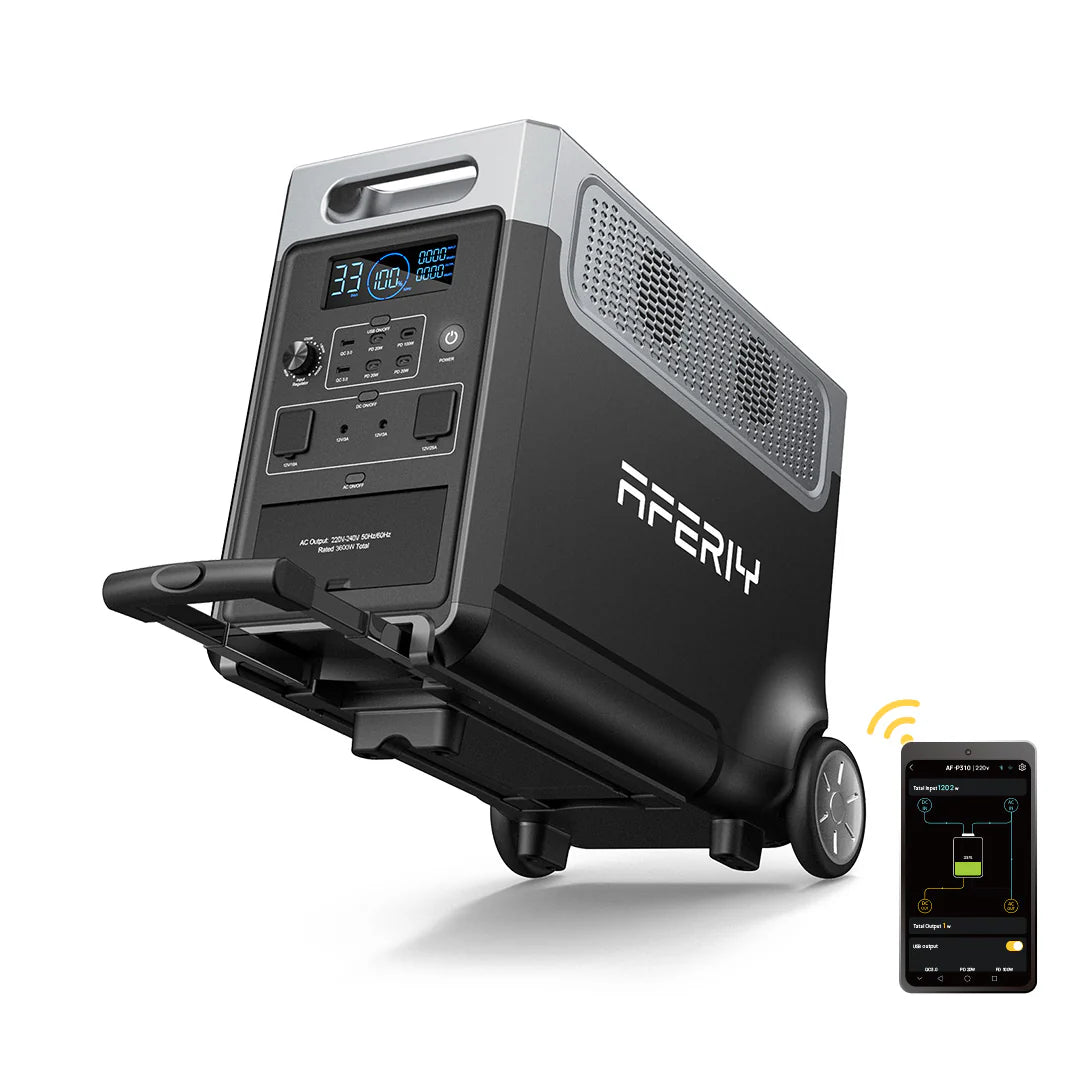
The AFERIY P180 Pro Portable Power Station provides 1,024Wh of capacity and 1,800W of AC output, with expandable capacity up to 5,120Wh. The UK model also provides a UPS function with a switch‑over time of up to 10ms.
This makes it suitable for essential loads such as a fridge, router, lights, laptops and other household electronics within its output limits.
It can charge from AC, so solar panels are not required for basic use. It also supports solar and car charging if you want additional charging options later.

AFERIY P300 Portable Power Station
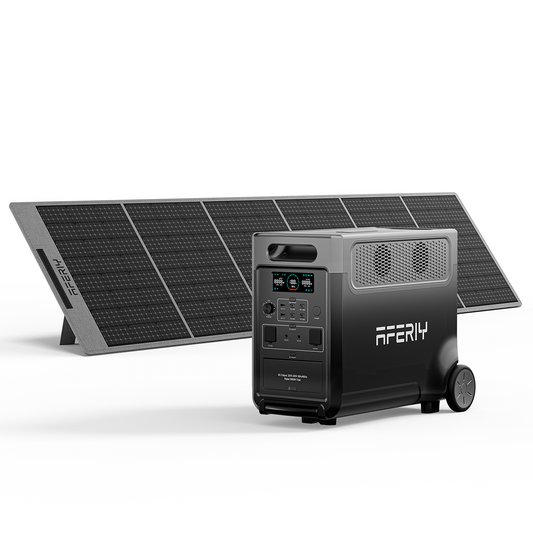
For higher loads or longer backup requirements, the AFERIY P300 Portable Power Station provides 2,048Wh of capacity and 3,000W of AC output, with expandable storage up to 10,240Wh. It also supports up to 1,200W of solar input and includes a 10ms UPS function.
Like the P180 Pro, the P300 can be charged from AC without solar. Its larger capacity and higher output make it better suited to households that need to run more appliances or want the option of adding storage later.
The P180 Pro is the more compact option for essential loads, while the P300 offers more output and substantially greater expansion capacity.

How to Choose a Home Battery Without Solar
Before choosing a battery, consider four main factors.
Check Your Electricity Tariff
If your main goal is to save money, look at whether your tariff offers cheaper periods and whether the difference is large enough to make battery charging worthwhile.
Match Capacity and Output to Your Needs
Calculate the appliances you want to run and how long you want them available. Check both the battery’s storage capacity and its continuous output.
Decide How Much Backup You Need
If you only need to keep essential appliances running during short power cuts, you may not need enough storage for whole‑home backup.
For longer outages, additional capacity becomes more important because a battery without another charging source cannot continue supplying electricity indefinitely.
Consider Future Solar
If you may install solar panels later, check whether the battery and inverter are compatible with the type of solar system you may want to add.
For a permanently installed system, you should also use an appropriately qualified installer and check any relevant requirements for connecting the system to the electricity network.
FAQs
Can you charge a home battery from the grid?
Yes. A home battery can charge directly from the mains without solar panels. With a suitable time‑of‑use tariff, charging can be scheduled during cheaper periods and the stored electricity used later.
Can a battery without solar save money in the UK?
It can, particularly when paired with a suitable time‑of‑use tariff. However, potential savings depend on electricity prices, household consumption, battery efficiency and installation costs.
Does a home battery need a special electricity tariff?
No. A battery can charge from the mains without a time‑of‑use tariff. However, a suitable tariff can create more opportunities to charge when electricity is cheaper and use stored energy when prices are higher.
Can you install solar panels after installing a battery?
In many cases, yes, but compatibility depends on the battery, inverter and solar system. If solar is a future possibility, check compatibility before choosing the system.
Conclusion
A home battery can work without solar panels and can be useful for more than just storing renewable energy. In the UK, it can be charged from the mains and used to shift electricity consumption away from more expensive periods, particularly when combined with a suitable time‑of‑use tariff.
It can also provide backup during a power cut if the system supports this function. The main limitation is that a battery without solar has a finite amount of stored energy and normally depends on the grid for recharging.
The best option depends on your electricity tariff, household energy use, required backup time and future plans. A permanently installed home battery may suit households looking for integrated energy storage, while a portable power station can provide a more flexible option for essential backup loads.