

Power Station vs Generator: Which Is Right for You?
When the power goes out, keeping a refrigerator, lights, Wi-Fi, or other essentials running can become a priority. A portable power station and a generator can both provide backup electricity, but they are designed around different ways of supplying power.
A portable power station stores electricity in a rechargeable battery, while a generator produces electricity using fuel. That basic difference affects how each option fits into everyday situations, from short home outages and camping trips to longer periods without grid power.
Understanding how they work and what each is designed for can help you make a more practical choice between a power station vs generator.

Power Station vs Generator: How Do They Work?
Portable Power Station
A portable power station is a rechargeable battery system with a built-in inverter and multiple output ports. You charge the battery before use, then connect appliances directly to the unit. Depending on the model, charging can come from an AC outlet, solar panels, or a vehicle.
Because it does not burn fuel to produce electricity, a power station has no combustion exhaust while it is supplying power. It also starts without an engine and generally operates much more quietly, although cooling fans may still run under load.
The tradeoff is stored energy. A power station can only supply as much energy as its battery holds unless you can recharge it during use.
Generator
A conventional portable generator uses fuel to run an internal combustion engine, which drives an alternator to produce electricity. Gasoline is common, while some models can also use propane or other fuels.
Its biggest practical advantage is that runtime can be extended by refueling. As long as you have enough fuel and the generator is within its operating limits, it can continue producing electricity.
There are also important operating requirements. Fuel generators produce exhaust and carbon monoxide, so they must be operated outdoors. The U.S. Consumer Product Safety Commission recommends keeping portable generators at least 20 feet from homes, with the exhaust directed away from the building.
Power Station vs Generator: Key Differences
The generator vs power station comparison becomes clearer when you look at how each system works in everyday use.
| Feature | Portable Power Station | Fuel Generator |
|---|---|---|
| Energy source | Rechargeable battery | Fuel |
| How power is supplied | Stored electricity | Electricity produced while running |
| Runtime | Limited by battery capacity | Extended by refueling |
| Noise | Mainly cooling-fan noise | Engine noise |
| Combustion exhaust | None during battery discharge | Yes |
| Recharging | AC, solar, or vehicle, depending on model | Refueling |
| Maintenance | Relatively low | Engine and fuel-system maintenance |
| High-power operation | Depends on inverter rating and battery capacity | Depends on generator output |
| Portability | Battery-based design | Engine and fuel add weight |
Noise and Exhaust
Noise is one of the most noticeable differences. A fuel generator has an engine running whenever it produces electricity, while a portable power station has no internal combustion engine. Its cooling fans may produce some noise under load, but there is no engine noise or fuel combustion.
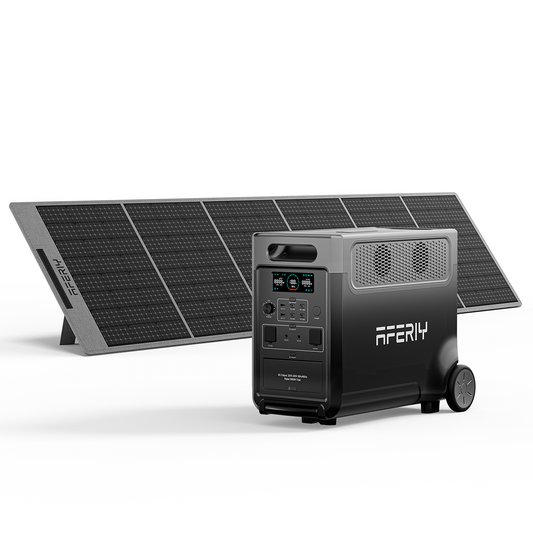
For households that need backup power at night, or for camping where noise matters, this can make battery-based power more practical. The AFERIY P300 Portable Power Station lists cooling-fan noise below 25–50 dB under its specified conditions, while its 3,000W pure sine wave output can support a wide range of household appliances.

Fuel generators also produce combustion exhaust, including carbon monoxide, and must be operated outdoors in accordance with safety guidance. A battery power station does not produce combustion exhaust while discharging.
Runtime and Recharging
Battery capacity and power output describe two different things. Capacity, measured in watt-hours (Wh), indicates how much energy is stored, while output, measured in watts (W), indicates how much power the system can deliver at a given time.
A 2,048Wh power station stores more energy than a 1,000Wh model, but actual runtime depends on the appliances being powered, their load, and conversion losses. A refrigerator that cycles on and off, for example, uses power differently from a heater running continuously.
A generator has a different runtime model. It continues producing electricity while the engine is running, and additional fuel can extend its operating time. A battery power station instead needs to be recharged through AC power, solar panels, a vehicle, or another compatible source.
Power Output
Power output is just as important as battery capacity. Before choosing either system, check the running wattage of the appliances you want to operate and whether they require additional power when starting.
Refrigerators, pumps, compressors, and some power tools can draw more power when their motors start than they use during normal operation. A system therefore needs sufficient inverter or generator output to handle both normal and startup demand.
The important point is to match the system’s continuous and startup output with the equipment you plan to use. A higher wattage rating does not automatically mean longer runtime, just as a larger battery does not automatically mean it can run every high-power appliance.
Capacity determines how long stored energy can last, while output determines what the system can run at a given time.
Which One Fits Different Power Needs?
The better choice depends on how much power you need, how long you need it, and whether you have a practical way to recharge it.
Short Power Outages
For a short power outage, many households only need to keep a refrigerator, Wi-Fi router, phones, lights, and a few essential devices running.
A portable power station can handle these loads without fuel, engine noise, or the need to refuel. The main consideration is to identify your must-run loads and choose enough battery capacity and output for them.
Long Outages and High-Power Loads
Longer outages are more demanding because the challenge is not only producing enough power, but keeping that power available over several days.
A fuel generator can keep running as long as there is a safe supply of fuel. A battery power station needs to be recharged, so its usefulness during a prolonged outage depends heavily on battery capacity and charging options.
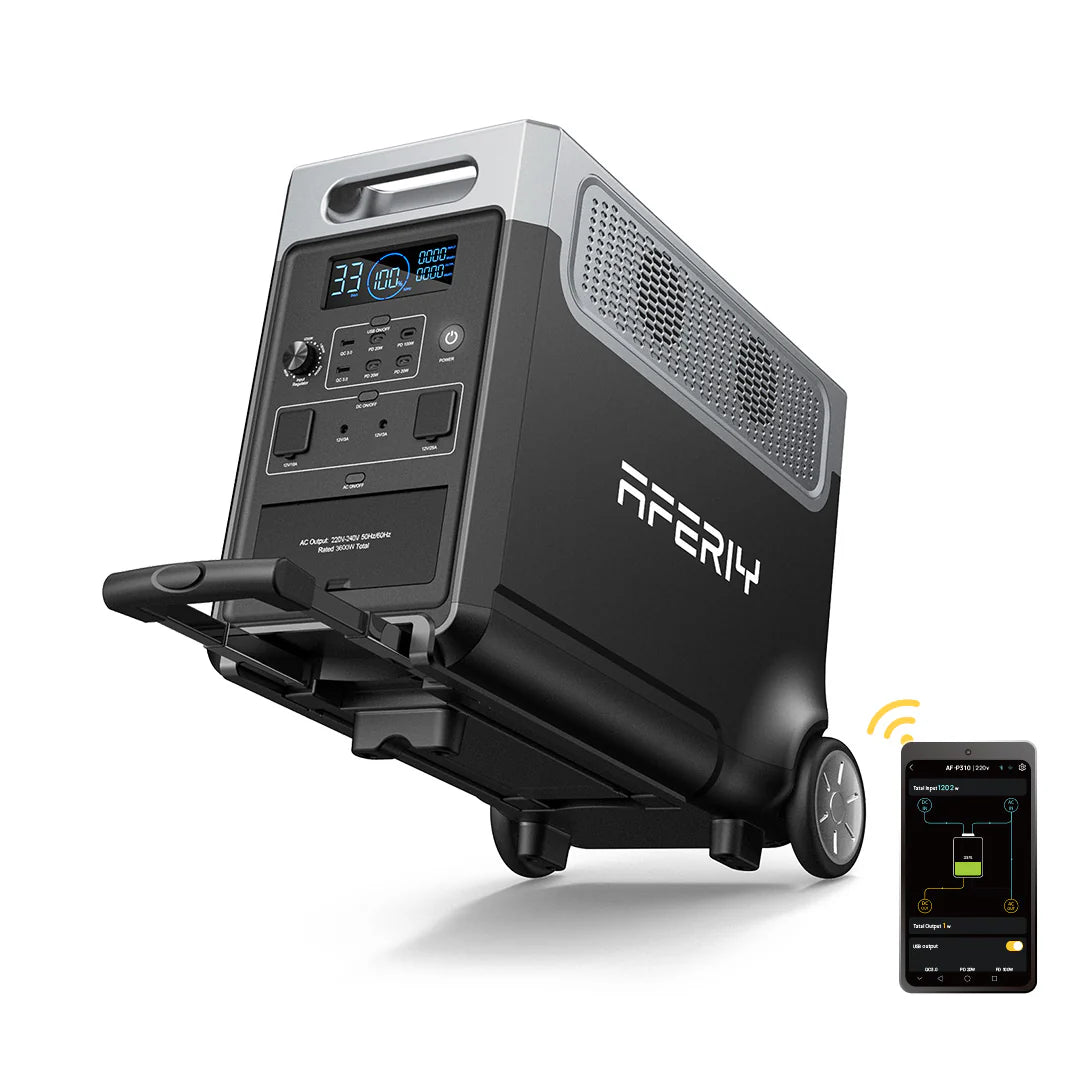
This is where an expandable system can be more practical for households that want battery-based backup without being limited to the capacity of a single unit. The AFERIY P310 Portable Power Station starts with 3,840Wh of LiFePO₄ battery capacity and can expand to 11,520Wh. This gives users the option to add storage as their backup needs grow rather than choosing the largest capacity from the start.

Recharging is another concern during an extended outage. The P310 supports up to 2,000W of solar input and can combine AC and solar charging, allowing the battery to be replenished from sunlight when grid power is unavailable. Its 3,600W pure sine wave output also provides enough inverter capacity for many higher-demand appliances and equipment, although actual use still depends on the appliance’s running and startup requirements.
Camping, RV and Indoor Use
For camping and RV trips, the choice depends largely on the equipment and operating environment.
A generator can make sense for sustained high-power loads such as an RV air conditioner when fuel is available and generator use is permitted. However, campground quiet hours and operating restrictions can limit when it can be used.
A portable power station is better suited to everyday loads such as phones, lights, laptops, cameras, fans, and smaller appliances when quiet operation and simple setup matter.
For indoor backup, the difference is more important: fuel generators produce carbon monoxide and must be operated outdoors, while a battery power station produces no combustion exhaust during discharge. This makes battery-based backup more suitable for powering essential indoor devices during an outage.
How to Choose Between a Power Station and Generator?
Start with the equipment you actually need to run.
Add up your running wattage.
List the appliances you expect to use at the same time. Then check for startup requirements on refrigerators, pumps, compressors, and power tools.
Estimate the outage length.
A few hours and several days require very different backup strategies. For longer outages, consider not only battery capacity but also how you will recharge it.
Consider the operating location.
If the equipment needs to work inside the home or near a sleeping area, the absence of combustion and engine noise can be important. If you have a suitable outdoor location and need sustained high output, a fuel generator may fit the situation better.
Plan for the second day, not just the first.
For a power station, think about AC, solar, vehicle charging, or expandable batteries. For a generator, think about fuel storage, availability, and safe refueling.
Match the system to the actual job.
A small battery unit does not become a whole-home backup simply because it has AC outlets, and a high-output generator is unnecessary if you only need to keep a refrigerator and a few electronics running.
For some users, the two technologies can also work together. A battery power station can handle quieter essential loads, while a generator is reserved for situations that require sustained high power.
FAQs
Is a power station better than a generator?
It depends on the intended use. A power station can be a practical option when quiet operation, low maintenance, flexible charging, and essential-load backup are priorities. A fuel generator can be useful when extended runtime and sustained high-power output are more important.
Can a portable power station replace a generator?
For some applications, yes. It can replace a generator for many electronics, refrigerators, lighting, and other loads if its output and battery capacity are sufficient. It may not be a practical replacement for every high-demand appliance or a multi-day outage without a reliable way to recharge.
What is the main difference between a generator vs power station?
A generator produces electricity while its engine is running, whereas a power station stores electricity in a rechargeable battery and delivers it through an inverter. That difference determines how each system handles fuel, noise, exhaust, runtime, and recharging.
Conclusion
The portable power station vs generator decision comes down to the loads you need to support, how long you expect to need backup power, and where the equipment will operate. A power station offers stored energy, quiet operation, and multiple charging options, while a fuel generator can keep producing electricity as long as it has an appropriate fuel supply.
Rather than comparing wattage or price alone, look at your actual appliances, their startup requirements, expected outage duration, and your plan for recharging or refueling. That gives you a much more realistic picture of which backup system fits your situation.