




Home Battery Backup System for Home Power Outage
Power outages can disrupt essential household activities, from keeping food fresh to maintaining lighting and internet access. A home battery backup system stores electricity for use during an outage, helping households maintain access to essential appliances.
This guide covers how home battery backup systems work, what they can power, their costs in the UK and how to choose a suitable solution.
What Is a Home Battery Backup System?
A home battery backup system stores electricity from the mains or compatible solar panels and supplies it when the grid goes down.
Unlike petrol generators, battery systems produce no combustion exhaust during normal operation and operate quietly. Depending on their capacity and output, they can power essential appliances such as refrigerators, lights, routers and computers.
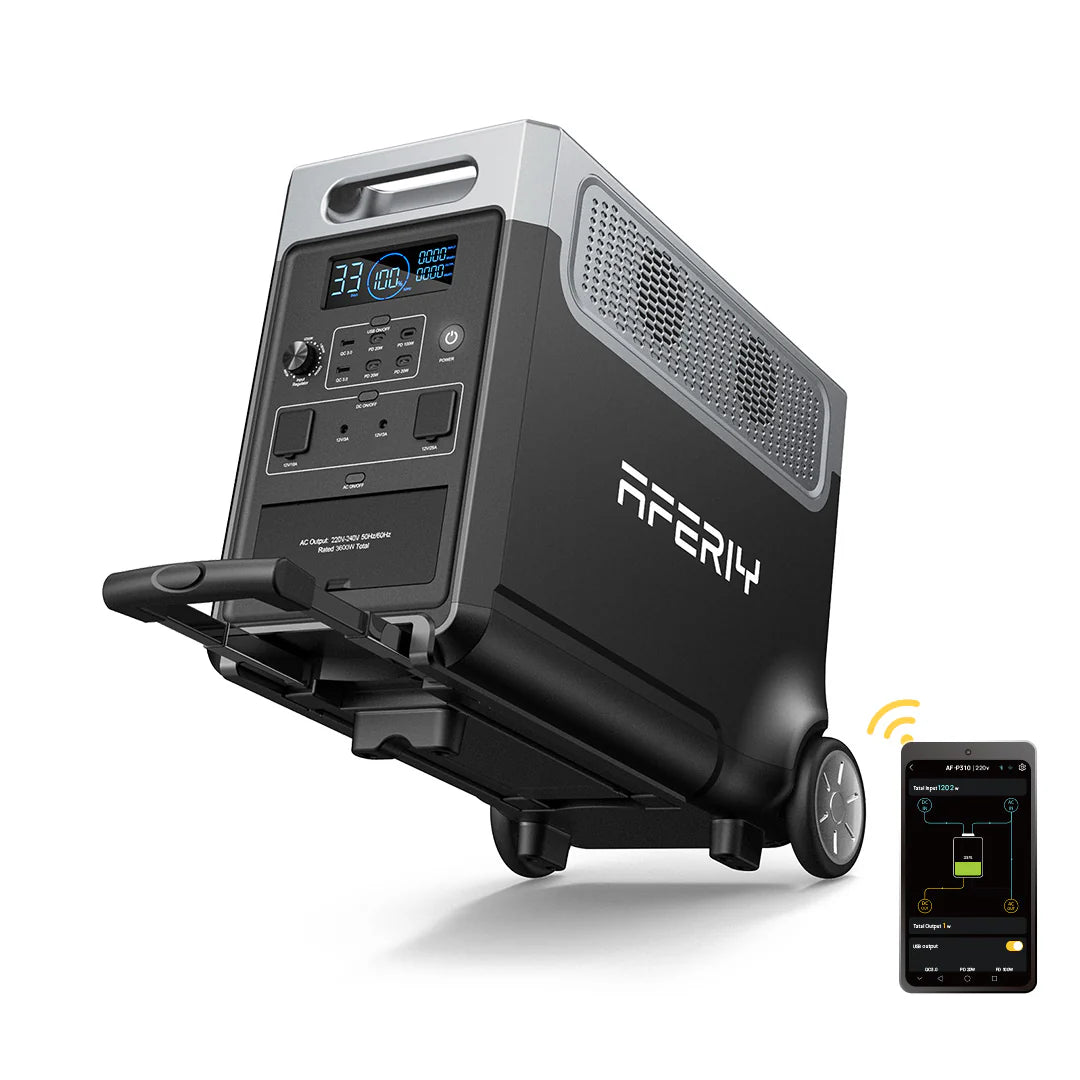
Common options include integrated home energy storage systems, expandable battery systems and portable power stations. They differ in installation requirements, storage capacity and portability, so the right choice depends on your household's backup needs.

How Does a Home Battery Backup System Work?
A home battery backup system stores electricity before an outage and supplies it when the mains power becomes unavailable.
Charging the Battery Before an Outage
Batteries can be charged using mains electricity or compatible solar panels. Solar charging allows households to store excess electricity generated during daylight for later use. Keeping sufficient charge available is important in areas prone to unexpected power cuts.
Switching to Backup Power
When the mains supply is interrupted, systems with backup functionality switch to battery power and supply connected appliances. Some include an Uninterruptible Power Supply (UPS) function for faster switching, helping reduce interruptions to compatible electronics. Others require appliances to be connected directly to designated backup outputs.
Monitoring and Restoring Power
Displays or mobile apps can show battery levels, charging status and electricity consumption. Once mains electricity returns, the battery can recharge using the configured power sources, preparing it for the next outage.
What Can a Home Battery Backup System Power and for How Long?
The appliances a home battery backup system can run depend on two key specifications: battery capacity (Wh) and rated output power (W).
Battery capacity determines how much energy is available, while rated output power determines which appliances can operate simultaneously.
The following table illustrates estimated runtimes using a 5.12kWh battery with approximately 85% usable energy (4,352Wh).
| Household Device | Typical Power Consumption | Estimated Runtime |
|---|---|---|
| LED light | 5–15W | 290–870 hours |
| Wi-Fi router | 5–15W | 290–870 hours |
| Smartphone charger | 5–30W | 145–870 hours |
| Laptop | 20–100W | 43.5–218 hours |
| Television | 50–150W | 29–87 hours |
| Electric blanket | 80–120W | 36–54 hours |
| Refrigerator | 100–250W | 17.4–43.5 hours |
| Freezer | 150–200W | 21.8–29 hours |
| Dehumidifier | 300–700W | 6.2–14.5 hours |
| Microwave | 700–1,400W | 3.1–6.2 hours |
| Washing machine | 1,200–2,200W | 2–3.6 hours |
| Electric kettle | 2,200–3,000W | 1.45–1.98 hours |
These figures assume continuous operation at the stated power consumption and do not account for additional conversion losses. Actual runtime varies by appliance and operating conditions. Refrigerators and freezers cycle on and off, while washing machines use varying amounts of power throughout a cycle.
For everyday backup, prioritise refrigeration, lighting, communication equipment and essential electronics. High-power appliances such as kettles and washing machines can consume substantial energy.
Before connecting appliances, check their combined running power and startup requirements against the system's rated output. A larger battery provides more stored energy but does not necessarily support higher-powered appliances.
Home Battery Backup System vs Portable Power Station
Home battery storage systems and portable power stations both provide backup electricity, but their designs and applications differ.
| Comparison | Home Battery Storage System | Portable Power Station |
|---|---|---|
| Design | Fixed or modular energy storage equipment | Self-contained battery unit |
| Capacity | Often expandable | Depends on model |
| Installation | May require professional installation | Generally ready to use |
| Portability | Usually designed for stationary use | Designed for easier movement |
| Typical use | Household energy storage and backup | Selected appliances and outdoor activities |
Home battery storage systems are generally better suited to households needing greater storage capacity or integration with household electrical circuits. Portable power stations offer a more flexible option for powering selected appliances without permanent installation.
However, neither solution automatically guarantees whole-house backup. A grid-connected battery needs suitable backup functionality and electrical configuration to supply power during an outage.
How Much Does a Home Battery Backup System Cost in the UK?
The cost of a home battery backup system depends on its storage capacity, inverter specifications and installation requirements. Larger systems generally cost more, while additional electrical work and backup connections can increase the total price.
| Battery Capacity | Estimated Installed Cost |
|---|---|
| 5kWh | £3,500–£4,500 |
| 10kWh | £5,500–£7,000 |
| 13.5–15kWh | £7,500–£10,000 |
| 20kWh | £8,500–£15,000 |
These are indicative UK market estimates for 2026, not fixed quotations. Actual costs vary depending on the equipment, property and installation requirements.
When comparing prices, check whether the quotation includes the battery, inverter, installation and backup functionality. Battery-only prices can be considerably lower than the total cost of an installed system.
How to Choose the Right Home Battery Backup System
Choosing a home battery backup system starts with understanding your household's electricity consumption, essential appliances and expected backup duration.
Battery Capacity and Household Energy Needs
List the appliances you need during an outage and estimate their daily energy consumption. A household that only needs lighting, internet access and phone charging will require less capacity than one that also needs refrigeration and other appliances.
Consider future energy requirements as well. An expandable system can provide additional storage if your household's electricity needs increase.
Rated Output Power and Output Ports
Check the continuous AC output and available connections. The system must support the combined power consumption of appliances running simultaneously.
Also consider startup power requirements, particularly for refrigerators and other motor-driven appliances.
Charging Options and Solar Compatibility
Check whether the system supports mains and solar charging. If using solar panels, verify the maximum PV input, voltage and current limits to ensure compatibility.
Solar charging performance depends on sunlight, panel output and household electricity consumption.
UPS Function, Battery Life and Warranty
A UPS function can reduce interruptions to connected equipment when mains power fails. Check the specified switching time and supported backup connections.
For LiFePO4 batteries, compare the manufacturer's cycle-life specifications, warranty coverage and recommended operating conditions to understand long-term performance.
Budget and Installation Requirements
Set a budget based on your actual backup needs rather than choosing the largest available system. Check whether professional installation, additional wiring or other electrical equipment is required.
Comparing the total cost of the complete setup gives you a more realistic basis for choosing a system.
Best AFERIY Home Battery Backup Systems
AFERIY offers two home energy storage solutions for households looking for high-capacity backup power: the PH062 All-in-One Home Energy Storage System and the PN062 Home Battery Storage System.
Both feature a 5.12kWh LiFePO4 battery, 6,200W AC output and up to 6,500W solar input. Their main difference lies in their design and storage expansion capabilities.
Best All-in-One Home Battery Backup: AFERIY PH062
The AFERIY PH062 All-in-One Home Energy Storage System combines battery storage and power conversion in one unit, offering a streamlined solution for household backup.
It features a 5.12kWh LiFePO4 battery, 6,200W pure sine wave AC output and up to 6,500W solar input through its built-in 120A MPPT solar charge controller. Its integrated design makes it a suitable option for households looking for a high-output energy storage system without assembling separate core components.

Best Expandable Home Battery Backup: AFERIY PN062
The AFERIY PN062 Home Battery Storage System is designed for households that may need additional storage capacity over time.
Starting with 5.12kWh of LiFePO4 battery capacity, it can be expanded to 10.24kWh, 15.36kWh or 20.48kWh by adding compatible expansion batteries. It also provides 6,200W pure sine wave AC output and supports up to 6,500W solar input.
Its 10ms UPS backup function helps reduce interruptions for compatible connected equipment during a mains power failure. The expandable design makes the PN062 particularly suitable for households expecting their backup energy requirements to increase.

How to Maintain a Home Battery Backup System
Proper maintenance helps keep a home battery backup system operating reliably and extends its useful service life.
Follow the manufacturer's recommendations for battery charging, storage and operating temperatures. If using solar panels, clean their surfaces periodically to prevent dust and dirt from reducing charging efficiency.
Regularly inspect cables and connectors for visible damage. For permanently installed energy storage systems, follow the manufacturer's inspection requirements and arrange professional servicing when necessary.
FAQs
Is AFERIY Suitable for Home Backup?
Yes. AFERIY offers home energy storage systems designed for backup power. The PH062 provides 5.12kWh of battery capacity and 6,200W output, while the PN062 supports expandable storage up to 20.48kWh.
Can a Home Battery Backup System Power an Entire House?
It depends on the system's battery capacity, output power and electrical configuration. Whole-house backup requires suitable connections and installation. Not every battery storage system can supply an entire property automatically.
Can a Home Battery Backup System Be Charged by Solar Panels?
Yes. Compatible home battery systems can store electricity generated by solar panels for later use. The AFERIY PH062 and PN062 support up to 6,500W solar input, although actual charging performance depends on sunlight, panel configuration and energy consumption.
Conclusion
Choosing the right home battery backup system depends on your household's energy needs, required backup duration and budget. Compare battery capacity, output power, charging options and installation requirements to find a solution that reliably supports your essential appliances during power outages.


1 comment
This is a thorough and informative article on home battery backup systems. I appreciate how it covers everything from the basics of what these systems are and how they work, to the specific benefits and factors to consider when choosing one.
The detailed descriptions of different models like the Aferiy P210 and P310 provide clear options depending on capacity and power needs. Additionally, the maintenance tips are practical and helpful for ensuring long-term efficiency.
Overall, it’s a valuable read for anyone looking to invest in a reliable home power solution, especially in areas prone to frequent outages.