

Plug-In Solar Panels for Home: Cost, Power & What to Know
Plug-In Solar Panels have become a new option for generating electricity at home in Great Britain. Unlike conventional rooftop solar, these smaller systems are designed to connect to a standard household socket, giving some homeowners, renters and flat owners another way to use solar power.
The rules changed in August 2026, making compliant plug-in solar devices available under a new regulatory framework. But choosing a suitable system involves more than looking at its wattage or price. Where the panels are installed, how much sunlight they receive and how much electricity your household uses during the day can all affect their value.

How Do Plug-In Solar Panels Work?
Plug-In Solar Panels convert sunlight into DC electricity. A microinverter then converts this electricity into AC power that can be used within the home.
When the panels are generating electricity, the power can be used by appliances that are operating at the same time. If the home needs more electricity than the panels are producing, the remaining demand comes from the grid as usual. If generation is higher than household demand, surplus electricity can be exported to the grid.
This means Plug-In Solar Panels are mainly designed to reduce the amount of electricity a home needs to take from the grid. They are not intended to replace the grid or provide whole-home backup during a power cut.
Under the current Great Britain framework, a compliant plug-in solar device can have a maximum rated AC output of 800W. The government introduced this route specifically for plug-in solar systems without batteries that meet the required technical and safety specification.
The 800W figure therefore refers to the electricity supplied to the home’s electrical installation through the device’s AC output. It should not be confused with the total rated wattage of the solar panels connected to the inverter.
How Much Electricity Can Plug-In Solar Panels Generate?
An 800W AC output does not mean that a system produces 800W continuously throughout the day. Solar generation changes with sunlight, season, weather, orientation and shading.
For an 800W system, Energy Saving Trust estimates around 700kWh of annual generation under a modelled set of conditions. The calculation assumes a Manchester installation facing south at a 30-degree angle with no shading, so it should be treated as an example rather than a guaranteed result for every home.
The position of the panels can make a noticeable difference. A system exposed to strong sunlight for much of the day will generally have more opportunity to generate electricity than one shaded by nearby buildings, trees or walls. The available daylight also changes substantially between summer and winter.
What matters in practice is how much of this generation can be used at home. A television, fridge, router or laptop running during daylight hours can use electricity generated by the panels. Larger appliances such as ovens, tumble dryers and other high-demand equipment may require more electricity than the system is producing at a given moment, with the grid supplying the difference.
For this reason, the useful output of Plug-In Solar Panels should be considered over time rather than by asking whether an individual appliance can be powered entirely by an 800W system.
How Much Do Plug-In Solar Panels Cost?
Current guidance puts the starting price for a compliant Plug-In Solar Panel system at around £450. A complete system can include the solar panels, microinverter, mounting brackets and cables, although prices vary between products and configurations.
The potential reduction in electricity bills is also relatively modest compared with a larger rooftop installation. A model from Energy Saving Trust estimates savings of around £70 to £100 per year, depending partly on whether the household is occupied during the day and can use more of the electricity as it is generated.
The UK Government gives a separate headline estimate of up to £110 per year, with plug-in solar capable of providing up to 20% of an average home’s electricity use. This is an upper estimate rather than a guaranteed saving for every household.
Your actual savings depend on your electricity consumption, solar generation and the amount of generated electricity used directly in the home. For example, a household that regularly uses appliances during the day may make better use of its solar generation than one whose main electricity demand occurs in the evening.
It is therefore better to compare the purchase price with realistic annual generation and household usage than to assume a fixed payback period.
Where Can Plug-In Solar Panels Be Installed?
One of the main differences between Plug-In Solar Panels and conventional rooftop solar is where they can be used. A suitable system does not require a conventional solar installation on the roof, so it can be relevant to properties where roof access is limited.
Garden installations are one option, while some products can also be mounted on balconies or other suitable outdoor spaces. However, the installation method matters. Panels mounted to a balcony or building need to be securely supported and must not create a structural or safety problem.
The UK Government specifically advises consumers to check whether permission is required before purchasing or installing plug-in solar devices. Depending on the property, this may involve a landlord, building owner, freeholder, planning authority or listed-building requirements.
For renters and flat owners, permission is particularly important. A portable system may be easier to accommodate than equipment permanently fixed to a building, but the terms of a tenancy or lease can still affect what you are allowed to install.
Sunlight is another practical consideration. A convenient installation location is not necessarily a productive one. Before buying, consider whether nearby buildings, trees, walls or balcony structures will shade the panels for significant periods.
Are Plug-In Solar Panels Legal in the UK?
Compliant Plug-In Solar Panels became legally available under the new plug-in route in Great Britain from 27 August 2026. The regulatory changes allow suitable solar microgeneration devices to connect to a standard UK mains socket, provided they meet the required conditions.
The important word is compliant. The rule does not mean that any combination of solar panels, inverter and plug bought online can simply be connected to a household socket.
The government has introduced an Interim Product Specification covering the technical and safety requirements for plug-in solar devices. The specification applies specifically to plug-in solar products and does not extend to other plug-in technologies such as plug-in batteries.
The current GB connection framework also permits a single plug-in microgenerator with a registered capacity of 800W or less. G98 Issue 2 Amendment 1 states that connecting more than one plug-in microgenerator is not permitted.
Ofgem has approved the related G98 modification for plug-in microgeneration, allowing compliant devices to be incorporated into the network connection framework while maintaining requirements for network safety and supply quality.
Northern Ireland has separate electricity connection arrangements under G98/NI, so the Great Britain plug-in route should not automatically be treated as applying there.
For that reason, buyers should check the exact product’s compliance status and the current requirements applying to their property and electricity network before installation.
Are Plug-In Solar Panels Worth Considering?
Plug-In Solar Panels and conventional rooftop solar panels use the same basic photovoltaic technology, but they serve different purposes.
A conventional rooftop system is normally much larger and permanently installed. By comparison, plug-in solar is designed around a smaller output and a simpler connection method. This makes it particularly relevant to households that cannot install a conventional rooftop array or do not want to commit to a larger installation.
The trade-off is lower generation. An 800W plug-in system cannot provide the same household electricity contribution as a typical multi-kilowatt rooftop system. Its value comes from using a smaller amount of solar generation to offset part of the home’s normal electricity demand.
It can therefore be a practical option for a flat, rental property or home with limited roof space, provided the property allows the installation and the panels have a suitable position with good sunlight.
There is also an important limitation when considering backup power. Standard grid-connected Plug-In Solar Panels are not designed to keep household appliances running during a power cut. When the grid is unavailable, the solar system must stop operating rather than continue supplying the home’s electrical installation.
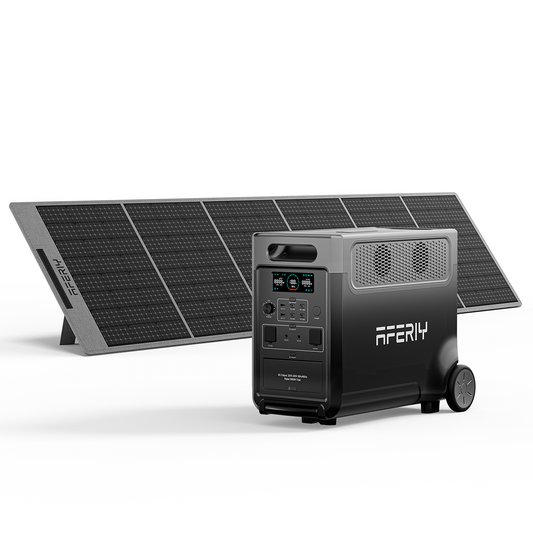
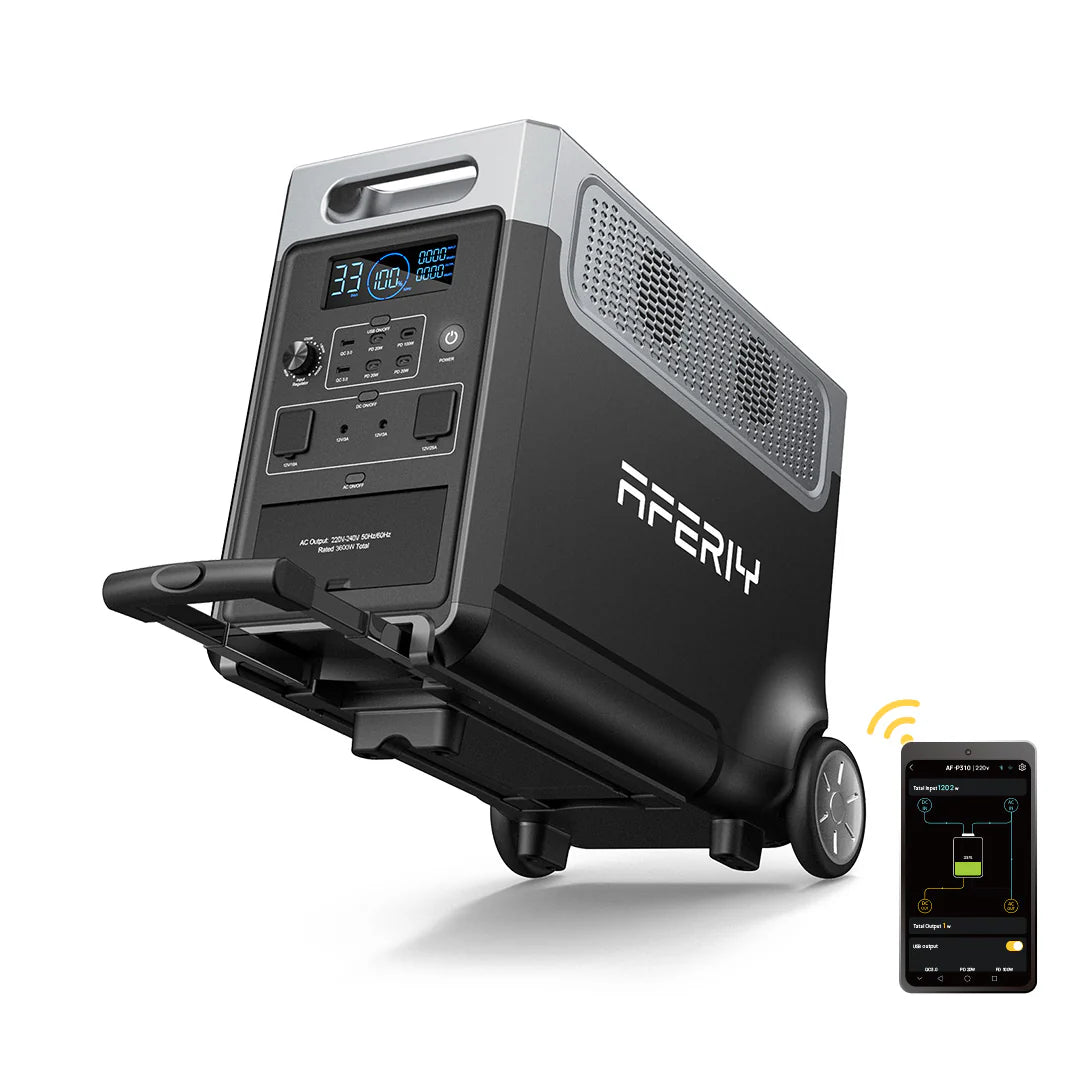
If you also need electricity during an outage, a separate battery-based backup system serves a different purpose. For example, the AFERIY P300 Portable Power Station has a 2,048Wh battery capacity and supports up to 1,200W of solar input. It can store energy for later use and supply selected loads independently of the grid.

The distinction is simple: Plug-In Solar Panels generate electricity, while a battery stores electricity for use later.
FAQs
Can renters install Plug-In Solar Panels?
Renters may be able to use them, but permission requirements depend on the property and installation. The government advises checking whether permission from a landlord or building owner is needed before purchasing or installing a plug-in solar device.
Can Plug-In Solar Panels be installed on a balcony?
Some systems can be mounted on balconies, but the panels need an appropriate and secure mounting arrangement. You should also check with the landlord, freeholder or building owner before attaching equipment to a balcony or other external part of the property.
Can I connect two Plug-In Solar Panel systems?
No. The current G98 requirements permit a single plug-in microgenerator with a registered capacity of 800W or less in a customer’s installation. Connecting more than one plug-in microgenerator is not permitted under this route.
Can Plug-In Solar Panels charge a battery?
The current plug-in solar framework is specifically for plug-in solar devices and does not cover plug-in battery systems. The government has treated plug-in solar and plug-in batteries as separate technologies, so you should not assume that a battery can simply be added to a compliant plug-in solar setup.
Conclusion
Plug-In Solar Panels offer a simple way to generate some of your own electricity without installing a full rooftop solar system. In Great Britain, compliant systems can now provide up to 800W of AC output, making them suitable for smaller homes and properties where conventional solar may not be practical.
How much you save depends on sunlight, installation position and your daytime electricity use. For greater solar generation or backup power during outages, a conventional solar or battery system may be more suitable.