

What Is Plug-In Solar and How Does It Work in the UK?
Plug-in solar is giving UK households another way to generate electricity from sunlight, particularly where conventional rooftop solar is not practical. It can be an option for flats, rented properties and homes with limited roof space.
But what is plug-in solar, how does plug-in solar work, and how much does it cost? This guide explains how plug-in solar works, its potential output, UK requirements, costs and what to consider before installation.

What Is Plug-In Solar?
Plug-in solar is a small-scale solar PV system designed to generate electricity for a home without the need for a conventional rooftop installation. It typically combines solar panels, a microinverter, mounting equipment and a manufacturer-supplied connection cable.
Unlike a traditional solar PV system, which is normally hardwired into a property’s electrical installation, plug-in solar is designed to connect through a suitable household socket. This makes it particularly relevant to flats, balconies, gardens and other properties where a larger rooftop system may not be practical.
You may also see plug-in solar described as balcony solar or plug-and-play solar. Balcony solar generally refers to where the system is installed, while plug-in solar describes the way the system connects to the home’s electrical supply.
How Does Plug-In Solar Work?
So, how does plug in solar work once the panels are installed?
The process starts when sunlight reaches the solar panels. Their photovoltaic cells generate direct current (DC) electricity, which is then sent to the microinverter.
The microinverter converts the DC electricity into alternating current (AC) that is compatible with the home’s electrical supply. The system then delivers this electricity through its approved connection to the household circuit.
When the solar system is generating electricity, appliances operating in the home can use that power, reducing the amount of electricity that needs to be supplied by the grid. For example, during daylight hours, solar generation can help meet the demand from appliances such as a fridge, router or television.
If household demand is higher than solar output, the grid supplies the remaining electricity. If solar generation exceeds what the home is using, any surplus is dealt with according to the system configuration and applicable UK electricity arrangements.
A standard grid-connected plug-in solar system is not a backup power source. If the grid supply fails, the inverter is designed to stop operating rather than continue supplying the home’s circuits.
How Much Power Can Plug-In Solar Produce?
In Great Britain, compliant plug-in solar devices can provide up to 800W of power. The UK Government estimates that plug-in solar could provide up to 20% of an average home’s electricity use and save households up to £110 a year. These are estimates rather than guaranteed results for every property.
The 800W figure refers to the maximum permitted output, not continuous generation. Solar output changes throughout the day depending on sunlight, shading, panel orientation, weather and the season.
Your actual savings will also depend on how much of the electricity your household uses while the panels are generating. A home that regularly uses electricity during daylight may be able to use more of its solar generation directly than a home that is empty for most of the day.
How Much Does Plug-In Solar Cost in the UK?
The cost of plug-in solar varies depending on the panels, microinverter, mounting system, brand and overall configuration. Current UK market guides show a wide range: some complete systems are available for around £329–£419, while other 800W systems and premium configurations cost considerably more.
For this reason, there is no single standard price for plug-in solar in the UK. When comparing systems, check what is included in the advertised price. A kit may include the panels, microinverter, mounting equipment and connection cable, while other costs or equipment may be separate.
The purchase price should also be considered alongside potential savings. The UK Government estimates savings of up to £110 a year, but actual savings depend on factors such as sunlight, household electricity use and how much solar electricity is consumed directly.
Rather than choosing a system based only on its lowest purchase price, compare its output, included equipment, mounting requirements and suitability for your property.
Is Plug-In Solar Legal in Great Britain?
Yes, compliant plug-in solar devices can now be used in Great Britain under the new arrangements introduced in August 2026.
The new rules apply to England, Scotland and Wales. Northern Ireland has a separate electricity and regulatory framework, so the Great Britain plug-in solar rules should not automatically be applied there.
However, the change does not mean that any solar panel and inverter can simply be connected to a household socket. The device must meet the applicable requirements for the plug-in route, including the relevant output and safety requirements.
Before buying, check that the specific product is suitable for the Great Britain plug-in framework and that the required product testing or registration requirements have been met. Current UK guidance and industry registers should be checked for the latest list of compliant devices.
You should also follow the applicable notification or registration process with the electricity network before using the system.
Where Can Plug-In Solar Be Used?
Plug-in solar can be useful in several situations where conventional rooftop solar is difficult to install.
For people living in flats, a balcony may provide a suitable location if the panels receive enough sunlight and can be mounted securely. Gardens, patios and other outdoor spaces can also work where there is sufficient daylight and a suitable mounting arrangement.
The available sunlight is important. A balcony surrounded by neighboring buildings or heavily shaded by trees may produce considerably less electricity than an open, well-exposed location.
Your property also matters. If you rent your home or live in a leasehold flat, check whether your landlord, freeholder or building management company requires permission before you install or attach equipment to a balcony, wall or other part of the property.
Does Plug-In Solar Need a Battery?
No. A basic plug-in solar system can operate without a battery. The solar panels generate electricity during daylight hours, and that electricity can be used by appliances in the home while the system is producing power.
The main limitation is timing. If your household uses most of its electricity in the evening, you may not be able to use all of the solar energy generated during the day. Any electricity that is not used immediately is not stored by a solar-only system.
This is particularly important under the current Great Britain rules. The new 800W plug-in solar framework does not cover plug-in solar systems with integrated battery storage, so a battery-equipped system should not automatically be treated as a compliant plug-in system that can simply be connected to a standard mains socket. Current guidance and reporting also distinguish solar-only plug-in systems from battery storage systems, which may require a different installation approach.
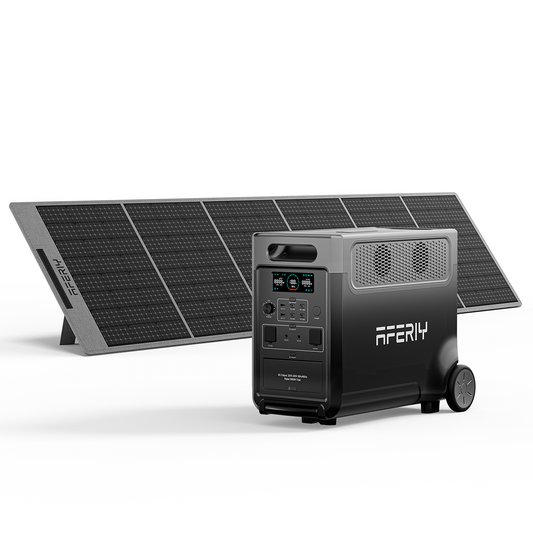
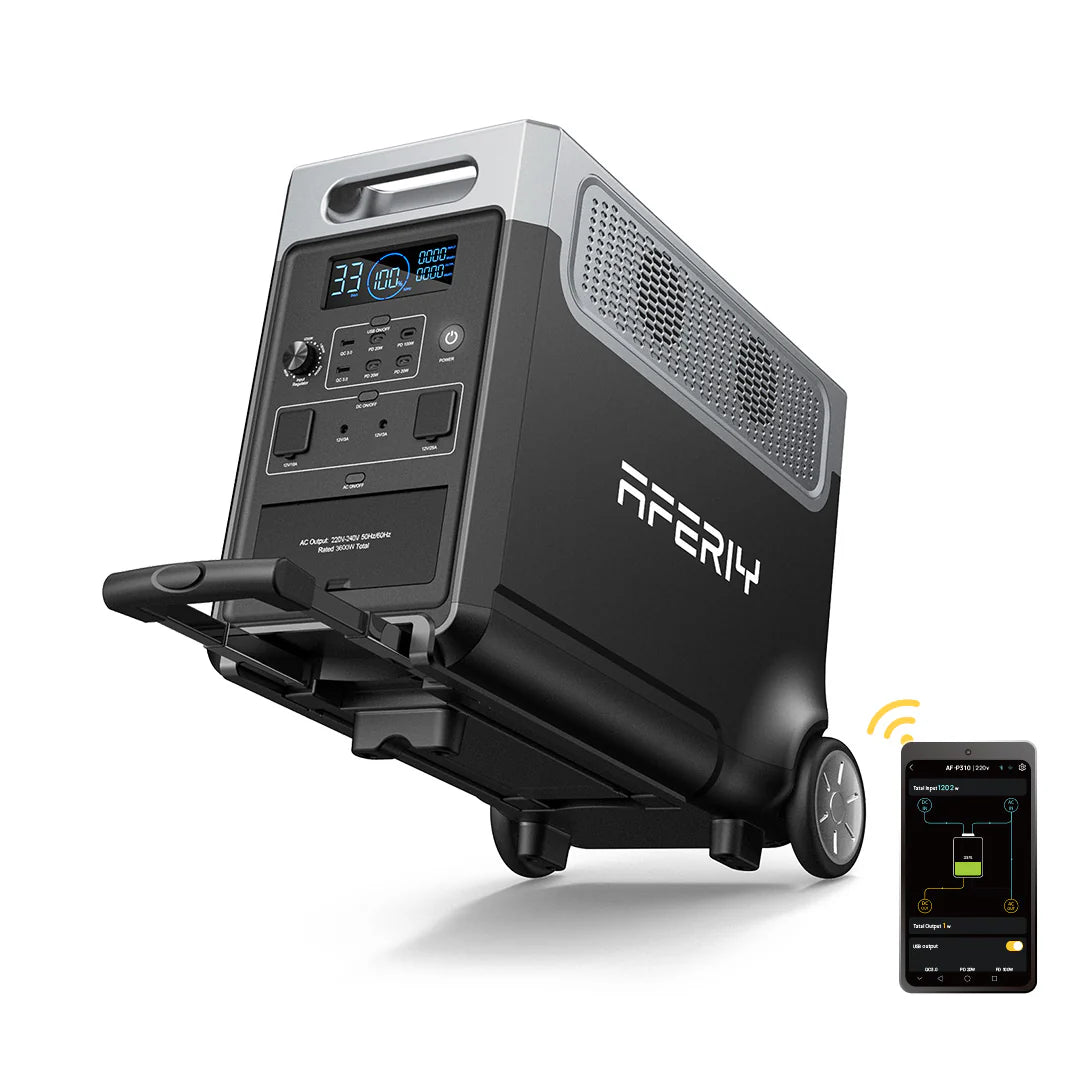
If you want to store solar energy and use it later, a battery-integrated balcony solar system offers another option. The AFERIY PS240 Balcony Solar System combines solar generation with battery storage, with up to 1,200W output and expandable storage from 1,958Wh to 9,792Wh. This allows solar energy generated during the day to be stored for use when solar production is lower.

This is different from a basic plug-in solar system. The current Great Britain plug-in solar route is designed for compliant socket-connected solar devices, while battery-integrated systems have their own requirements. Check the specifications and installation requirements for the specific system before connecting it to a property..
What Should You Check Before Installing Plug-In Solar?
Before buying a plug-in solar system, check both the product and the installation location.
Start by confirming that the specific device meets the requirements for the Great Britain plug-in route. Do not assume that a product described as “balcony solar” or “plug-and-play solar” is automatically compliant.
Next, check where the panels will be installed. They should receive suitable daylight and be securely mounted. Balcony railings, walls and other structures need to be appropriate for the mounting system, particularly where panels are exposed to wind.
If you live in a rented property or flat, check the relevant tenancy agreement, lease or building rules before installation. Permission may be required even if the electrical connection itself is permitted.
The electrical connection should also follow the manufacturer’s instructions. Use the specified connection equipment rather than improvising with unsuitable extension leads or adaptors. If you have concerns about the condition of your property’s wiring or electrical installation, seek professional advice before using the system.
Finally, complete any required notification or registration with the relevant electricity network.
FAQs
Is Plug-In Solar Worth It in the UK?
It can be worthwhile for households with a suitable sunny location and regular daytime electricity use. The UK Government estimates that plug-in solar could provide up to 20% of an average home’s electricity use and save up to £110 a year, although actual results will vary.
Can Plug-In Solar Work on Cloudy Days?
Yes. Solar panels can still generate electricity when the sky is cloudy, although they generally produce less power than under stronger sunlight. Output varies with weather, shading, panel position and the season.
Can Renters Install Plug-In Solar?
Renters may be able to use plug-in solar, but they should check their tenancy agreement and ask their landlord where necessary. Permission may be particularly important if the system needs to be attached to a balcony, wall or other part of the property.
Can Plug-In Solar Power a Home During a Power Cut?
A standard grid-connected plug-in solar system should not be relied on during a power cut. Its inverter is designed to stop operating when the grid supply is unavailable. A suitable battery backup system is required if you need electricity during an outage.
What Happens to Excess Solar Electricity?
If the panels generate more electricity than the home is using, surplus electricity may be exported to the grid depending on the system and applicable arrangements. Do not assume that excess generation will automatically qualify for export payments; check the relevant requirements with your electricity supplier.
Conclusion
Plug-in solar offers a smaller-scale way for households in Great Britain to generate electricity without a conventional rooftop solar system. Solar panels produce DC electricity, which a microinverter converts into AC power for household use during daylight hours.
With compliant systems now available under the 800W framework, households should check product compliance, property permissions, electrical suitability and any required registration before installation. For flats, rented properties and homes without suitable roof space, plug-in solar can provide a practical way to start generating solar electricity on a smaller scale.