




Blackout Kit: What You Need to Prepare for a Power Cut
A power cut can leave your home without lighting, internet access or heating, often with little warning. Even a short outage can be inconvenient if your phone is running low on battery or you rely on electric appliances for everyday tasks. While most UK power cuts are local and short-lived, more widespread outages can last considerably longer.
Putting together a blackout kit means having the essentials within reach when the electricity goes off. From torches and spare batteries to food, water and backup power, a practical emergency kit for blackout situations can help you manage without relying on mains electricity.

What Is a Blackout Kit and Why Do You Need One?
A blackout kit, sometimes called a power cut kit, contains essential supplies to help households cope with a loss of electricity.
Its purpose is slightly different from that of a general first aid kit. Rather than focusing only on medical emergencies, it covers everyday needs that become harder to manage during a power cut, including lighting, charging devices, preparing food and staying warm.
The UK government’s Be Ready campaign recommends keeping enough essential supplies at home for at least three days of disruption. This is a useful target for households, particularly during winter when losing heating and lighting can be more uncomfortable.
You do not need to buy a ready-made kit. Start by checking what you already have at home, then add anything missing based on the number of people in your household and their individual needs.
What Should Be in a Blackout Survival Kit?
A practical blackout survival kit should cover five essentials: lighting, power, communication, food and water, and personal safety. Keep the items together somewhere dry and easy to reach, rather than storing everything in different cupboards.
| Category | What to Include | Why It Matters |
|---|---|---|
| Lighting | LED torch, head torch, lantern, spare batteries | Provides light without using your phone |
| Power | Power bank, charging cables, portable power station | Keeps essential devices running |
| Communication | Battery-powered or wind-up FM radio, contact list | Helps you receive updates |
| Food and Water | Bottled water, tinned food, manual tin opener | Covers basic daily needs |
| Safety and Comfort | First aid kit, medication, blankets, warm clothing | Helps protect health and comfort |
1. Lighting: Torches, Head Torches and Batteries
Keep a reliable torch somewhere you can find it in the dark. A head torch is particularly useful when you need both hands free to prepare food, check a fuse box or look after children.
A battery-powered LED lantern is another useful addition. Unlike a handheld torch, it can illuminate a whole room, making it easier for everyone to move around safely.
Check which batteries your equipment uses and keep compatible spares together. Torches are also safer than relying on candles, which can create a fire hazard if knocked over or left unattended.
2. Power and Charging: Power Banks and Portable Power Stations
A power bank is one of the simplest ways to keep your phone charged during a power cut. Choose one with enough capacity for your household and remember to recharge it after use.
However, a standard power bank is mainly designed for smaller USB devices. It will not normally power appliances that require a mains socket.
If you work from home or want to keep a Wi-Fi router, laptop or compatible household equipment running, a portable power station offers another option. For example, the AFERIY P180 Pro Portable Power Station has a 1,024Wh battery and a 1,800W AC output. Its battery capacity can also be expanded to 5,120Wh with additional batteries.

This gives households more flexibility than a conventional phone power bank. You can connect compatible devices through its AC and USB outputs, provided their power requirements are within the unit’s limits.
3. Communication: Keep a Radio and Contact List
Mobile networks and home broadband may also be affected during a power cut, particularly if local communications infrastructure loses power.
A battery-powered or wind-up FM radio provides another way to receive local news and emergency updates. Make sure you know how to operate it and keep spare batteries if it uses them.
It is also worth writing down important phone numbers, including your electricity network operator’s emergency number. Do not rely entirely on contacts stored on a phone that may run out of battery.
4. Food and Drinking Water
Prepare enough drinking water and ready-to-eat food for everyone in your household. The UK government’s recommended starting point is 3 litres of drinking water per person per day for three days. Additional water is needed for cooking and washing.
Useful food supplies include:
- Tinned meat, fish, fruit and vegetables
- Crackers, nuts and dried fruit
- Long-life snacks and ready-to-eat meals
- A manual tin opener
Choose food that your household already enjoys and that does not need refrigeration or cooking. Remember to include baby food, formula and pet food where necessary.
During an outage, keep your fridge and freezer doors closed as much as possible. This helps maintain their temperature and reduces food waste.
5. First Aid, Medication and Warm Clothing
A basic first aid kit should include plasters, dressings, antiseptic wipes and other everyday medical essentials. Keep prescription medication accessible and check that you have enough for any potential disruption to normal supplies.
For colder weather, add blankets, sleeping bags, warm socks and spare clothing. These are particularly important if your heating system depends on electricity.
Remember to account for children, older relatives and pets. If anyone relies on electrically powered medical equipment, arrange an appropriate backup plan with their healthcare provider and electricity network operator. A standard portable power station should not be assumed suitable for medical equipment without checking its requirements.
What Causes Power Cuts in the UK?
If you are wondering what caused a power cut, there are several common possibilities:
Severe weather: Strong winds, storms, lightning and flooding can damage overhead power lines, underground cables and other electrical infrastructure.
Equipment faults: Transformers, cables and other network components can fail or become damaged, interrupting the supply to nearby properties.
Planned maintenance: Electricity network operators sometimes temporarily disconnect supplies to carry out repairs or upgrade equipment.
Wider network disruption: More extensive problems affecting electricity distribution can interrupt supplies across larger areas.
Most power cuts affect a relatively small area, but serious damage to electricity infrastructure can take longer to repair. Checking updates from your local network operator is the best way to understand what is happening in your area.
How Long Do Power Cuts Last?
How long do power cuts last? It depends on the cause of the outage, the extent of the damage and how many properties are affected.
Most everyday power cuts are short-lived. However, the restoration standards used by Ofgem in Great Britain set different timeframes for qualifying interruptions:
- 12 hours for interruptions outside severe weather conditions.
- 24 hours for severe storm Category 1 conditions.
- 48 hours for severe storm Category 2 conditions.
These are standards linked to network operator obligations and compensation, not guaranteed restoration times for every individual outage.
If your electricity goes off, call 105 free of charge in England, Scotland and Wales to report the problem and contact your local electricity network operator. In Northern Ireland, call 03457 643643.
You can also check your local operator’s website for outage updates and estimated restoration times.
How to Prepare Your Home for a Blackout
Having supplies ready is useful, but knowing what to do when the power goes off matters just as much.
Before an outage: Charge your phones and power banks, check your torches and keep important contact numbers somewhere accessible. If severe weather is forecast, prepare earlier rather than waiting until the electricity goes off.
During an outage: Switch off or unplug non-essential appliances to reduce the risk of unexpected operation when electricity returns. Leave one light switched on so you know when the supply is restored. Avoid opening the fridge and freezer unnecessarily.
Stay safe and warm: Use blankets and extra clothing instead of relying on improvised heating methods. Never use barbecues, camping stoves or fuel-burning generators indoors or in enclosed spaces because of carbon monoxide poisoning and fire risks.
If someone in your household needs additional assistance during a power cut, check eligibility for the Priority Services Register through your electricity supplier.
Is a Portable Power Station Worth Adding to Your Blackout Kit?
For a short power cut, a torch and a charged power bank may be enough. But if you need to keep a laptop, Wi-Fi router, lighting and other essential devices running for longer, a portable power station offers a more capable backup option.
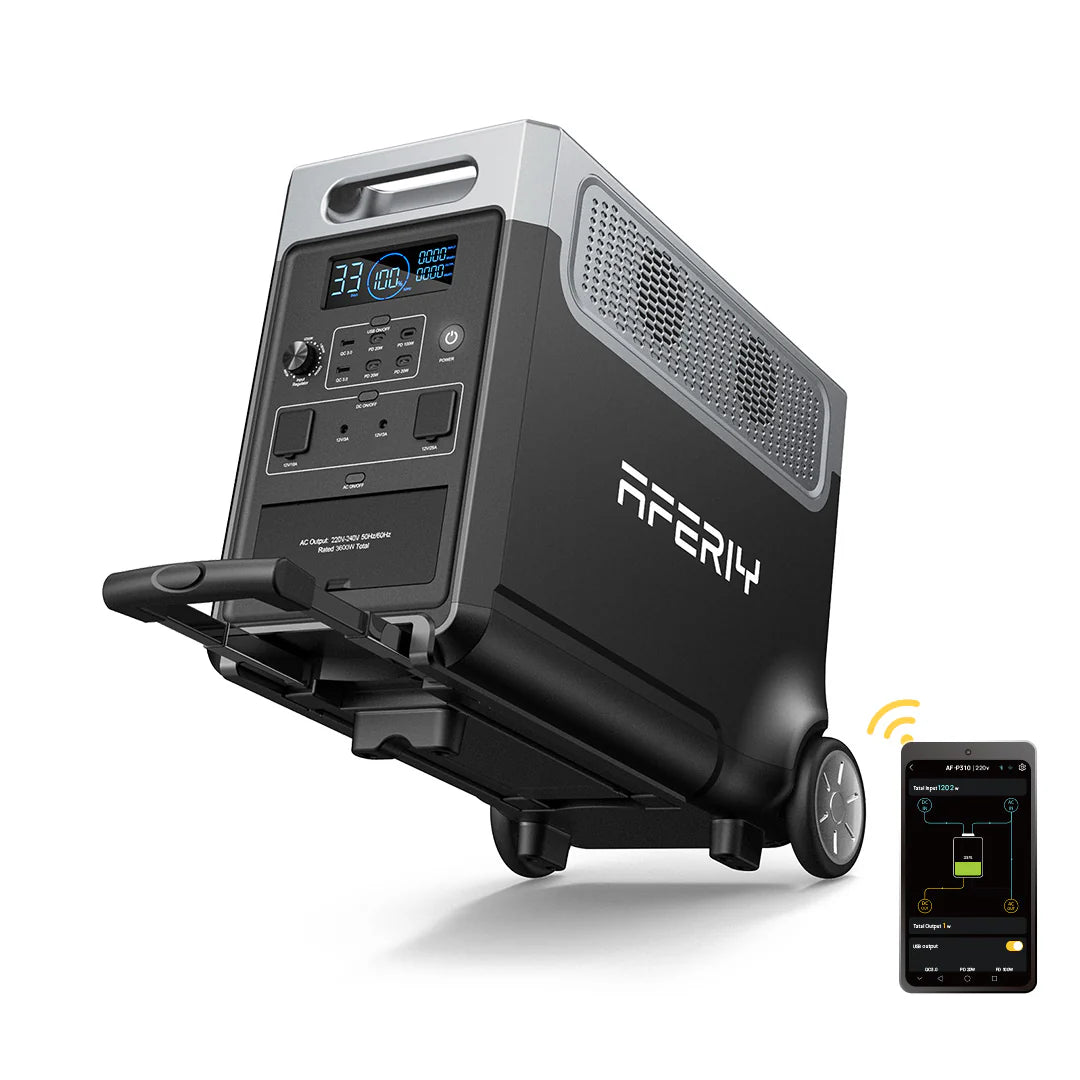
For households with greater power requirements, the AFERIY P310 Portable Power Station provides 3,840Wh of battery capacity and 3,600W of AC output. Its capacity can be expanded to 11,520Wh with two additional expansion batteries, making it suitable for households that want to support more devices or prepare for longer power cuts. It also features multiple AC and USB outputs, allowing compatible devices to be powered simultaneously.

Another useful feature is its support for up to 2,000W of solar input. When sunlight is available, compatible solar panels can provide an additional way to recharge the battery without relying entirely on mains electricity. This can be particularly useful during an extended outage, although actual solar charging performance depends on weather conditions and panel setup.
FAQs
How often should you check your blackout emergency kit?
Check it every six months. Test rechargeable devices, replace expired food and medication, check torch batteries and make sure your supplies still meet your household’s needs.
Can you use a portable power station during a power cut?
Yes. A portable power station can supply electricity to compatible devices through its AC, USB or DC outputs. Check its rated output, battery capacity and connection requirements before using it with an appliance.
What should you do first when the power goes out?
Check whether the outage affects your home or the surrounding area, then use a torch rather than a candle. Leave one light switched on, protect refrigerated food by keeping doors closed and contact your local electricity network operator on 105 in Great Britain.
Can a power station keep your fridge running during a blackout?
Potentially, yes, provided the power station can handle the fridge’s running and starting power requirements. You should also consider how much energy the fridge uses over time, as its compressor cycles on and off. Check both the appliance specifications and the power station’s available capacity before relying on this setup.
Conclusion
A useful blackout kit starts with simple essentials: reliable lighting, spare batteries, drinking water, ready-to-eat food and a way to stay informed. For households with greater electricity needs, a portable power station can provide additional backup for compatible devices. Preparing these supplies in advance makes an unexpected power cut easier to manage, whether it lasts an hour or considerably longer.


