

Balcony Solar UK: A Complete Guide for Beginners
Solar power is becoming more accessible in the UK, but rooftop solar is not practical for every home. Balcony solar, also known as plug-in solar, offers a smaller option for flats, rented properties and homes without suitable roofs. Using compact solar panels and a microinverter, balcony solar generates electricity for household use. Since 27 August 2026, compliant plug-in solar systems have been legally available through the new socket-connected route in Great Britain. This guide explains how balcony solar works, how much energy it can generate, what it costs and what to consider before installing one.

What Is Balcony Solar and How Does It Work?
Balcony solar is a compact solar power system designed for balconies, walls, terraces and other small outdoor spaces where a full rooftop installation may not be suitable. A typical system uses solar panels connected to a microinverter. The panels convert sunlight into DC electricity, while the microinverter converts it into AC electricity that can be used by household appliances. In a plug-in system, the generated electricity is supplied to the home’s electrical circuit through a suitable connection. Appliances operating at the same time can use the solar electricity first, reducing the amount of electricity they need to draw from the grid. This makes balcony solar particularly useful for homes with daytime electricity demand. The actual benefit depends on factors such as panel orientation, shading, available sunlight and how much electricity the household uses while the panels are producing power.
What Do You Need for a Balcony Solar System?
A balcony solar system typically includes solar panels, a microinverter, mounting equipment and the necessary electrical connection. The panels generate DC electricity, while the microinverter converts it into AC electricity for household use.
The mounting system should suit the balcony or outdoor space and provide a secure position with as little shading as possible. For a plug-in system, the equipment must also be designed for the applicable UK connection route rather than simply combining standard solar components and plugging them into a household socket.
If you also want to store solar energy for later use, a battery-integrated balcony solar system is another option. This allows excess solar energy to be stored during the day and used when the panels are producing less power, although battery systems should not be confused with the simple socket-connected plug-in solar route.
Is Balcony Solar Legal in the UK?
Yes. Since 27 August 2026, compliant plug-in solar systems have been legal in Great Britain under the new socket-connected route. A qualifying device can supply up to 800VA to the mains installation, with a maximum current of 3.5A. The government estimates potential savings of up to £110 per year, depending on the system and household electricity use. The equipment must meet the applicable interim product specification and be designed for connection to a UK mains socket using the manufacturer’s supplied plug and connection lead. You cannot simply combine ordinary solar panels and a microinverter and plug them into a socket. The specification also sets requirements for household circuits and electrical protection, so older installations may need to be checked by a qualified electrician. Planning and property permissions are separate from electrical compliance. Depending on the installation, planning rules may apply, while renters may need landlord approval and flat owners may need permission from a freeholder or management company. The socket-connected route applies to Great Britain; Northern Ireland has a separate electricity and connection framework. Relevant network requirements, including G98, also need to be followed.
How Much Energy Can Balcony Solar Generate?
An 800W balcony solar system does not continuously generate 800W. Solar output changes throughout the day according to sunlight intensity, weather, panel angle, orientation, shading and system losses. The UK government’s impact assessment provides useful examples. Under its modelling assumptions, an 800W system mounted at a 30-degree tilt and facing south could produce around 690kWh of electricity per year at maximum potential output. Around 428kWh could be consumed directly in the home under the modelled conditions. A different installation can produce considerably less. An 800W system mounted vertically and facing east or west was modelled at around 378kWh of annual generation, with approximately 272kWh consumed on site. These figures are examples rather than guarantees. The assessment assumes conditions including limited shading, typical UK solar irradiation and a household that is occupied throughout the day. A shaded balcony or a poorly oriented installation may generate substantially less. For this reason, the panel’s rated wattage is only one part of the calculation. A smaller system in a sunny, well-positioned location can sometimes make better use of its available capacity than a larger system that receives significant shading.
How Much Does Balcony Solar Cost in the UK?
The cost of balcony solar depends on the panels, microinverter, mounting equipment and whether battery storage is included. The UK government's modelling puts the initial cost of an 800W plug-in solar system at around £400–£600, with about £500 used as the central assumption. Actual prices vary between products and installations.
The potential savings also depend on how much solar electricity is used at home. Government modelling estimates annual savings of around £110 for an 800W system under favourable conditions, while a vertical east- or west-facing setup could save around £70 per year.
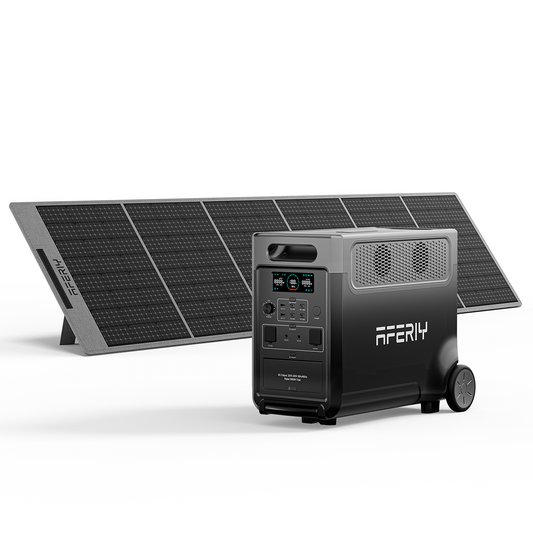
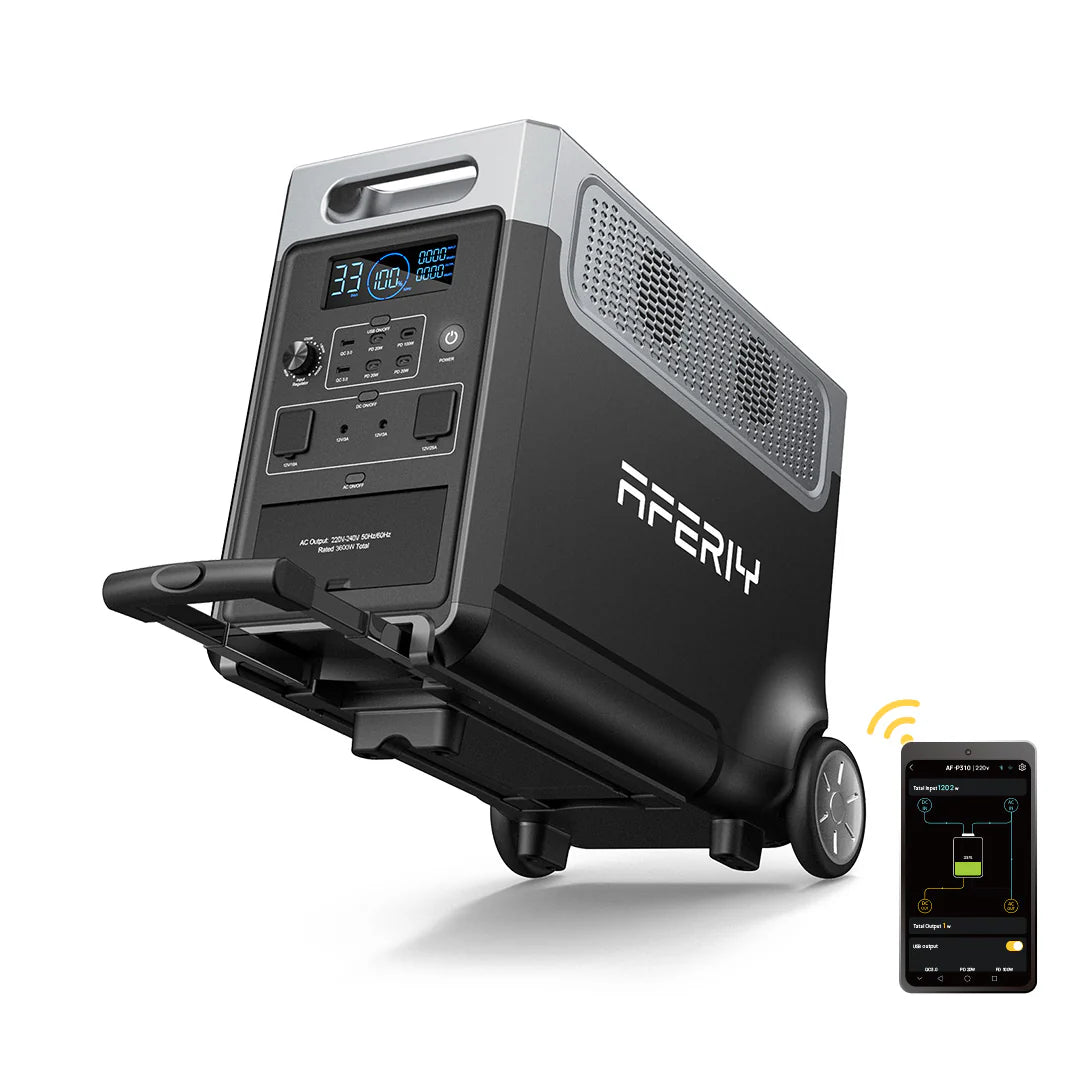
If you want to store solar energy rather than use it only while the panels are generating, a battery-integrated system can provide more flexibility. The AFERIY PS240 Balcony Solar System combines solar generation with battery storage, offering up to 800W–1200W output and 1,958Wh to 9,792Wh of expandable capacity. It can store solar energy during the day for use later, making it a different approach from a basic plug-in solar setup.

The two systems should not be treated as interchangeable. The GB plug-in solar route has its own product and connection requirements, while a battery-integrated balcony system follows the requirements applicable to its specific configuration. Always check the product specifications and installation requirements before connecting a system to a property.
Does Balcony Solar Need a Battery?
No. A battery is not required for a basic balcony solar system. The new GB plug-in solar route is designed around a solar device connected directly to a suitable household socket, and the government’s interim product specification specifically separates this route from battery energy storage systems. Without a battery, solar electricity is most useful when the home is consuming electricity at the same time that the panels are generating it. For example, daytime use from a refrigerator, router, computer or other household equipment can reduce grid electricity consumption. A battery changes how that energy can be used. Instead of relying mainly on daytime consumption, stored solar energy can be used later in the evening or at other times when the panels are not producing electricity. However, adding battery storage does not simply turn a standard plug-in solar kit into a battery-connected system; a different electrical configuration may be required.
Is Balcony Solar Worth It in the UK?
Balcony solar can be worthwhile when the installation has good solar exposure and the household uses a reasonable amount of electricity during daylight hours. It can be particularly attractive for people living in flats or rented properties who cannot install a conventional rooftop system. The smaller scale also makes it possible to generate some solar electricity without undertaking a full rooftop installation. However, the economics depend heavily on the installation. A shaded balcony, north-facing position or location with limited usable sunlight may produce much less electricity than the rated panel capacity suggests. The same applies to households that are rarely home during the day and therefore have less opportunity to use the generated electricity directly. For a household with a suitable roof and enough space, conventional rooftop solar may offer greater generation potential. Balcony solar is better viewed as a smaller option for properties where a full solar installation is impractical or where a household wants a more limited system.
FAQs
Can I install balcony solar on a rented property?
You may be able to, but electrical compliance is separate from property permission. Renters should check their tenancy agreement and obtain any required landlord permission before attaching panels, mounting equipment or installing external equipment.
Can balcony solar work on a cloudy day?
Yes. Solar panels can still generate electricity under cloudy conditions, but output is lower than under strong direct sunlight. The amount produced depends on the weather, panel orientation, shading and the quality of available light.
Do I need to notify my electricity network operator?
Network requirements still apply to plug-in solar. The exact notification or registration process depends on the applicable connection rules and product, so users should follow the manufacturer’s instructions and check the relevant requirements before installation.
Can balcony solar provide electricity during a power cut?
A standard grid-connected plug-in solar system should not be treated as backup power during a grid outage. A suitable battery or portable power station with the appropriate backup configuration is a different solution for maintaining power when the grid is unavailable.
Can balcony solar replace rooftop solar?
Not usually. Balcony solar is a smaller system intended for properties or spaces where conventional rooftop solar is difficult or impractical. A suitable rooftop installation can generally accommodate more panels and provide substantially greater generation capacity.
Conclusion
Balcony solar offers a practical way for UK households to generate electricity where rooftop solar is not suitable. Since August 2026, compliant plug-in solar systems have been available through the new socket-connected route in Great Britain. Its performance depends on factors such as panel position, sunlight and household electricity use. Government modelling shows that an 800W system could generate around 378–690kWh per year under different conditions. For use after sunset or during outages, battery storage or a portable power station can provide additional flexibility, but these are separate from the plug-in solar system itself.