

Are Solar Batteries Worth It for Your Home in the UK?
If you have solar panels, a home battery can store surplus electricity during the day and let you use it later when solar generation falls. This can help increase your use of solar power and reduce electricity bought from the grid.
But are solar batteries worth it for every UK home? Not necessarily. The answer depends on your solar generation, electricity use, export payments and available tariffs.
So, when does a battery make financial sense—and when might the upfront cost outweigh the benefits? Let’s look at the key factors.

How Does a Solar Battery Work?
Solar panels generate electricity during daylight hours, but household electricity use does not necessarily follow the same pattern.
Your solar system will normally supply your home first. If your panels produce more electricity than you are using, the surplus can be used to charge your battery. Once the battery is full, additional electricity can be exported to the grid.
Later in the day, when solar generation falls, your home can use the electricity stored in the battery rather than importing as much from the grid.
In Great Britain, surplus renewable electricity can also be exported under the Smart Export Guarantee (SEG). Households with an energy storage system can still apply for SEG, although suppliers have different tariff terms and requirements.
This means the value of a battery is not simply about storing electricity. It is about deciding whether it is more valuable to use that electricity yourself later or export it and receive an export payment.
When Are Solar Batteries Worth It?
You Regularly Export Surplus Solar
A battery can make more sense if your solar panels generate considerably more electricity than your home uses during the day.
This is common when people are away from home during working hours. Your panels may produce their most electricity around the middle of the day, while much of your household demand occurs later.
Without a battery, unused electricity can be exported. With storage, some of that electricity can be kept for the evening.
However, don’t assume that every exported unit should automatically be stored. Your potential saving depends on the difference between the value of exporting that electricity and the cost of buying electricity later.
You Use More Electricity in the Evening
Household demand often increases later in the day as people return home, cook, use appliances and switch on lighting and entertainment equipment.
A battery can shift some of your daytime solar generation into this period.
This is particularly useful if your home has relatively low daytime consumption but higher evening demand. In contrast, if you already use most of your solar electricity while it is being generated, there may be less surplus for a battery to store.
You Can Use a Time‑of‑Use Tariff
Time‑of‑use tariffs are one of the most important reasons to consider a battery in the UK.
Instead of charging your battery only from solar, some systems can also charge from the grid when electricity is cheaper and discharge later when electricity costs more.
Energy Saving Trust notes that solar and battery tariffs can offer different import and export rates at different times of day.
This can make a battery useful even when your solar generation alone does not provide enough surplus energy to fill it regularly.
However, tariff rates and eligibility can change. A battery should therefore be assessed using your actual electricity usage and the tariff available to you rather than assuming that every time‑of‑use tariff will produce the same savings.
You Want Backup During a Power Cut
For some homeowners, backup power is more important than bill savings.
A suitably configured battery system can keep selected appliances operating during a power cut. However, having a solar battery does not automatically mean your home will remain powered when the grid goes down.
The system needs to support backup operation, and the required equipment and configuration should be confirmed with your installer.
You should also consider the battery’s usable capacity and power output. Running a fridge, router, lights and a few small appliances requires much less power than running an electric cooker, immersion heater or other high‑power equipment.
If you only need backup power for occasional outages, camping trips or specific appliances, a portable power station can be a more flexible alternative to a permanently installed battery.
The AFERIY P180 Pro Portable Power Station offers 1,024Wh of capacity and 1,800W of rated output, making it suitable for essentials such as a fridge, router, lights and laptops. Its under‑10ms UPS can also help keep sensitive electronics running during brief power interruptions.

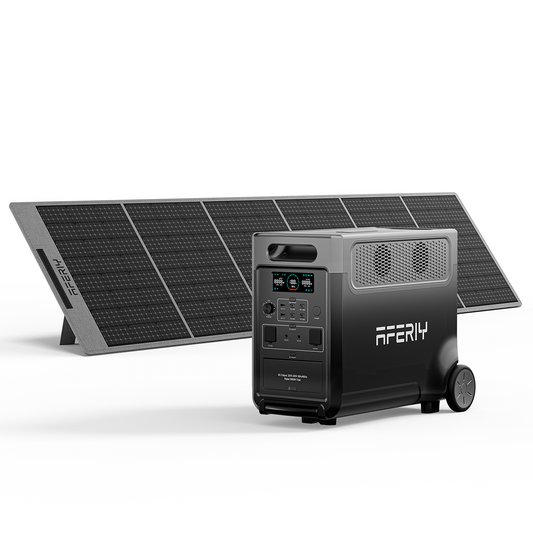
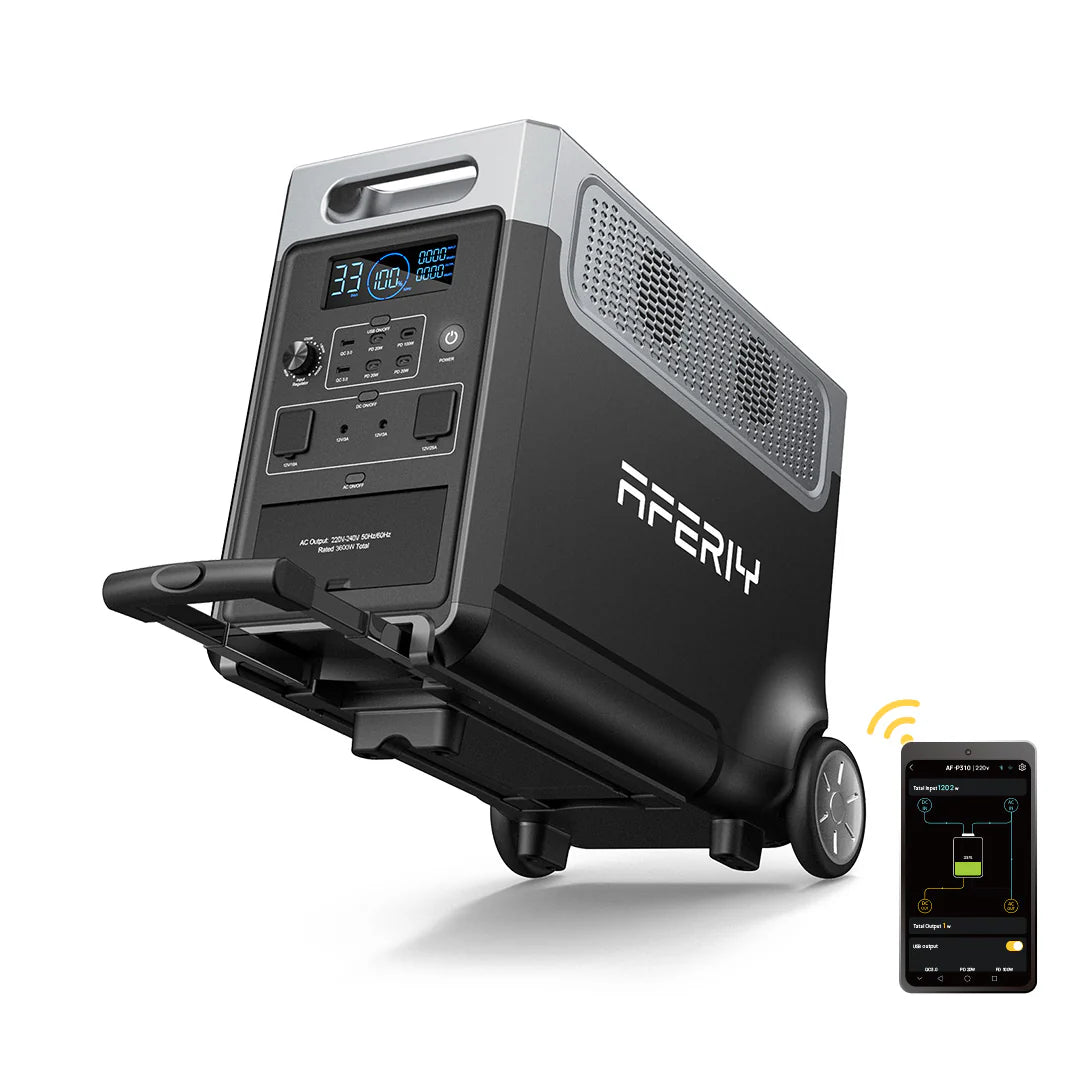
For longer outages or higher‑power appliances, the AFERIY Haven3000 P300 Portable Power Station provides 2,048Wh and 3,000W of output, with expandable capacity up to 10,240Wh. This gives you more flexibility to run multiple appliances or extend backup time without committing to a fixed home battery system.

These portable options are not replacements for whole‑home solar storage, but they can make sense when mobility, occasional backup and flexible power use are more important than permanent energy storage.
When Might a Solar Battery Not Be Worth It?
You Already Use Most of Your Solar Electricity
If you are usually at home during the day and consume much of your solar generation immediately, there may not be enough surplus electricity to justify a large battery.
In this situation, increasing battery capacity may add cost without providing much additional benefit.
The goal is not to maximize storage capacity. It is to match the battery to your actual generation and consumption pattern.
You Receive a Good Export Rate
Exporting surplus electricity is not necessarily a poor alternative to storing it.
SEG tariffs vary between suppliers, and some export arrangements offer more attractive rates than others. Energy Saving Trust also notes that suppliers can offer other solar export arrangements with different conditions.
Before buying a battery, check how much you currently receive for exported electricity and compare that with the value of using the electricity yourself later.
Your Electricity Consumption Is Low
A household with relatively low electricity use may not need a large battery.
Energy Saving Trust says battery requirements depend on factors such as household electricity use and the size of the generation system. It also notes that battery systems vary significantly in size.
Buying more storage than you can regularly use can make the economics less attractive.
The Upfront Cost Is Too High
Battery storage is a significant investment.
Energy Saving Trust currently puts the cost of battery storage at around £1,500 to £10,000, depending on the system and size. Its current guidance gives around £4,600 for a 5kWh battery system.
MoneySavingExpert currently puts the average cost of a standard solar battery system at around £5,000, while noting that prices can range from about £1,500 to £10,000.
The final price can include the battery, inverter, installation and other electrical work, so compare complete installation quotes rather than battery prices alone.
How Much Does a Solar Battery Cost in the UK?
There is no single price that applies to every home.
As a current reference point, Energy Saving Trust gives a range of £1,500–£10,000, with a 5kWh system costing around £4,600.
When comparing systems, look at:
- Usable capacity: how much stored electricity you can actually use.
- Power output: how much electricity the battery can supply at once.
- Round‑trip efficiency: how much energy remains after charging and discharging.
- Warranty: how long the manufacturer covers the battery.
- Total installed cost: the complete price rather than the battery alone.
How Do You Calculate the Payback Period?
A simple starting point is:
Payback period = Net battery cost ÷ Annual battery‑related savings
For example, if a battery costs £5,000 and the battery‑related saving is £400 per year, the simple payback would be 12.5 years.
That calculation does not guarantee the actual return.
Your results will depend on how much surplus solar you generate, your electricity tariff, export payments, battery efficiency, charging and discharging behavior, and how often the battery is used.
Battery economics vary considerably between households and that a battery does not always recover its cost within its expected lifetime, particularly where households already have access to attractive export tariffs.
For that reason, ask for a calculation based on your own electricity consumption rather than relying on a generic annual saving figure.
How Long Do Solar Batteries Last?
Energy Saving Trust currently gives a typical battery lifespan of around 10 to 12 years, although actual performance depends on the battery, operating conditions and how it is used.
The warranty is therefore an important part of the comparison.
Check the warranty period, cycle rating and any guaranteed remaining capacity at the end of the warranty. A battery may also need replacing before your solar panels, so include potential future replacement costs when considering the long‑term economics.
FAQs
Can I add a battery to my existing solar panels?
Yes. A battery can often be retrofitted to an existing solar PV system, although your inverter and electrical setup need to be checked for compatibility.
What size solar battery do I need?
There is no standard size for every home. Your electricity use, solar generation and usage patterns should all be considered when choosing battery capacity.
Can a solar battery charge from the grid?
Yes. Some systems can charge from the grid during cheaper periods and use the stored electricity when prices are higher, particularly with a time‑of‑use tariff.
Can I have a solar battery without solar panels?
Yes. A battery can be charged from the grid and used with a time‑of‑use tariff, even without solar panels.
Are solar batteries subject to VAT in the UK?
Qualifying electrical storage battery installations currently benefit from 0% VAT. The temporary zero rate applies until 31 March 2027, after which the reduced rate is scheduled to apply.
Conclusion
So, are solar batteries worth it in the UK? For some homes, yes—but it depends on how you use electricity.
A battery can be more worthwhile if you regularly export surplus solar, use more electricity in the evening, or can benefit from a time‑of‑use tariff. The case is weaker with low electricity use, high export payments or a high upfront cost.
Compare your solar generation, electricity use, tariff and battery cost before deciding.