

How Many Watts Does a Coffee Maker Use? A UK Power Consumption Guide
Whether you make coffee at home every morning, travel in a caravan, or enjoy off-grid camping, knowing how many watts does a coffee maker use helps you choose the right machine and power source.
Most household coffee machines typically use between 550 and 1,500 watts, although the exact coffee maker wattage depends on the machine type, heating system, brewing method, and capacity. Compact filter machines usually require less power, while pod machines and espresso machines often need more electricity because they heat water quickly.
However, wattage only shows how much power a coffee machine requires while operating. The actual electricity consumption depends on how long it runs and whether features such as warming plates or standby functions continue using energy.
This guide explains how many watts does a coffee machine use, how much it costs to run, and how to choose a suitable solar generator for coffee brewing.

How Many Watts Does a Coffee Maker Use?
The short answer is that most home coffee makers use between 550 and 1,500 watts. The heating element is usually responsible for most of the power demand because it needs to heat water to the correct brewing temperature.
A lower wattage does not always mean lower energy consumption. A machine with a higher watt rating may complete brewing faster, while a lower-powered model may run for a longer period.
The main factors affecting coffee maker wattage include:
- Heating technology
- Water capacity
- Brewing speed
- Coffee machine type
- Additional features such as milk steaming or warming plates
For example, a basic filter coffee machine may only need moderate power, while an espresso machine requires more electricity to maintain precise temperature and pressure.
Coffee Maker Wattage by Type
Different coffee machines require different amounts of power depending on their design.
| Coffee Machine Type | Typical Wattage |
|---|---|
| Compact filter coffee machine | 600–900W |
| Standard filter coffee machine | 900–1,200W |
| Pod coffee machine | 900–1,500W |
| Espresso machine | 1,000–1,500W |
These figures represent typical household machines. Actual power requirements vary by model, so checking the manufacturer’s specifications is the most accurate way to confirm wattage.
Filter Coffee Machines
Filter coffee machines are among the most common options in UK households. Most models use around 600–1,200W, depending on their size and brewing capacity.
Because they usually brew several cups at once, they may run longer than pod machines. Some models also include a warming plate that keeps coffee hot after brewing, which can increase electricity use if left switched on for extended periods.
Pod Coffee Machines
Pod coffee machines generally require around 900–1,500W because they heat water quickly for each serving.
Although the power rating is relatively high, the brewing cycle is usually short. This means the total energy used for one cup can still be relatively low compared with machines that keep coffee warm for longer periods.
Espresso Machines
If you are searching how many watts does a coffee machine use for espresso, most home espresso machines require around 1,000–1,500W.
Espresso machines often need more power because they must maintain stable temperatures and, in some models, generate steam for milk-based drinks such as cappuccinos and lattes.
How Much Does It Cost to Run a Coffee Maker?
The cost of running a coffee maker depends on three main factors:
- The machine’s wattage
- How long it operates
- Your electricity tariffs
Electricity usage is measured in kilowatt-hours (kWh), which is the unit used on UK energy bills.
You can calculate energy consumption using:
Energy used (Wh) = Power (W) × Operating time (hours)
For example, a 1,000W coffee machine running for 6 minutes:
1,000 × (6 ÷ 60) = 100Wh
This equals 0.1kWh of electricity.
The actual running cost depends on your electricity price per kWh, so the same coffee machine may cost different amounts depending on your tariff.
In most cases, the brewing process itself uses relatively little electricity because it only lasts a few minutes. The bigger factor is how the machine behaves after brewing.
For example:
- A warming plate that stays on for hours can use more electricity than the brewing cycle itself.
- A thermal carafe can keep coffee warm without continuous heating.
- Turning the machine off after use can reduce unnecessary standby consumption.
Can a Solar Generator Run a Coffee Maker?
Yes, a solar generator can run many coffee machines, as long as its inverter output and battery capacity meet the coffee maker’s requirements.
Most household coffee machines require around 550–1,500 watts, so the most important factors when choosing a solar generator are:
Continuous AC output — determines whether the coffee machine can operate normally.
Battery capacity — affects how many brewing cycles and additional devices can be supported.
Pure sine wave inverter — provides stable power suitable for appliances with electronic components.
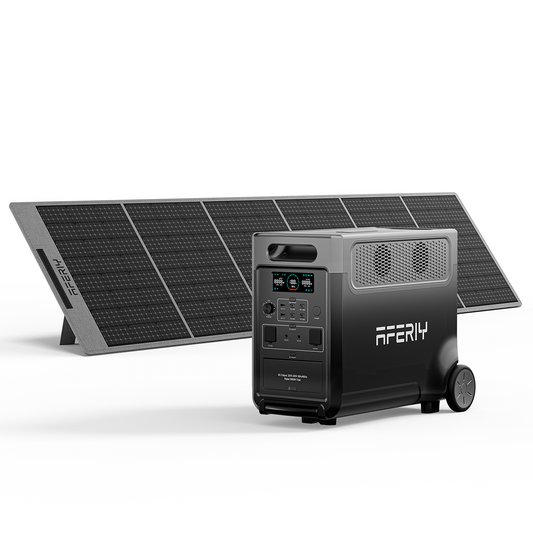
A solar generator typically consists of a portable power station paired with one or more solar panels. The power station stores electricity in its battery and supplies AC power through an inverter, while the solar panels recharge the battery using sunlight. This combination provides a convenient way to run small household appliances, including many coffee makers, when mains electricity is unavailable or when you're travelling off grid.
For occasional coffee brewing, a compact solar generator is usually enough. However, if you plan to make coffee while camping, travelling in a caravan, using a campervan, or preparing drinks during a power cut, a higher-capacity model gives you more flexibility by allowing you to run other essential devices at the same time.
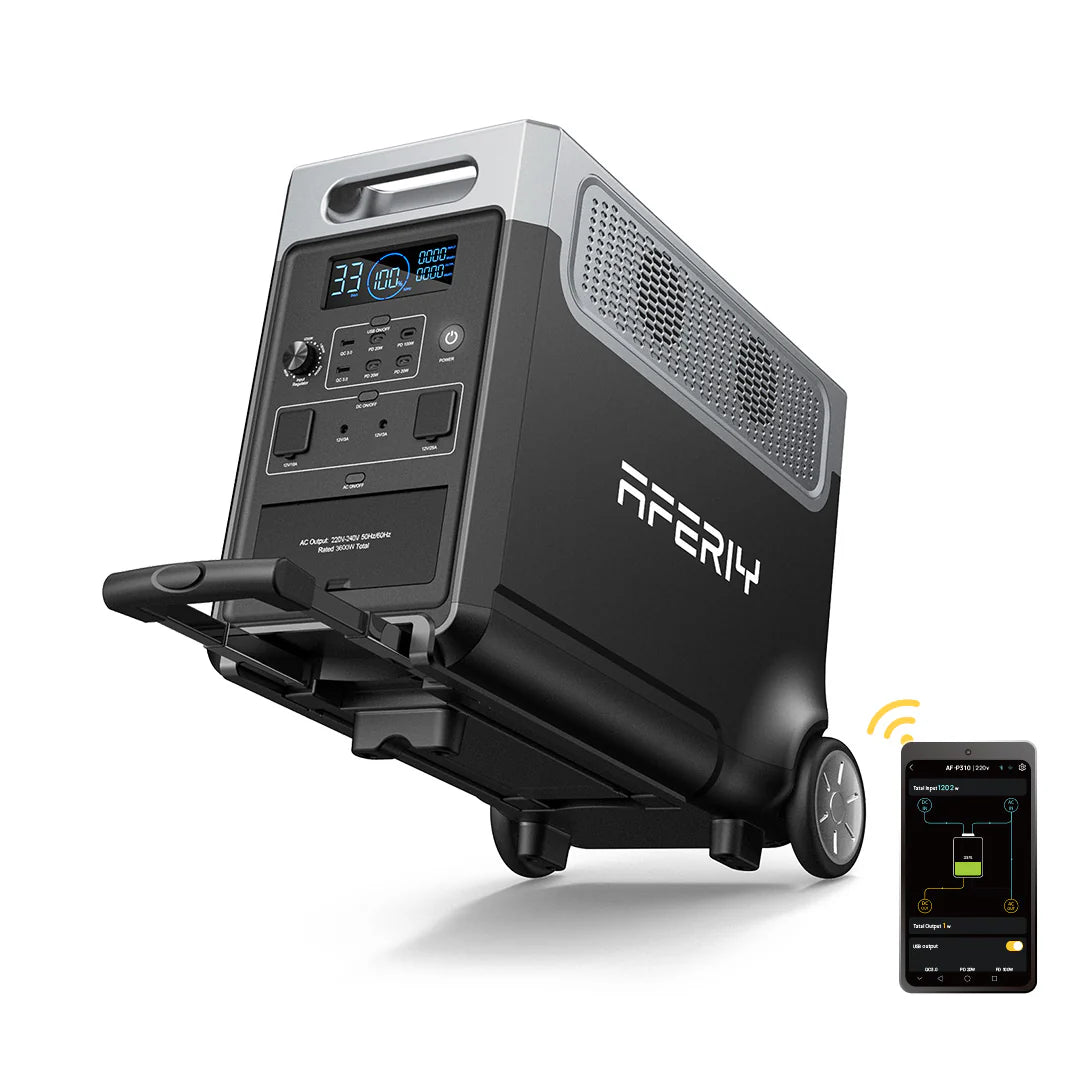
For example, the AFERIY P180 Pro Solar Generator is a practical choice for outdoor coffee brewing. With an 1800W output and 1024Wh LiFePO₄ battery, it can support many standard filter coffee machines and smaller coffee appliances while remaining easier to carry for weekend camping trips or outdoor activities. Its portable size makes it suitable for users who mainly need power for coffee, lighting, charging devices, and other small appliances.

For longer trips or situations where coffee is only one part of your power needs, such as caravan travel, campervan adventures, or emergency home backup, a larger solar generator provides more capacity. The AFERIY P280 Solar Generator offers a 2800W pure sine wave inverter and 2048Wh LiFePO₄ battery, with expandable capacity up to 10,240Wh. This makes it a better fit for users who want to run a coffee machine alongside other higher-demand devices, such as portable refrigerators, lights, laptops, and small kitchen appliances.

The right solar generator depends on how you use your coffee machine. A smaller system is often enough for a morning coffee during a short outdoor trip, while a higher-capacity model is more suitable when coffee is part of a wider off-grid power setup.
How to Reduce Coffee Machine Energy Use
Turn Off the Warming Plate
If your coffee machine uses a hot plate, switching it off after brewing can reduce unnecessary electricity consumption.
A thermal carafe is often a better option for people who drink coffee over several hours.
Brew Only What You Need
Making more coffee than necessary wastes both water and energy. Choosing the correct serving size can reduce overall consumption.
Avoid Standby Power
Some coffee machines continue using small amounts of electricity when left switched on. Turning the machine off completely when not needed can help reduce standby usage.
FAQs
What size inverter do I need to run a coffee maker?
The inverter should provide more continuous output than the coffee maker’s rated wattage. Most standard coffee machines work with a suitable pure sine wave inverter, while higher-powered espresso machines require more capacity.
Can a solar generator run an espresso machine?
Yes, but espresso machines usually require more power than standard filter coffee makers because they need higher temperatures and pressure control. Before connecting one to a solar generator, check the machine’s rated wattage and make sure the inverter can provide enough continuous output. Higher-capacity solar generators are generally better suited for espresso machines, especially when other appliances are running at the same time.
Does a coffee maker use more power than a kettle?
It depends on the appliance type and how long it runs. Both coffee makers and kettles mainly use electricity to heat water, but a coffee maker may consume more total energy if it keeps coffee warm with a hot plate after brewing.
Can a solar generator power a coffee maker during a power cut?
Yes, a suitable solar generator can power many coffee makers during a power cut. The key is ensuring the inverter output is higher than the coffee maker’s wattage and that the battery capacity is sufficient for your expected usage.
Conclusion
Understanding how many watts does a coffee maker use helps you choose the right coffee machine, estimate running costs, and select the correct backup power solution.
Most household coffee makers use between 550 and 1,500 watts, but actual electricity consumption depends on brewing time, machine type, and features such as warming plates.
For UK users who enjoy coffee while camping, travelling in a caravan, or preparing drinks during a power cut, choosing a solar generator with sufficient output, battery capacity, and a pure sine wave inverter can provide a reliable off-grid coffee solution.