

AFERIY P280 Portable Power Station vs Anker SOLIX C2000 Gen 2:Which 2kWh Power Station Is Better for UK Buyers?
Portable power stations have become an increasingly practical investment across the UK, whether for preparing for unexpected power cuts, travelling with a caravan, or enjoying longer off-grid camping trips. A 2kWh power station offers enough capacity to run essential appliances while remaining portable enough for everyday transport.
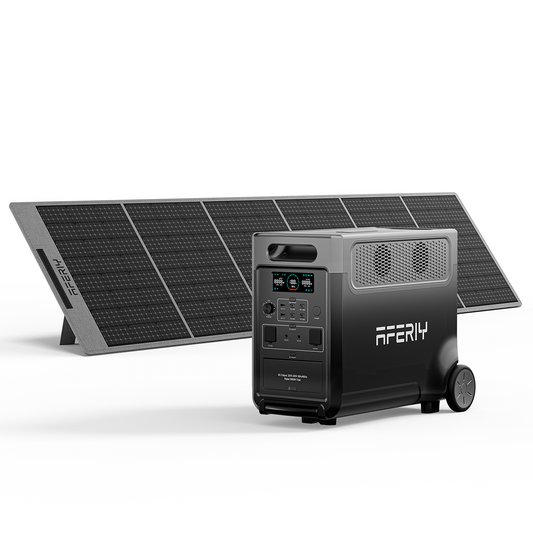
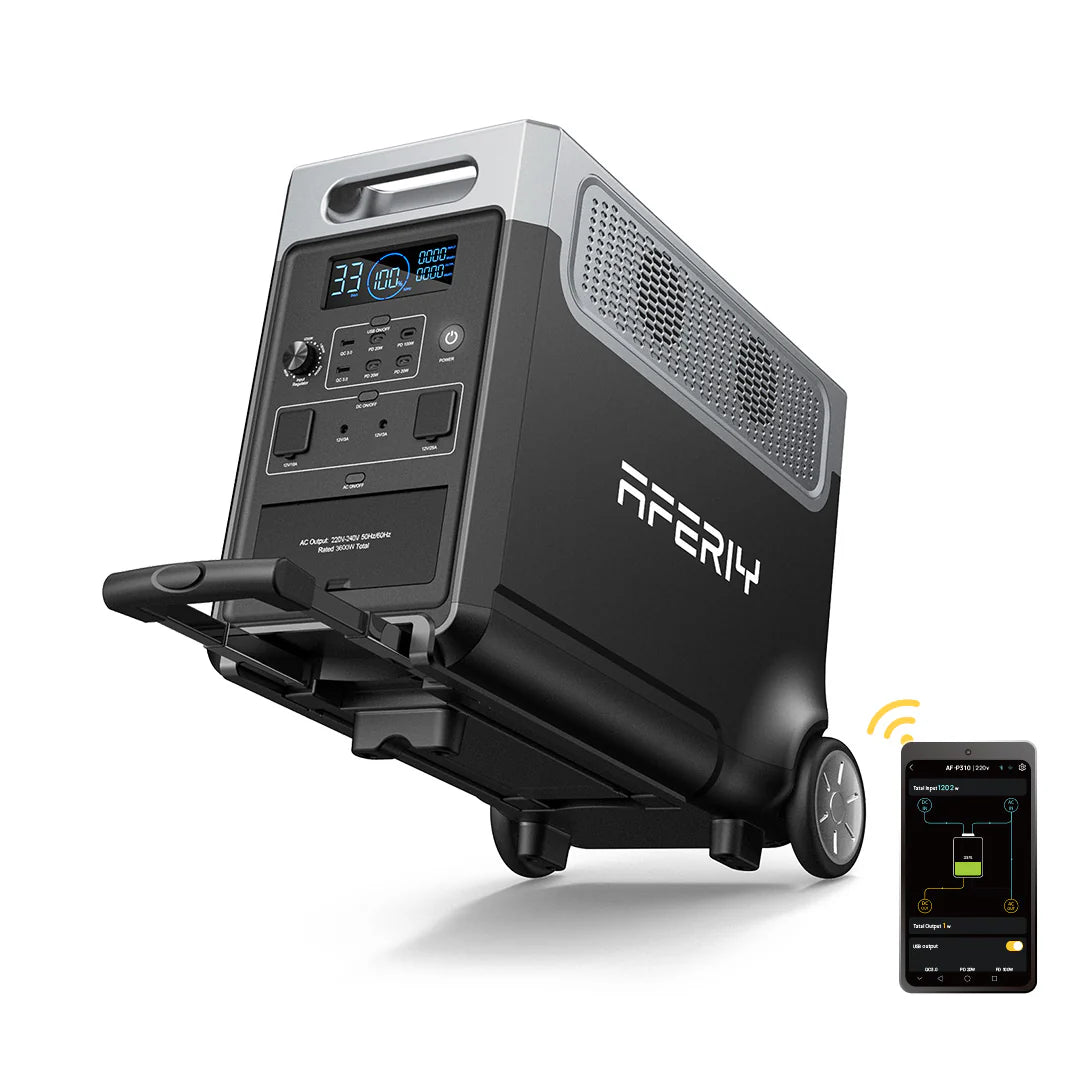
Among the leading options in this category are the AFERIY P280 Portable Power Station and the Anker SOLIX C2000 Gen 2. Both feature a 2,048Wh LiFePO₄ battery, fast charging, UPS functionality and smart app control, but they are designed with different priorities in mind. The AFERIY P280 Portable Power Station focuses on delivering higher output, greater solar charging capability and expandable capacity, while the C2000 Gen 2 is built around portability and fast day-to-day charging.
This comparison goes beyond the specification sheet to explore how each model performs in practical situations, helping you decide which power station best suits your energy needs.

Why Battery Capacity Isn’t the Whole Story
Although both models offer the same 2,048Wh battery capacity, choosing between them involves more than comparing watt-hours. Output power, solar charging capability, portability and future expandability all affect how the power station performs in everyday use. The following comparison focuses on these practical differences to help you identify which model best suits your requirements.
Specifications at a Glance
| Feature | AFERIY P280 Portable Power Station | Anker SOLIX C2000 Gen 2 |
|---|---|---|
| Battery Capacity | 2048Wh | 2048Wh |
| Battery Chemistry | LiFePO₄ | LiFePO₄ |
| Continuous Output | 2800W | 2400W |
| Peak Output | 5600W | 4000W Peak |
| Solar Input | 1200W (Dual MPPT) | 800W |
| AC Recharge | ≈80% in 55 min | ≈80% in 45 min |
| Expandable Capacity | Up to 10,240Wh | Up to 4,096Wh |
| UPS | <10ms | 10ms |
| App Control | Wi-Fi & Bluetooth | Wi-Fi & Bluetooth |
| Weight | 21.6kg | 18.9kg |
Although they share the same battery capacity, the specification table highlights two distinct approaches. The AFERIY P280 Portable Power Station prioritises higher power output and greater flexibility, while the Anker model focuses on portability and rapid charging.
Power & Appliance Compatibility
The inverter plays a much bigger role than battery capacity when running high-powered appliances.
The AFERIY P280 Portable Power Station provides 2800W continuous AC output, allowing it to power demanding household equipment such as electric kettles, microwaves, coffee machines, air fryers and many workshop tools. Independent testing also showed it operating a dual-basket air fryer drawing around 2400W, demonstrating stable performance under sustained heavy loads.

The Anker SOLIX C2000 Gen 2 offers 2400W continuous output, which is still sufficient for everyday devices including portable fridges, televisions, laptops and most kitchen appliances. For occasional camping or emergency use, many households are unlikely to notice the difference.
However, users who expect to run several appliances simultaneously or operate equipment with higher startup demands will benefit from the P280’s additional inverter capacity.
Charging and Energy Recovery
Charging performance isn’t just about speed — it also determines how quickly a power station is ready for its next job.
For mains charging, the Anker SOLIX C2000 Gen 2 has a slight advantage, reaching approximately 80% charge in around 45 minutes under ideal conditions. The AFERIY P280 Portable Power Station follows closely with up to 1800W AC charging, achieving around 80% in approximately 55 minutes according to independent testing. In practice, both minimise downtime compared with previous generations of portable power stations.
The larger difference appears when charging from solar panels.
The AFERIY P280 Portable Power Station accepts up to 1200W of solar input through dual MPPT controllers, while the C2000 Gen 2 supports 800W. Although British weather is often unpredictable, the higher input limit allows the AFERIY P280 Portable Power Station to recover more energy whenever sunlight conditions are favourable. For users spending several days off-grid, this can reduce reliance on mains charging and improve overall energy independence.
Battery Expansion: Planning for the Future
Both models use long-life LiFePO₄ batteries, but their expansion options differ considerably.
The AFERIY P280 Portable Power Station supports additional battery modules, increasing total capacity to 10,240Wh. This makes it suitable for users planning a scalable home backup or off-grid system.

The Anker SOLIX C2000 Gen 2 expands to 4,096Wh, providing sufficient capacity for most recreational use while keeping the system simpler and easier to manage.
Portability & Everyday Practicality
A power station’s specifications only tell part of the story. If you regularly move it between your home, car and caravan, portability can have just as much impact as battery capacity.
At 18.9kg, the Anker SOLIX C2000 Gen 2 is around 2.7kg lighter than the 21.6kg AFERIY P280 Portable Power Station. That difference makes it easier to lift into a vehicle, carry across a campsite or reposition around the house when needed.

If portability is your top priority, the lighter Anker model has a clear advantage. However, buyers who mainly intend to keep the power station at home are unlikely to notice the additional weight in day-to-day use.
Best for Different Users
Best for Home Backup
Recommended: AFERIY P280 Portable Power Station
When protecting your home against power cuts, output power and future flexibility are usually more important than carrying weight.
The AFERIY P280 Portable Power Station combines a 2800W pure sine wave inverter, 1200W solar charging, UPS switching below 10ms, and support for expansion up to 10,240Wh, making it better suited to powering multiple household appliances during extended outages.

Best for Caravan Holidays
Recommended: Anker SOLIX C2000 Gen 2
For caravan owners who mainly need power for lighting, portable fridges, laptops and small kitchen appliances, the lighter Anker model is easier to transport without sacrificing everyday performance.
Its compact design also makes storage simpler when travelling between destinations.

Best for Longer Off-Grid Stays
Recommended: AFERIY P280 Portable Power Station
If solar charging will be your primary energy source, the AFERIY P280 Portable Power Station offers a clear advantage.
Its dual MPPT controllers and 1200W maximum solar input allow larger solar arrays to recharge the battery more quickly whenever weather conditions permit. While UK sunshine can be unpredictable, the higher charging ceiling provides greater flexibility during multi-day camping trips or remote working away from the grid.
Best for DIY and Workshop Applications
Recommended: AFERIY P280 Portable Power Station
DIY equipment often places greater demands on a power station than everyday electronics.
With 2800W continuous output, the AFERIY P280 Portable Power Station provides additional headroom for power tools, compressors and other high-demand equipment, making it the more capable choice for garage projects and trade work.
Common UK Appliances: Which Model Is Better?
| Appliance | Recommended Choice | Why |
|---|---|---|
| Electric kettle | AFERIY P280 Portable Power Station | Higher inverter output handles high-wattage heating appliances more comfortably. |
| Air fryer | AFERIY P280 Portable Power Station | Provides additional capacity for sustained cooking loads. |
| Microwave | AFERIY P280 Portable Power Station | Better suited to appliances with high power demands. |
| Mini fridge | Either | Battery capacity is identical, so runtime is broadly comparable. |
| Broadband router | Either | Very low power consumption. |
| Television | Either | Both can comfortably support home entertainment devices. |
| Laptop & mobile charging | Either | Both offer multiple USB outputs and app-based monitoring. |
| CPAP machine | Either | Suitable for overnight use, depending on individual device settings. |
For low-power electronics, the practical difference between the two models is relatively small. The AFERIY P280 Portable Power Station becomes more advantageous when powering heating appliances or several higher-wattage devices simultaneously.
Strengths and Trade-offs
AFERIY P280 Portable Power Station
Advantages
- Higher 2800W continuous output
- Expandable to 10,240Wh
- 1200W dual MPPT solar input
- Fast 1800W AC input
- Long-life LiFePO₄ battery rated for 4,000+ cycles
- Wi-Fi and Bluetooth app control
- Up to 7-year warranty after eligible registration in supported markets
Considerations
- Heavier than the Anker SOLIX C2000 Gen 2
- Better suited to stationary use than frequent transport
Anker SOLIX C2000 Gen 2
Advantages
- Lower weight for easier transport
- Very fast mains charging
- Polished app experience
- Well suited to frequent travel and outdoor activities
Considerations
- Lower continuous output
- Smaller expansion capacity
- Lower maximum solar input
FAQs
Can a 2kWh portable power station run multiple kitchen appliances at the same time?
It depends on the combined power draw of the appliances rather than battery capacity alone. A 2kWh power station can easily operate low-power devices simultaneously, but appliances such as kettles, microwaves and air fryers place much heavier demands on the inverter. In this comparison, the AFERIY P280’s 2800W continuous output provides more headroom for running high-wattage appliances together than the 2400W inverter in the Anker SOLIX C2000 Gen 2. Before buying, check the rated wattage of the appliances you expect to use at the same time.
Is a 2kWh portable power station enough for a typical caravan holiday?
For many weekend or short touring trips, yes. A 2,048Wh power station can comfortably support essentials such as lighting, a portable fridge, laptops, camera batteries and small cooking appliances. If your trips regularly last several days without access to mains power, it’s worth paying closer attention to solar charging capability and battery expansion, as these features have a greater impact on long-term off-grid use than battery capacity alone.
Does dual MPPT charging make a noticeable difference?
Dual MPPT controllers can improve charging flexibility when using multiple solar panels or larger solar arrays. While actual charging speed always depends on weather conditions and panel configuration, a system capable of accepting 1200W of solar input has greater potential to recover energy than one limited to 800W. This becomes more valuable for users who spend several consecutive days away from mains electricity or plan to expand their solar setup over time.
Should I prioritise portability or higher output?
There’s no universal answer — it depends on how you’ll use the power station most often. If you’ll regularly lift it into a vehicle or move it around campsites, a lighter model is likely to be more convenient. However, if your priority is running more demanding appliances during home power cuts or building a larger backup system, higher inverter output and expansion capability usually provide greater long-term value. Choosing the model that matches your primary use case is generally more important than focusing on a single specification.
Final Verdict
Both models perform well within the 2kWh category, but they target different priorities.
The AFERIY P280 Portable Power Station is the stronger choice for buyers looking for a more capable backup power solution with greater flexibility for future expansion and heavier household use.
The Anker SOLIX C2000 Gen 2 is better suited to users who value portability, fast recharging and a compact design for regular travel.
Ultimately, the best choice depends less on battery capacity and more on how — and where — you expect to use your portable power station.