

How Many Amps Does a Microwave Use? UK Guide to Power Consumption
Whether you’re buying a new microwave, preparing for a power cut or choosing a backup power solution for a caravan or campsite, it’s useful to understand how many amps a microwave uses.
In the UK, most microwaves operate from a standard 230V mains supply, but the current draw varies depending on the appliance’s input power, design and cooking functions. Knowing these electrical requirements helps you choose the right power source, estimate electricity consumption and avoid overloading sockets.
This guide explains how to calculate microwave amps, what affects current draw and how to choose a suitable backup power solution for home or outdoor use.

How Many Amps Does a Microwave Use?
In the UK, most household microwaves draw between 4.5 and 8 amps during normal operation. Compact models typically require less current, while larger combination microwaves with grill or convection functions may draw close to 10 amps.
Although manufacturers often advertise cooking power (for example, 800W or 1000W), the actual electrical load is based on the input power, which is always higher because energy is also used by the magnetron, cooling fan, turntable motor and electronic controls.
The table below shows the typical current draw for common household microwaves using the UK’s standard 230V supply.
| Microwave Cooking Power | Typical Input Power | Approx. Amps (230V) | Best For |
|---|---|---|---|
| 700W | 1,100W | 4.8A | Small kitchens, student accommodation |
| 800W | 1,250W | 5.4A | Everyday reheating and defrosting |
| 900W | 1,400W | 6.1A | Family households |
| 1000W | 1,550W | 6.7A | Frequent cooking and meal preparation |
| 1200W | 1,800W | 7.8A | Large families and combination microwaves |
Most domestic microwaves remain well within the capacity of a standard 13A UK plug. However, it’s still advisable to avoid using several high-power kitchen appliances — such as kettles, toasters and microwaves — on the same extension lead at the same time, as this can overload the circuit.
How to Calculate Microwave Amps
Calculating a microwave’s current draw is straightforward once you know its input power.
Formula
Amps = Input Watts ÷ Voltage
In the UK, household electricity is supplied at 230V, so simply divide the appliance’s input wattage by 230.
Example
A microwave with an input power of 1,550W draws:
1,550 ÷ 230 = 6.7A
For the most accurate result, check the appliance’s rating label — normally found on the back or inside the door frame — and look for Input Power or Rated Input rather than the advertised cooking wattage.
What Affects Microwave Current Draw?
A microwave’s current draw isn’t fixed. Even appliances with similar cooking power can have different electrical requirements depending on how they’re designed and used.
Appliance Design
Solo microwaves generally consume less electricity than combination models that include grill or convection functions. When multiple heating elements operate together, the appliance draws more power from the mains.
Cooking Tasks
Heating a cup of tea for one minute requires far less electricity than cooking a frozen meal or baking with convection mode. Longer cooking programmes naturally increase energy consumption, even if the current draw remains similar.
Power Efficiency
Modern inverter microwaves deliver a steady level of energy instead of repeatedly switching the magnetron on and off. Besides improving cooking performance, this can reduce unnecessary energy waste during longer cooking cycles.
Household Electrical Supply
UK homes operate on a 230V mains supply, allowing microwaves to achieve the same power output while drawing fewer amps than equivalent appliances used in countries with 120V electricity. As a result, most domestic microwaves can be safely operated from a standard 13A fused socket.
Can You Plug a Microwave into a Standard UK Socket?
In most cases, yes. The majority of household microwaves sold in the UK are designed to operate from a standard 230V BS 1363 13A socket, so they can be plugged directly into a normal wall outlet without requiring a dedicated circuit.
Most microwaves are supplied with a 13A fused plug, which provides additional protection if the appliance develops a fault or draws excessive current. Appliances rated between 700W and 3,000W are typically fitted with a 13A fuse, making microwaves well suited to the UK’s standard electrical system.
That said, it’s worth following a few good practices:
- Plug the microwave directly into a wall socket whenever possible.
- Avoid using multi-way adaptors or overloaded extension leads.
- Don’t operate other high-power appliances, such as kettles, air fryers or toasters, from the same extension lead while the microwave is running.
- Check that the plug, cable and socket remain in good condition and show no signs of overheating.
Reliable Power Solutions for Home and Outdoor Cooking
A microwave is one of the most demanding small appliances to run from battery power. While many models are labelled as 800W or 1000W, their actual input power is often 1,200–1,800W, meaning not every portable power station is capable of powering them reliably. Before choosing a backup power solution, it’s important to consider three key factors: continuous AC output, battery capacity, and solar charging capability. Matching these specifications to your microwave ensures stable operation and enough runtime for your intended use, whether you’re preparing for a power cut or cooking away from the grid.
AFERIY P010 Solar Generator – A Lightweight Choice for Camping and Day Trips
If your main goal is to heat drinks or ready meals while camping, fishing or enjoying a day outdoors, carrying a large power station isn’t always practical. The AFERIY P010 Solar Generator is designed for users who value portability over extended runtime.
With 800W AC output and a 512Wh LiFePO₄ battery, it can support smaller microwaves and everyday essentials such as phones, tablets, cameras and LED lights. Its compact size makes it easy to pack into a car or caravan without taking up valuable storage space. For occasional microwave use and short outdoor adventures, it offers a convenient balance between portability and dependable performance.

AFERIY P210 Solar Generator – Built for Caravans, Motorhomes and Weekend Getaways
When travelling in a caravan or motorhome, a microwave is often just one of several appliances you need to power. You may also want to run a portable fridge, coffee machine, laptop or lighting without constantly worrying about battery levels.
The AFERIY P210 Solar Generator provides 2,400W AC output and a 2,048Wh LiFePO₄ battery, giving it enough capacity to power most household microwaves while supporting multiple devices simultaneously. With solar charging compatibility, it can recharge during the day, making it well suited to weekend camping, touring holidays and off-grid stays where access to mains electricity is limited.

AFERIY P310 Solar Generator – Dependable Backup for Extended Power Cuts
During a prolonged power cut, most households need to power far more than a microwave. Refrigerators, Wi-Fi routers, lighting, phones and other essential appliances quickly become priorities, so battery capacity becomes just as important as inverter output. Emergency preparedness guidance also recommends planning ahead for extended outages with reliable backup power.
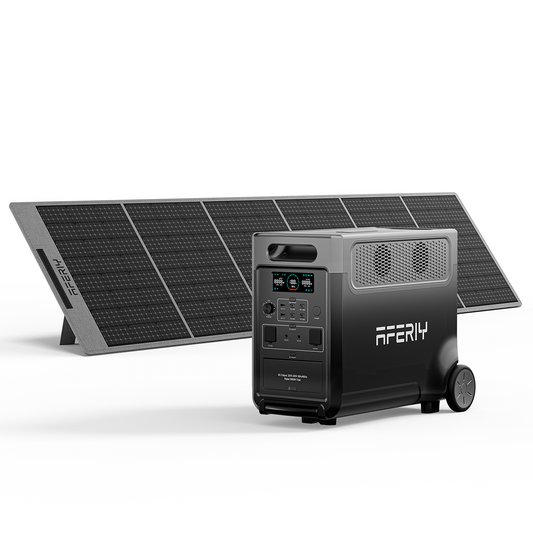
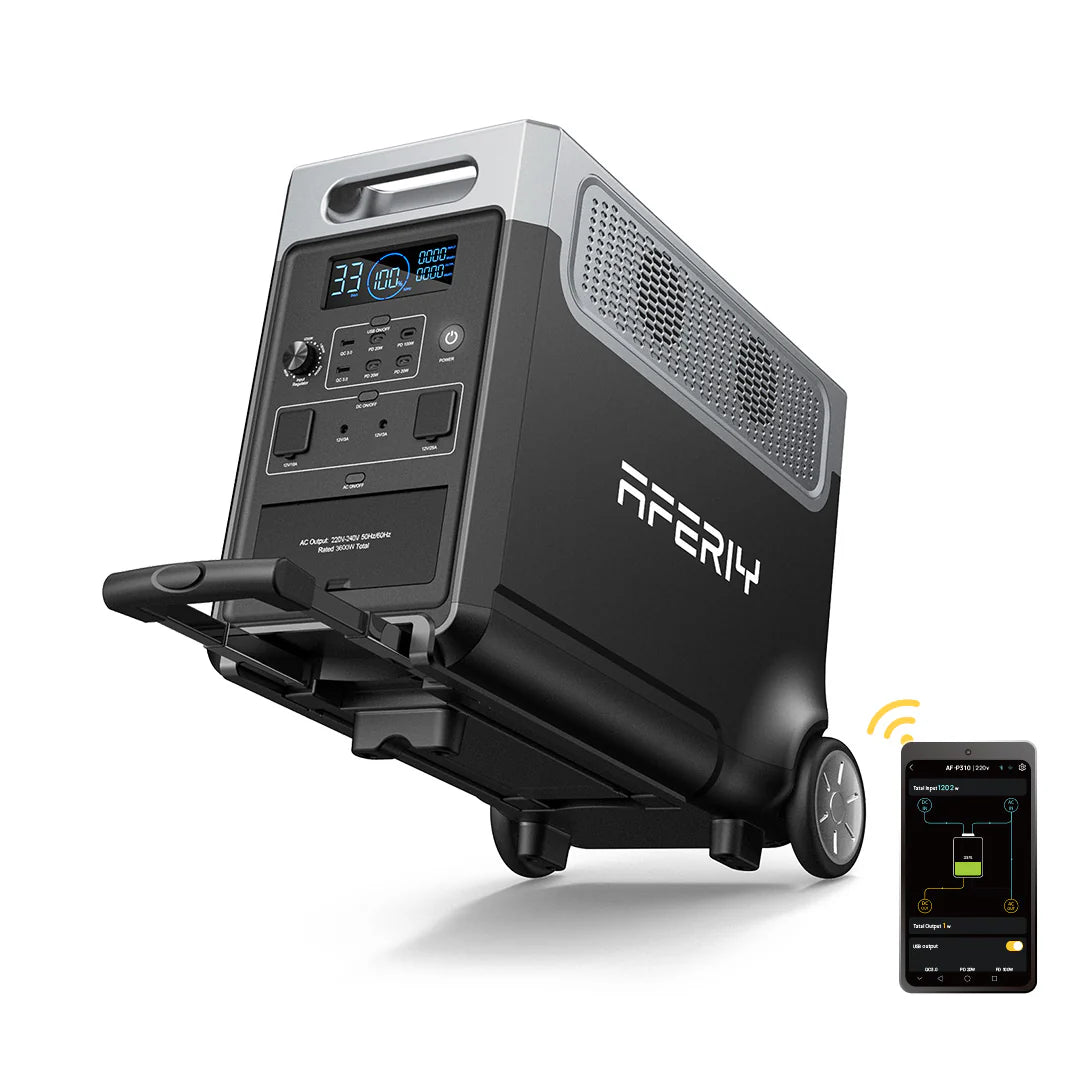
Designed for these demanding situations, the AFERIY P310 Solar Generator features a 3,600W pure sine wave inverter, a 3,840Wh LiFePO₄ battery, and expandable capacity up to 11,520Wh. With support for up to 1,600W of solar input, it can be recharged using solar panels during longer outages, helping reduce reliance on the grid. Whether you’re preparing meals at home during a blackout or living off-grid for several days, the P310 provides the output and capacity needed to keep essential appliances running reliably.

Simple Ways to Reduce Microwave Electricity Use
Although microwaves are already more energy-efficient than many conventional cooking appliances, a few simple habits can help reduce electricity use even further. They can also extend the runtime of a portable power station or solar generator during off-grid use.
Choose the right power setting. Full power isn’t always necessary. Lower settings are ideal for defrosting, melting ingredients and reheating delicate foods, helping them cook more evenly while avoiding unnecessary energy use.
Cover and stir food. A microwave-safe cover traps steam and speeds up cooking, while stirring food halfway through helps eliminate cold spots and reduces the need for extra heating.
Use the microwave for smaller meals. Reheating leftovers or cooking single portions is usually quicker and more energy-efficient than using a conventional oven, as microwaves require little or no preheating.
Keep it clean. Regularly wiping the cavity and turntable helps maintain efficient performance and consistent heating, especially when the appliance is used frequently.
FAQs
Is a higher-wattage microwave always better?
Not necessarily. A higher-wattage microwave generally cooks food more quickly, but it isn’t always the best choice for every household. If you mainly reheat drinks or ready meals, a 700W–800W model may be perfectly adequate. Larger households or people who cook more frequently may benefit from a 900W–1000W microwave, which reduces cooking times without significantly increasing day-to-day running costs.
Can I use an extension lead with a microwave?
It is generally safer to plug a microwave directly into a wall socket. If an extension lead is unavoidable, choose one that is fully unwound, correctly rated for high-power appliances and in good condition. Avoid connecting multiple kitchen appliances to the same extension lead, as this can increase the risk of overheating.
How can I tell if my microwave is becoming unsafe to use?
Stop using the appliance if you notice sparking (arcing), unusual buzzing noises, burn marks inside the cavity, repeated fuse failures, or if the casing becomes excessively hot during normal operation. These signs may indicate an electrical fault that should be inspected by a qualified technician before the microwave is used again.
Conclusion
Most household microwaves in the UK draw around 5–8 amps on a standard 230V supply, although the exact current depends on the appliance’s input power rather than its advertised cooking wattage.
Before choosing a backup power solution, always check the microwave’s rating label to confirm its electrical requirements. Matching the appliance with a suitably sized portable power station or solar generator helps ensure safe, reliable operation whether you’re preparing for a power cut, travelling in a caravan or enjoying off-grid adventures.