

How Many Watts Are in a Megawatt? MW to Watts Explained
Electricity is measured using different units depending on the scale of the system. A small household appliance may use only a few hundred watts, while solar farms, wind farms, and power stations are often measured in megawatts (MW).
So, how many watts in a megawatt? The answer is:1 megawatt (MW) = 1,000,000 watts (W)
Understanding this conversion helps explain how large energy systems are measured and how these figures compare with everyday power needs, including solar generation, battery storage, and home backup solutions.

What Is a Megawatt and Why Is It Used?
A watt (W) is the standard unit used to measure electrical power. It shows how much power a device consumes or how much power an electrical system can deliver at a specific moment.
For everyday household products, watts are usually enough to describe power requirements. For example, LED lights, phone chargers, laptops, and small kitchen appliances are commonly rated in watts because their electricity demand is relatively low.
However, as electricity systems become larger, using millions of watts becomes inconvenient. This is why larger units such as kilowatts and megawatts are used.
The relationship between these units is:
1 kilowatt (kW) = 1,000 watts
1 megawatt (MW) = 1,000 kilowatts
1 megawatt (MW) = 1,000,000 watts
If you are wondering what is a megawatt, it is simply a unit used to describe large‑scale power capacity. Megawatts are commonly used for renewable energy projects, commercial electricity systems, industrial facilities, and power generation infrastructure.
For UK households, electricity usage is usually discussed in kilowatt‑hours (kWh) rather than megawatts because homes operate on a much smaller scale.
How Many Watts Are in a Megawatt?
The answer to how many watts are in a megawatt is: 1 MW = 1,000,000 W
The conversion formula is:
Megawatts × 1,000,000 = Watts
For example:
| Megawatts (MW) | Kilowatts (kW) | Watts (W) |
|---|---|---|
| 0.001 MW | 1 kW | 1,000 W |
| 0.01 MW | 10 kW | 10,000 W |
| 0.1 MW | 100 kW | 100,000 W |
| 0.5 MW | 500 kW | 500,000 W |
| 1 MW | 1,000 kW | 1,000,000 W |
| 5 MW | 5,000 kW | 5,000,000 W |
This conversion shows the difference between household energy equipment and large‑scale electricity generation.
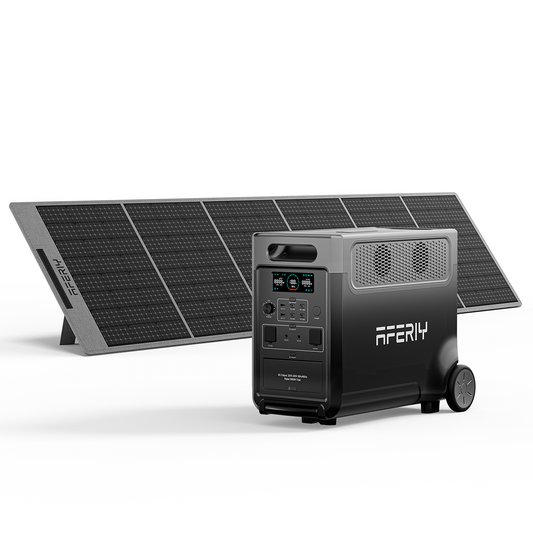
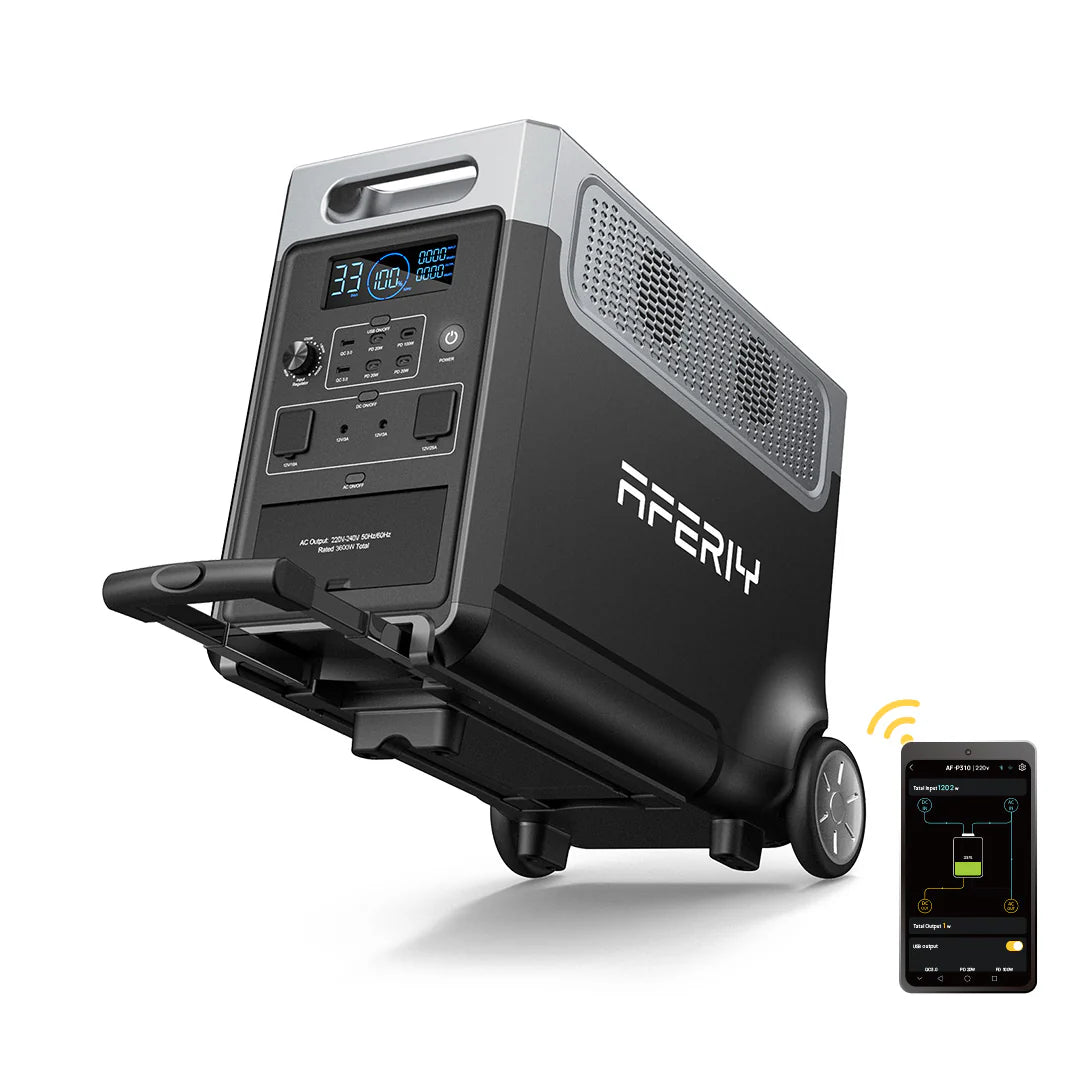
For example, a portable power station rated at 3,000W provides substantial power for household appliances, camping equipment, and emergency backup. However, it represents only: 3,000W ÷ 1,000,000W = 0.003 MW
This is why portable power stations and home energy products are normally rated in watts or kilowatt‑hours, while utility‑scale projects use megawatts.
How Much Electricity Can 1 Megawatt Generate?
1 megawatt (MW) system can generate 1 megawatt of power at a given moment, but the total amount of electricity it produces depends on how long it operates and the conditions it operates under. A megawatt measures power capacity, while the total electricity generated over time is measured in megawatt‑hours (MWh).
For example, a 1 MW solar installation can deliver up to 1 MW of power under suitable conditions, but its actual electricity generation will vary throughout the day. Factors such as sunlight availability, weather conditions, system efficiency, and operating time all affect the final energy output.
This means a solar system may produce more electricity during periods of strong sunlight and less during cloudy weather or at night. The same principle applies to other energy systems, where the rated power capacity does not always represent the amount of electricity generated over a specific period.
To measure total electricity production, energy professionals use megawatt‑hours (MWh). A system operating at 1 MW continuously for one hour would generate 1 MWh of electricity.
How Many Solar Panels Are Needed for 1 Megawatt?
A 1 megawatt (MW) solar system typically requires around 2,000–2,500 solar panels, depending on the wattage of each panel. The higher the output of an individual panel, the fewer panels are needed to reach the same 1 MW capacity.
The calculation is straightforward:
Number of solar panels = 1,000,000W ÷ Solar panel wattage
For example:
400W solar panels:
1,000,000W ÷ 400W = approximately 2,500 panels
500W solar panels:
1,000,000W ÷ 500W = approximately 2,000 panels
In real solar projects, the final panel count may vary depending on the module type, system design, installation space, and efficiency requirements. Commercial and utility‑scale solar installations often choose higher‑output panels because they can reduce the number of modules required and make better use of available land.
In comparison, residential solar systems in the UK are usually measured in kilowatts (kW) rather than megawatts because they are designed around individual household electricity consumption. A home solar installation focuses more on matching daily energy usage, available roof space, and electricity demand rather than achieving MW‑level capacity.
How Many Homes Can 1 Megawatt Power?
1 megawatt (MW) power source can typically provide electricity for hundreds of homes, with estimates often ranging from several hundred to around 1,000 households, depending on electricity consumption, location, climate, and how the power is used.
However, there is no fixed number because a megawatt measures power capacity at a specific moment, while homes consume electricity over time. A household with higher energy demand, such as one using electric heating or consuming more electricity during peak periods, will require more power than a home with lower energy usage.
For example, the same 1 MW capacity could support more homes in areas with lower average electricity consumption, but fewer homes where households have higher heating, cooling, or appliance demands. This is why energy providers usually provide estimates rather than a single exact figure when explaining how many homes a power project can supply.
To understand the full picture, it is also important to consider megawatt‑hours (MWh), which measure the total amount of electricity generated over time. A 1 MW system operating continuously for one hour would produce 1 MWh of electricity, but the number of homes supported depends on how much energy each household uses during that period.
MW vs MWh: Understanding Power and Energy Storage
One of the most important concepts when comparing energy systems is understanding the difference between MW and MWh.
A megawatt (MW) measures power. It answers: How much electricity can a system provide at one moment?
A megawatt‑hour (MWh) measures energy. It answers: How much electricity can a system produce or store over time?
For example:
A 1 MW system operating continuously for one hour produces: 1 MW × 1 hour = 1 MWh
Large‑scale battery storage projects often use MWh to describe storage capacity, while home energy products usually use kWh because household electricity needs are much smaller. One MWh equals 1,000 kWh.
How Much Battery Storage Does a Home Need?
Most UK homes typically need around 5–10 kWh of battery storage, while households with higher electricity consumption, electric vehicles, heat pumps, or longer backup requirements may need a larger system. The right battery size depends on how much electricity you use, which appliances you want to keep running, and how long you need backup power.
For many homeowners, the main goal of battery storage is not to power every appliance indefinitely, but to keep essential devices running when electricity is unavailable or to store energy for later use. A smaller system may be enough for basics such as lighting, Wi‑Fi routers, phones, and small electronics, while larger systems are more suitable for supporting higher‑demand appliances or longer periods away from the grid.
When choosing a battery system, it is important to understand the difference between power output (W) and battery capacity (Wh or kWh). Output power determines which appliances can operate at the same time, while battery capacity determines how long the stored electricity can last. A system with high output but limited capacity may run powerful appliances briefly, while a larger battery with insufficient output may struggle with higher‑power devices.
For users who mainly need portable backup during camping trips, RV travel, or occasional power cuts, the AFERIY P180 Pro Portable Power Station provides a practical solution by offering enough stored energy for everyday electronics and essential appliances without requiring a permanent installation.

For households needing more flexibility during longer power cuts or situations where more demanding appliances need to be supported, the AFERIY P300 Portable Power Station is a better fit. Its larger energy storage capacity makes it suitable for extended backup scenarios, off‑grid use, and users who want more available power when mains electricity is unavailable.

Ultimately, choosing the right battery size is about matching storage capacity with real electricity usage rather than simply selecting the largest system available. Understanding your daily energy needs, essential appliances, and expected backup duration will help you avoid both under‑sizing and paying for unused capacity.
FAQs
Is a megawatt bigger than a kilowatt?
Yes. A megawatt is a much larger unit of power. One megawatt equals 1,000 kilowatts or 1,000,000 watts.
Why are electricity systems measured in megawatts?
Megawatts make it easier to describe large power systems such as solar farms, wind farms, and power stations without using extremely large numbers.
Are home batteries measured in megawatts?
Usually not. Home batteries are generally measured in kilowatt‑hours (kWh) because household energy requirements are much smaller than grid‑scale storage systems.
Conclusion
A megawatt represents a much larger scale of electricity than most households use every day. Knowing that 1 megawatt equals 1,000,000 watts makes it easier to understand renewable energy projects, battery storage systems, and electricity generation.
For UK homeowners, the more practical measurements are usually watts, kilowatts, and kilowatt‑hours. Understanding how power output and energy capacity work together can help you choose the right backup power solution for your actual needs.