

What Will a 5000-Watt Generator Run? Everything You Need to Know
Power cuts, outdoor adventures, and off-grid projects all have one thing in common—they require a dependable source of electricity. That’s why many homeowners and outdoor enthusiasts ask the same question: what will a 5000-Watt generator run?
A 5000-Watt generator sits in the middle of the portable generator market. It offers enough output to power many essential appliances without the size, fuel consumption, or cost of larger standby systems. Whether you need emergency backup for your home, electricity for a caravan holiday, or power for a small workshop, a 5000W generator can cover a wide range of applications.
So, what will a 5000-Watt generator power. This guide explains what a 5000-Watt generator can realistically power, how to calculate your electrical load, and how to decide whether a traditional generator or a portable power station is the better solution.

How Much Power Does a 5000-Watt Generator Actually Provide?
Many people assume that a 5000W generator can simply power any appliance with a rating below 5000-Watts. In reality, generators have two different power ratings that should always be considered before connecting electrical equipment.
- Running watts refer to the continuous power a generator can supply during normal operation.
- Starting watts (also called surge watts) are the short bursts of additional power required when motor-driven appliances switch on.
Appliances such as refrigerators, freezers, sump pumps and portable air conditioners often draw two to three times their normal running wattage for a few seconds during start-up. If several of these appliances start simultaneously, the combined surge demand may exceed the generator’s capacity even though the normal running load appears well within the limit.
For this reason, it’s always good practice to leave some spare capacity rather than operating a generator at its maximum output. Keeping the continuous load below around 80% of the rated capacity not only reduces the risk of overload but can also improve fuel efficiency and extend the generator’s service life.
What Can Run on a 5000-Watt Generator?
Now let’s answer the question most buyers have: what can run on a 5000-Watt generator?
A generator of this size is capable of powering a broad selection of household appliances, communication equipment, kitchen devices and outdoor tools. While some high-demand appliances require careful load management, most everyday electrical items fall comfortably within its operating range.
| Appliance | Running Watts | Starting Watts (Approx.) | Suitable? |
|---|---|---|---|
| Refrigerator | 100–800W | 500–2,000W | ✅ Yes |
| Freezer | 300–700W | 1,000–2,000W | ✅ Yes |
| LED Lighting | 10–100W | Same as running watts | ✅ Yes |
| Broadband Router | 10–30W | Same as running watts | ✅ Yes |
| Television | 50–200W | Same as running watts | ✅ Yes |
| Laptop | 50–100W | Same as running watts | ✅ Yes |
| Mobile Phone Charger | 5–30W | Same as running watts | ✅ Yes |
| Microwave | 600–1,500W | Same as running watts | ✅ Yes |
| Coffee Machine | 800–1,500W | Same as running watts | ✅ Yes |
| Electric Kettle | 2,000–3,000W | Same as running watts | ✅ Usually |
| Portable Air Conditioner | 1,000–1,800W | 2,000–3,000W | ✅ Usually |
| Circular Saw | 1,200–2,000W | 2,000–4,000W | ✅ Usually |
| Air Compressor | 1,500–2,500W | 3,000–5,000W | Depends |
| Electric Heater | 1,500–3,000W | Same as running watts | Limited |
| Central Air Conditioner | 3,000W+ | 5,000W+ | Depends |
Although these figures provide a useful guide, every appliance is different. Always check the manufacturer’s specifications before connecting high-power equipment, particularly anything with an electric motor or compressor.
What Can You Run on a 5000-Watt Generator at the Same Time?
Understanding what can you run on a 5000-Watt generator is often more useful than looking at individual appliances. In practice, you’ll normally power several devices together rather than using only one at a time.
Below are three typical scenarios that demonstrate how a 5000W generator may be used.
Example 1: Home Emergency Backup
During a power cut, most households only need to keep essential appliances running.
| Appliance | Running Watts |
|---|---|
| Refrigerator | 200W |
| Broadband Router | 20W |
| Television | 120W |
| Six LED Lights | 80W |
| Laptop | 60W |
| Mobile Phone Chargers | 20W |
Estimated Running Load: 500W
This leaves plenty of spare capacity for occasional use of a microwave or coffee machine while maintaining reliable operation.
Example 2: Camping and Caravan
For caravan holidays or extended camping trips, a 5000W generator can comfortably support everyday comforts.
| Appliance | Running Watts |
|---|---|
| Portable Fridge | 80W |
| Electric Kettle | 2,200W |
| Coffee Machine | 1,000W |
| Lighting | 60W |
| Phone & Laptop Charging | 120W |
Estimated Running Load: 3,460W
This setup remains within the capacity of a typical 5000W generator, although it’s still advisable not to operate every appliance continuously.
Appliances a 5000-Watt Generator May Not Run
A common misconception is that a 5000W generator can power every appliance in a home. In reality, some electrical equipment requires more power than a portable generator of this size can safely provide.
The table below highlights appliances that may exceed the generator’s capacity or require careful load management.
| Appliance | Can It Run? | Notes |
|---|---|---|
| Electric Shower | ❌ No | Typically requires 7–10kW. |
| Electric Oven | ⚠️ Limited | May only power one heating element at a time. |
| Electric Hob | ⚠️ Limited | High continuous power demand. |
| Heat Pump | Usually No | High startup current. |
| Central Air Conditioner | Depends | Larger units often exceed surge capacity. |
| Electric Water Heater | Usually No | High continuous load. |
| Tumble Dryer | Depends | Heating element and motor draw significant power. |
This doesn’t necessarily mean these appliances can never be used. If they’re the only device connected and their startup demand falls within the generator’s limits, some models may operate successfully. However, trying to run several high-power appliances together is likely to exceed the available output.
For most households, prioritising essential appliances is a far more practical approach than attempting whole-home backup.
Petrol Generator or Portable Power Station?
Traditional petrol generators remain an excellent option when high continuous output and long runtime are the top priorities. They’re widely used on construction sites, farms and remote locations where refuelling is straightforward.
However, more homeowners are now choosing portable power stations for everyday backup because they offer several practical advantages. They’re quieter, require virtually no routine maintenance and produce no exhaust emissions during operation. They can also be safely used indoors when operated according to the manufacturer’s instructions.
If your priority is powering essential appliances during a power cut, camping regularly or reducing reliance on fuel, a portable power station may be a more convenient alternative.
AFERIY P210 – Compact Backup for Everyday Essentials
The AFERIY P210 Portable Power Station is designed for users who need reliable electricity for everyday devices without carrying a large generator.

Its portable design makes it well suited to:
- Caravan holidays
- Weekend camping trips
- Home emergency backup
- Outdoor photography
- Charging laptops, phones and small appliances
For users whose priority is convenience, quiet operation and low maintenance, the P210 provides dependable backup without the noise or fuel requirements of a traditional petrol generator.
AFERIY P310 – More Capacity for Extended Backup
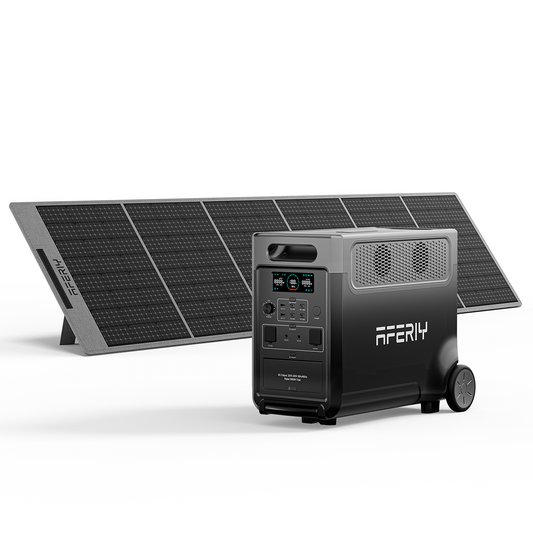
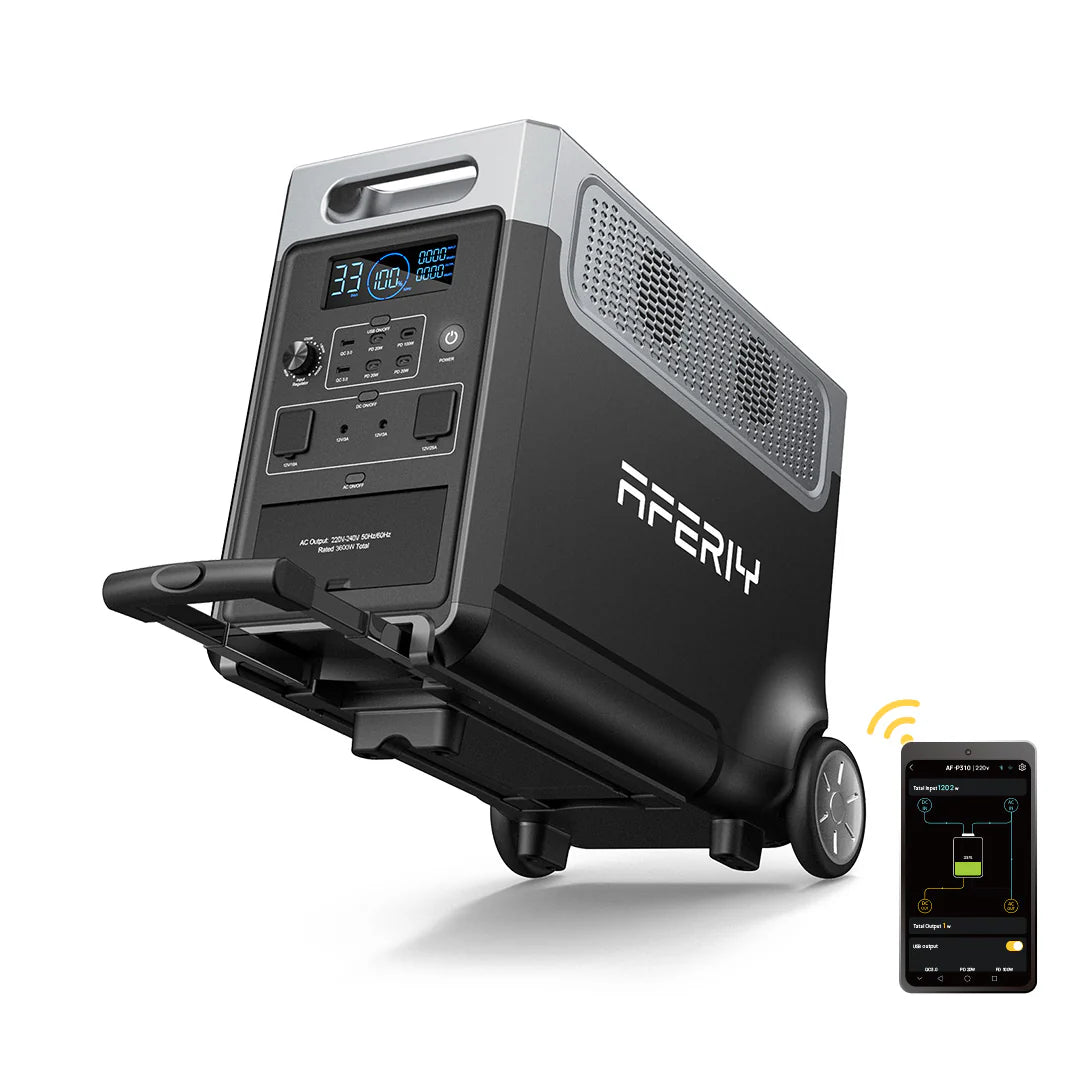
If your power requirements are higher, the AFERIY P310 Portable Power Station offers a substantial increase in both output and battery capacity.

With 3,600W AC output and a 3,840Wh LiFePO₄ battery, it’s capable of powering larger household appliances for extended periods. Solar charging compatibility also makes it an attractive option for off-grid living, caravan travel and emergency preparedness.
Unlike conventional generators, the P310 doesn’t require petrol, oil changes or regular engine servicing, making it a cleaner and lower-maintenance solution for users who value convenience.
How to Choose the Right Backup Power Solution
Choosing the right power source isn’t simply about selecting the highest wattage. The best option depends on how and where you plan to use it.
Estimate Your Essential Load
Start by listing the appliances you expect to use during a power cut or outdoor trip. Add together their running wattage and check the startup requirements of any motor-driven equipment.
Leave Room for Startup Surges
Avoid operating your generator at full capacity. Leaving around 20% spare capacity helps accommodate temporary startup loads while improving reliability.
Think About Runtime
A generator’s wattage determines what it can power, while its fuel tank or battery capacity determines how long it can keep those appliances running.
Choose the Right Technology
If you regularly require high-output power for heavy-duty equipment, a petrol generator remains a practical choice. If your priorities are quiet operation, minimal maintenance and solar charging, a portable power station may provide a better long-term solution.
FAQs
Can a 5000-Watt generator run a fridge freezer?
Yes. Most domestic fridge freezers require between 100W and 300W while running, although the compressor may briefly demand several times that amount during start-up. A 5000W generator can usually handle this without difficulty.
Can you boil a kettle with a 5000-Watt generator?
In most cases, yes. Electric kettles typically consume between 2,000W and 3,000W, so a 5000W generator has sufficient capacity. However, avoid using several other high-power appliances at the same time.
Is a 5000-Watt generator enough during a power cut?
For most households, yes. It can usually power essential appliances such as refrigeration, lighting, broadband equipment, televisions and charging devices. Large heating appliances and whole-house backup generally require a higher-capacity system.
How long will a petrol generator run?
Runtime depends on fuel tank size, engine efficiency and electrical load. Many portable petrol generators can operate for around 8–12 hours on a full tank under moderate load, although actual runtime varies between models.
Conclusion
Understanding what will a 5000-Watt generator run is about more than simply checking a power rating. The combination of running wattage, startup requirements and the number of appliances operating at the same time all determine what your generator can realistically handle.
For most homes, a 5000W generator provides enough capacity to keep essential appliances running during a power cut, support outdoor activities and power a range of tools or equipment. If you’re looking for quieter operation, lower maintenance and the flexibility of solar charging, a portable power station such as the AFERIY P210 or AFERIY P310 offers a practical alternative.
Before making a purchase, calculate your essential electrical load, consider how long you need backup power and choose the solution that best matches your everyday needs. This approach will help ensure reliable power whenever and wherever you need it.