

How Many Watts Does a CPAP Use? CPAP Battery Backup Guide
For people who rely on CPAP therapy every night, having a reliable power supply is essential. A power cut, camping trip, or travelling away from home can interrupt your sleep therapy if you do not have a suitable backup solution.
Many users search how many watts does a CPAP use because they want to understand whether a battery, portable power station, or solar generator can keep their CPAP machine running overnight.
Although CPAP machines are designed to be energy-efficient, their actual power consumption depends on several factors, including the device model, humidifier settings, heated tubing, pressure settings, and the way the machine receives power.
In most cases, a CPAP machine uses around 20–100 watts, but choosing a backup power source depends more on battery capacity (Wh) than just watt output.

How Many Watts Does a CPAP Use?
When asking how many watts does a CPAP machine use, the answer depends on the type of setup and accessories being used.
The CPAP machine itself usually consumes relatively little electricity. However, additional features designed to improve comfort, such as heated humidifiers and heated tubing, can significantly increase power requirements.
Typical CPAP power consumption:
| CPAP Setup | Typical Power Consumption |
|---|---|
| CPAP machine only | 20–40W |
| CPAP with heated humidifier | 40–70W |
| CPAP with heated humidifier and heated tubing | 60–100W |
A basic CPAP without heating features may operate at the lower end of this range, while a fully equipped setup may require considerably more energy.
For users choosing a backup power solution, it is better to estimate based on your highest expected usage. This helps ensure the CPAP continues operating throughout the night, even when additional features are enabled.
How Much Power Does a CPAP Use Overnight?
Knowing the wattage of your CPAP is useful, but battery systems are measured in watt-hours (Wh). Therefore, understanding how much power does a CPAP use in 8 hours is important when selecting a backup battery.
The calculation is:
Energy Used (Wh) = Power Consumption (W) × Operating Time (hours)
For example:
A CPAP using 50 watts for 8 hours:
50W × 8 hours = 400Wh
Estimated overnight energy consumption:
| Average CPAP Power | Energy Used in 8 Hours |
|---|---|
| 30W | 240Wh |
| 50W | 400Wh |
| 80W | 640Wh |
| 100W | 800Wh |
Actual energy usage may vary because CPAP machines do not always operate at maximum power. However, humidifiers and heated tubing can continue drawing electricity throughout the night.
For most users, a CPAP setup may require approximately:
- 250–400Wh per night without heating features
- 400–700Wh per night with humidification
- 600Wh or more per night with heated tubing
When selecting a backup power source, choosing additional capacity above your estimated requirement is recommended to account for inverter losses and changing conditions.
What Size Battery Does a CPAP Need?
One of the most important factors when choosing CPAP backup power is battery capacity.
A common mistake is focusing only on the output wattage. While watt output determines whether the device can run your CPAP, battery capacity determines how long it will continue operating.
For example:
- CPAP power consumption: 50W
- Sleep duration: 8 hours
50W × 8 hours = 400Wh
Because portable power stations lose some energy during AC conversion, adding around 20–30% extra capacity provides a more realistic estimate.
400Wh × 1.25 = 500Wh
Therefore, a battery with around 500Wh or more capacity would generally provide a more comfortable overnight backup.
Recommended capacity ranges:
| Battery Capacity | Suitable Use |
|---|---|
| 300–500Wh | Basic overnight CPAP use |
| 500–1000Wh | Most overnight CPAP setups |
| 1000Wh+ | Multiple nights or powering additional devices |
Users who operate a heated humidifier, need backup during longer power cuts, or want to charge other devices should consider a larger-capacity solution.
Best Backup Power Options for CPAP Users
The best backup power solution depends on how long you need your CPAP to operate and whether you need power for other essential devices.
The main options include dedicated CPAP batteries, portable power stations, and solar generators.
CPAP Battery Backup
Dedicated CPAP batteries are designed specifically for sleep therapy devices and are a convenient option for short trips or occasional overnight use.
Their advantages include:
- Compact and lightweight design
- Easy portability
- Designed specifically for CPAP machines
However, dedicated CPAP batteries usually have smaller capacities compared with portable power stations. Their runtime may also be reduced when using power-intensive features such as heated humidifiers and heated tubing.
For users who only need a simple backup solution for occasional travel, a dedicated CPAP battery may be enough. However, those preparing for longer power cuts or wanting to run additional devices may need a higher-capacity option.
Portable Power Station for CPAP Backup
A portable power station provides a more flexible solution for CPAP users who need longer runtime and additional features.
Compared with dedicated CPAP batteries, portable power stations typically offer:
- Larger battery capacity
- Multiple output options
- Stable AC power
- Ability to power other essential electronics
When choosing a portable power station for CPAP use, look for sufficient battery capacity and a pure sine wave inverter to provide stable power for sensitive electronic equipment.
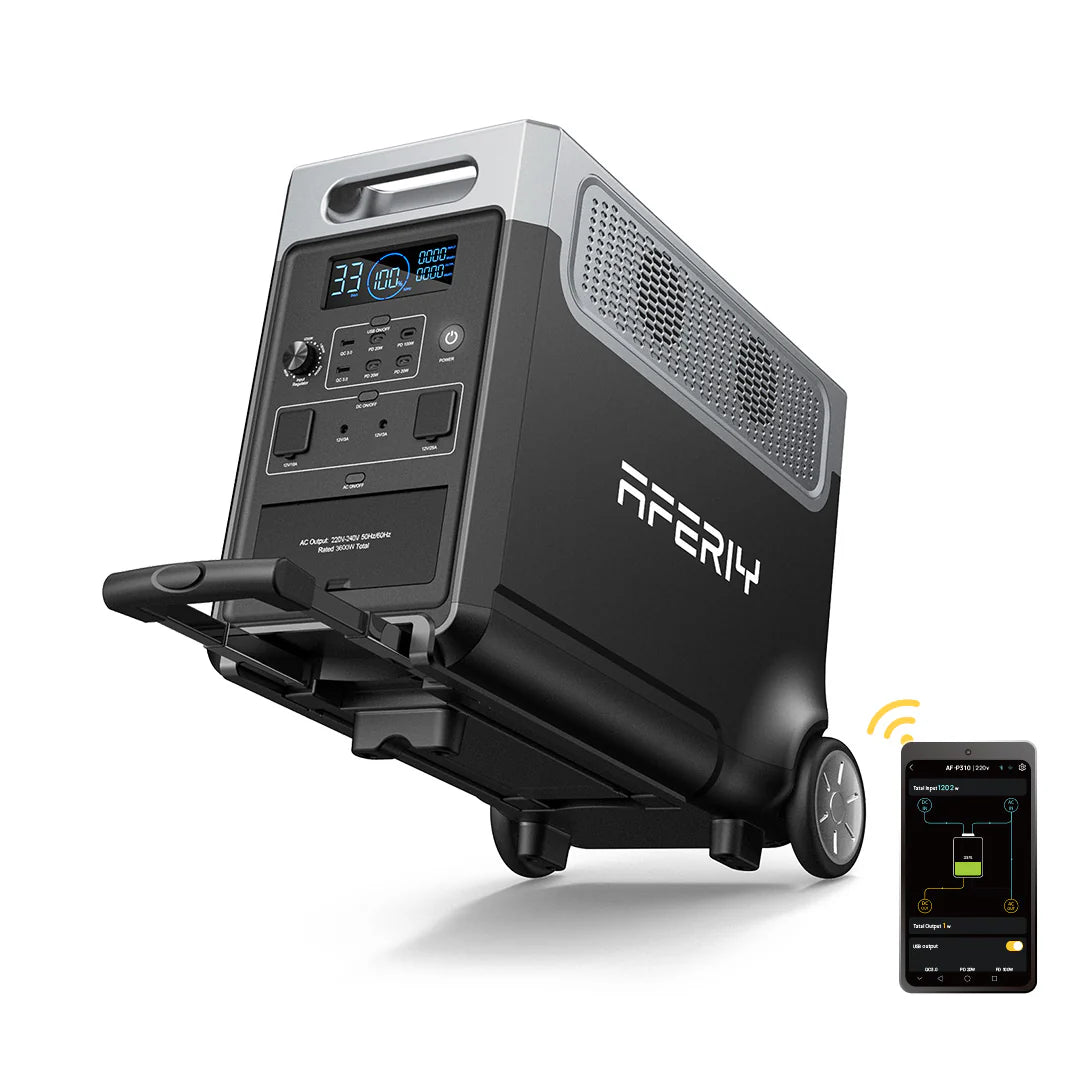
The AFERIY P180 Pro Portable Power Station is a practical option for users who need reliable CPAP backup power at home or while travelling. It features a 1024Wh LiFePO₄ battery, 1800W pure sine wave output, and UPS functionality, providing stable and reliable power for CPAP machines and other sensitive devices.

With approximately 1kWh of battery capacity, the P180 Pro can support most CPAP setups overnight while leaving additional capacity for essential devices during a power cut, including:
- Mobile phones
- Wi-Fi routers
- LED lights
- Small electronics
Its LiFePO₄ battery technology provides a long cycle life and improved safety, making it suitable for both emergency backup and outdoor use. The expandable capacity design also allows users to increase available storage when longer backup time is required.
Solar Generator for Extended CPAP Backup
For users who need backup power for several days, a solar generator offers the advantage of battery storage combined with solar charging capability.
Solar generators are useful for:
- Extended power cuts
- Camping
- Caravan trips
- Off-grid situations
Unlike fuel generators, solar generators operate quietly and produce no exhaust emissions during use. When connected with compatible solar panels, they can recharge during daylight hours and extend available backup time.
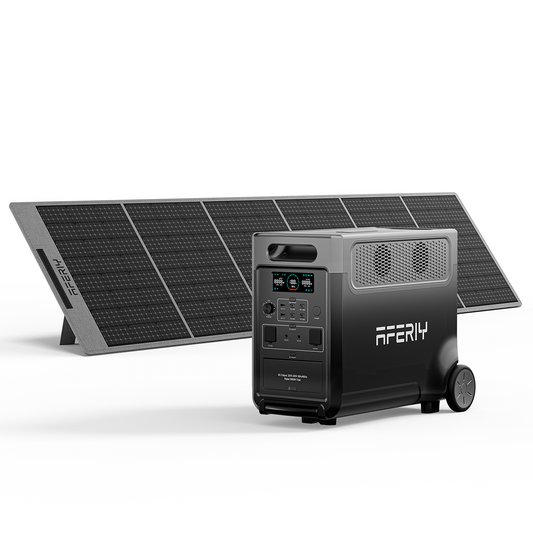
The AFERIY P210 Solar Generator is designed for users who need greater energy storage for longer backup situations. It combines a 2048Wh LiFePO₄ battery with solar charging capability, providing significantly more capacity than standard CPAP batteries.

For CPAP users, the P210 can provide extended runtime depending on the machine’s power consumption and settings. It can also support other essential devices during longer outages, such as lights, communication equipment, and small household appliances.
How to Choose the Right CPAP Backup Solution
Before choosing a backup power system, consider:
Your CPAP Power Consumption
Check the actual watt usage of your CPAP machine, especially if you use heated accessories.
Required Runtime
A single overnight trip requires less capacity than several days of backup power.
Additional Devices
If you want to power phones, routers, lights, or other electronics, choose a larger battery capacity.
Charging Options
For home backup, mains charging may be sufficient. For camping or extended outages, solar charging provides additional flexibility.
FAQs
Can I use a CPAP machine during a power cut?
Yes, a CPAP machine can continue working during a power cut if it is connected to a suitable backup power source. The key is choosing a solution with enough battery capacity and a stable power output.
Before an emergency, test your backup setup to confirm that your CPAP machine, power adapter, and battery system work correctly together.
Does a CPAP machine need a pure sine wave inverter?
A pure sine wave inverter is recommended for CPAP machines because it provides cleaner and more stable AC power, similar to the electricity supplied by a standard home socket.
While some devices may operate with other inverter types, pure sine wave output is generally the safer choice for sensitive electronic equipment.
Can I use a power station while travelling with a CPAP machine?
Yes. A portable power station can be a practical option for travelling with a CPAP machine, especially for camping, caravans, or locations without reliable mains electricity.
When travelling, consider factors such as battery size, weight, charging options, and whether the power station can support other devices you may need.
Does using a CPAP humidifier reduce battery life?
Yes. A heated humidifier can significantly reduce battery runtime because it requires additional energy to heat water throughout the night.
If longer runtime is needed, some users choose to lower the humidity setting or use their CPAP without heating features when appropriate.
Can I recharge a CPAP backup battery with solar panels?
Yes. Some portable power stations and solar generators support solar charging, allowing users to recharge the battery during daylight hours.
This can be useful for extended camping trips, caravan travel, or longer power interruptions where access to mains electricity is limited.
Conclusion
Understanding how many watts does a CPAP use helps you choose the right backup power solution and avoid interruptions to your therapy.
Most CPAP machines consume around 20–100 watts, but the actual battery requirement depends on runtime, heating features, and additional devices you want to power.
For short trips, a dedicated CPAP battery may be enough. For greater flexibility, a portable power station such as the AFERIY P180 Pro provides more capacity and can support additional essentials during power cuts. For extended backup or off-grid use, a solar generator like the AFERIY P210 offers longer runtime with solar charging capability.
By choosing the right capacity and testing your setup in advance, you can keep your CPAP running reliably wherever you need it.