




Typhoon vs Hurricane vs Cyclone: Key Differences
A severe storm over the Atlantic is usually called a hurricane, while a similar system in the western Pacific is known as a typhoon. In the Indian Ocean, it is generally called a cyclone. Although the names differ, these storms share the same basic characteristics.
So, what is the difference between a typhoon and a hurricane? When comparing hurricane vs typhoon or hurricane vs cyclone, the main distinction is where the storm develops. This guide explains their regional names, intensity classifications, formation and potential impact, with practical advice for UK households.

Hurricane vs Typhoon vs Cyclone: How Are They Different?
Hurricanes, typhoons and tropical cyclones are rotating weather systems that develop over warm tropical or subtropical waters. They have a low-pressure centre and organised thunderstorms, often bringing strong winds and heavy rainfall.
Their names depend primarily on the ocean basin where they form.
| Storm name | Main region |
|---|---|
| Hurricane | North Atlantic, Caribbean Sea, Gulf of Mexico and eastern and central North Pacific |
| Typhoon | Western North Pacific |
| Tropical cyclone / cyclone | Indian Ocean and South Pacific, including the Australian region |
For example, a tropical cyclone developing over the Caribbean is called a hurricane, while a similar system near the Philippines is called a typhoon. Storms forming over the Bay of Bengal or Arabian Sea are commonly called cyclones.
When comparing tropical cyclone vs typhoon, remember that a typhoon is simply the regional name for a tropical cyclone in the western North Pacific.
The term cyclone can also describe other rotating low-pressure systems. Extratropical cyclones, for example, develop in association with weather fronts and the jet stream rather than drawing their energy primarily from warm tropical waters.
Despite their different names, these tropical systems can all produce destructive winds, torrential rain and coastal flooding. Their impact depends on their intensity, movement and surrounding conditions.
How Are Hurricanes, Typhoons and Cyclones Classified?
The names hurricane, typhoon and cyclone do not indicate how powerful a storm is. A hurricane is not automatically stronger than a typhoon, and a cyclone can be just as destructive.
Meteorological agencies classify tropical cyclones mainly by maximum sustained wind speed, but their measurement periods and categories can differ.
In the North Atlantic and eastern North Pacific, a storm becomes a hurricane when its maximum sustained winds reach at least 74 mph (119 km/h), generally measured over one minute.
In the western North Pacific, the Japan Meteorological Agency uses a ten-minute average. Its typhoon threshold is 64 knots, approximately 74 mph (118 km/h). Other agencies may use different averaging periods and classifications.
This matters when comparing hurricane vs typhoon reports: one-minute and ten-minute wind averages can produce different figures for the same storm.
In the North Atlantic and eastern North Pacific, the Saffir-Simpson Hurricane Wind Scale divides hurricanes into five categories. Category 1 starts at 74 mph (119 km/h), while Category 5 begins at 157 mph (252 km/h).
Other regions use their own classifications, including severe tropical storms, typhoons and super typhoons. Wind category alone does not determine the overall danger. Rainfall, storm surge, flooding and the storm’s path also matter.
How Do Tropical Cyclones Develop?
Although hurricanes, typhoons and cyclones have different regional names, they form through the same basic meteorological process.
Development usually begins over warm ocean water, normally around 27°C or higher. Heat from the sea causes water to evaporate. Warm, moist air rises and cools, forming clouds and thunderstorms. As water vapour condenses, it releases heat that helps sustain the rising air and developing low-pressure system.
The Earth’s rotation helps organise the circulation around the centre. Several conditions influence whether the system strengthens:
Warm ocean water: Supplies the heat and moisture needed for development.
Moist air: Supports thunderstorms, while dry air can disrupt the storm.
Low vertical wind shear: Allows the storm’s circulation to remain organised.
Sufficient distance from the Equator: The Coriolis effect helps organise rotation and is too weak close to the Equator.
A pre-existing weather disturbance is also needed. Warm water alone does not guarantee that a tropical cyclone will form.
What Damage Can Tropical Cyclones Cause?
Whether called a hurricane, typhoon or cyclone, a tropical cyclone can bring several hazards at once.
Strong winds: Powerful winds can damage roofs, break windows, uproot trees and bring down electricity cables. Flying debris can also pose a serious danger.
Storm surge: Strong winds push seawater towards the coast, raising water levels above normal tides and potentially flooding low-lying communities.
Heavy rainfall: Prolonged rain can cause river flooding, road closures and landslides, sometimes continuing after a storm moves inland.
Power cuts: Fallen trees, damaged cables and flooded infrastructure can interrupt electricity supplies. Households may lose lighting, refrigeration, broadband and mobile charging. Gas boilers and heat pumps that rely on electricity may also stop working.
For UK readers, it is important to understand how former hurricanes can affect the country. Tropical hurricanes do not normally form at UK latitudes because surrounding sea temperatures are not warm enough. However, a hurricane can travel across the Atlantic and undergo extratropical transition. Its structure and energy source change, but the resulting low-pressure system can still bring strong winds, heavy rain and coastal disruption to the UK.
How to Prepare for Severe Storms and Power Cuts
Strong winds, flooding and electricity disruption can affect everyday household needs. Preparing essential supplies and backup power in advance can help reduce the impact.
Before severe weather arrives
Follow Met Office forecasts and warnings, secure loose outdoor items and check local authority advice if flooding or evacuation is a concern.
The UK Government’s Be Ready guidance recommends keeping at least three days’ worth of essential supplies. Allow around 3 litres of drinking water per person per day, alongside non-perishable food, medicines, a first-aid kit, a torch, spare batteries and a battery or wind-up radio.
Consider the needs of everyone in your household. If someone relies on electrically powered medical equipment or other essential devices, arrange a separate backup plan. Check whether you qualify for your energy supplier’s Priority Services Register for additional support during power cuts.
Charge phones and power banks before severe weather arrives. Think about which appliances need electricity and how long you may need to run them.
A portable power station can provide backup electricity for compatible household devices. The AFERIY P280 Portable Power Station delivers 2800W of output with a 2048Wh battery, expandable up to 10240Wh. It can support essential equipment such as lighting, phones, laptops and a compatible fridge, making it an option for households with moderate backup power needs.
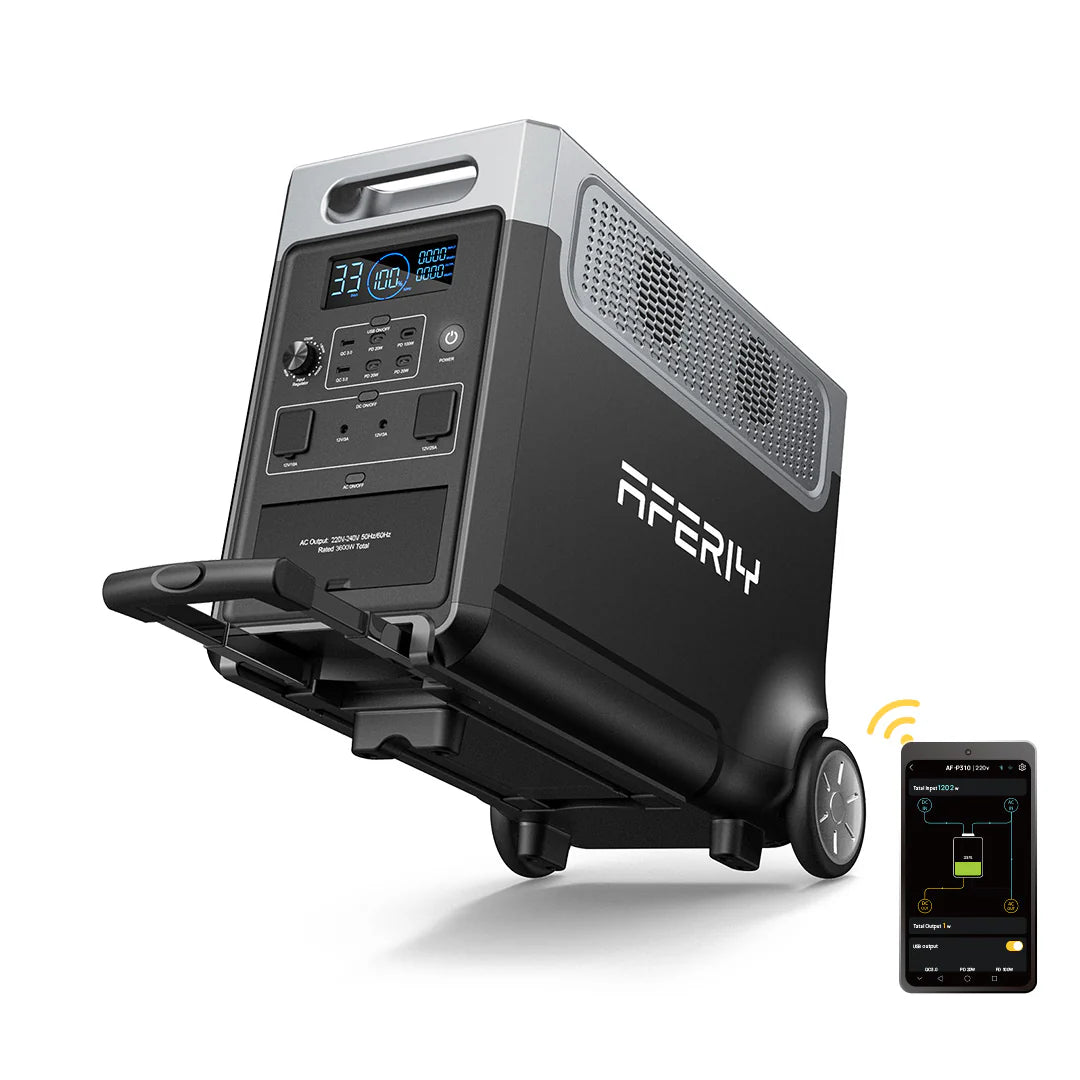
For higher power demands and greater stored energy, the AFERIY P310 Portable Power Station offers 3600W of output and 3840Wh of capacity, expandable up to 11520Wh. Its higher output and larger base capacity provide more flexibility for running several compatible devices, including refrigeration, lighting and selected kitchen appliances.

If you plan to use solar charging, prepare compatible solar panels and cables in advance. Fully charge the power station before severe weather and check its solar input limits. Cloud cover and poor weather can reduce solar generation, so do not rely on it as a guaranteed charging source during a storm.
During a power cut
Keep fridge and freezer doors closed to maintain their temperature. Use torches rather than your phone’s torch, and conserve mobile battery by limiting unnecessary use.
Prioritise essential devices when using a power station and avoid connecting appliances that exceed its rated output. Follow the manufacturer’s operating and safety instructions.
In England, Scotland and Wales, call 105 free of charge to report a power cut. In Northern Ireland, contact the electricity network operator on 03457 643643.
After the storm
Stay away from fallen electricity cables, flooded roads and damaged buildings. Follow local authority advice before returning to an evacuated area. Check food safety after a prolonged power cut and do not use electrical equipment that has been exposed to floodwater until it has been checked.
FAQs
Can a hurricane reach the UK?
A tropical hurricane does not normally form around the UK because local sea temperatures are too low. However, a hurricane can travel across the Atlantic and undergo extratropical transition, bringing strong winds and heavy rain to the UK.
What does ex-hurricane mean?
An ex-hurricane is a former tropical hurricane that has undergone extratropical transition. It is no longer classified as a tropical hurricane, but can remain a powerful low-pressure system.
Is a cyclone the same as a tornado?
No. A tropical cyclone is a large weather system that develops over warm ocean waters. A tornado is a much smaller rotating column of air extending from a thunderstorm towards the ground.
Why are tropical storms given different names around the world?
The terms hurricane, typhoon and cyclone reflect the ocean basin where a storm develops. Individual storms also receive names under regional naming systems, generally once they reach tropical storm strength.
Conclusion
The difference between a hurricane, typhoon and cyclone is mainly geographical. They are regional names for tropical cyclone systems, although meteorological agencies use different wind measurements and intensity classifications.
For UK households, understanding how ex-hurricanes can affect local weather is particularly useful. Monitoring official warnings, preparing essential supplies and arranging backup electricity can help reduce disruption from severe weather and power cuts.


