

Be Ready Campaign: A UK Household Emergency Guide
Launched on 22 October 2026, the UK government’s Be Ready Campaign encourages households to prepare for three days of disruption to essential services, including electricity, water, phone networks and the internet.
Severe weather, flooding and other emergencies can interrupt everyday services, sometimes making it difficult to access shops, transportation and essential supplies. Preparing in advance means having enough food, water and medication, knowing how to contact family members and making arrangements for essential household needs.
This guide explains the Be Ready Campaign, what to include in an emergency kit and how to plan for power cuts and other disruptions.

What Is the UK’s Be Ready Campaign?
The Be Ready Campaign is a UK government initiative launched on 22 October 2026. It forms part of a three-year effort to help households become better prepared for temporary disruptions to everyday services.
The campaign focuses on practical steps people can take before an emergency happens. Its central message is that households should be ready to manage for three days while support reaches those who need it most.
The official guidance highlights several actions:
Keep Essential Supplies at Home: Store bottled water and non-perishable food for three days, alongside medication and other household essentials.
Make a Household Emergency Plan: Decide how family members will contact each other, where to meet and what to do if they need to leave home.
Check Available Support: Eligible households can register for additional assistance through the Priority Services Register in England, Scotland and Wales. Northern Ireland uses Customer Care Registers.
Stay Connected: Exchange contact details with neighbours and consider how you could support people who may need extra help during an emergency.
The campaign also encourages households to build their supplies gradually rather than purchasing everything at once. Many useful items may already be available at home.
For households that depend on medical equipment or have additional support needs, contacting utility providers in advance can help ensure they know what assistance may be available during an interruption.
What to Pack in Your 3-Day Emergency Kit
A practical emergency kit should cover the basic needs of everyone in your household. The UK government’s Be Ready checklist provides a useful starting point, with supplies covering food, water, lighting, communication, health and personal needs.
Water and Food
Prepare bottled drinking water at a rate of 3 litres per person per day. For a household of four, this means 36 litres for three days. Additional water is needed for cooking, washing and other household tasks.
Choose non-perishable foods that have a long shelf life and do not require refrigeration. Tinned meat, fish, vegetables, dried fruit and nuts are practical options. Include a manual tin opener and consider foods that can be eaten without cooking if electricity or gas supplies are interrupted.
Lighting and Warmth
Keep a torch and spare batteries somewhere easy to find. Battery-powered lighting is generally safer than candles during a power cut. Blankets, sleeping bags and warm clothing can also help maintain comfort if central heating stops working.
Communication and Information
A battery-powered or wind-up FM radio can provide access to local news and emergency updates if mobile networks or internet services become unavailable. Keep a fully charged power bank and write down important telephone numbers, including emergency contacts and your electricity network operator.
Medical and Hygiene Supplies
Include a first aid kit, essential medication, copies of prescriptions, hand sanitiser, wet wipes and basic toiletries. Request repeat prescriptions in advance so you are less likely to run out during an emergency.
Money, Documents and Family Needs
Keep some cash in coins and notes in case card payments or ATMs are unavailable. Store copies of important documents, such as identification, insurance details and medical equipment instructions, in a waterproof folder.
Families with babies should include ready-to-feed formula and nappies. Pet owners should prepare enough pet food, bottled water and necessary medication for their animals.
You do not need to buy everything immediately. Check what you already have, identify missing items and add supplies gradually during regular shopping trips.
How Could a 3-Day Disruption Affect Your Household?
An interruption to essential services can affect several parts of daily life at the same time. Understanding these effects can help you decide which household needs to prioritise.
Power Cuts and Food Storage
A power cut can affect lighting, refrigeration, cooking, heating and communication. Refrigerators and freezers may continue to keep food cold for a limited period, but their performance depends on how often the doors are opened and the amount of food stored.
According to British Red Cross guidance, a closed fridge will usually stay cold for up to four hours. A full freezer can keep food frozen for around 48 hours, compared with approximately 24 hours when half full.
Keep appliance doors closed as much as possible and check food temperatures before consuming refrigerated items after an extended outage.
Water Supply Disruptions
Water services can also be affected by severe weather, flooding or infrastructure problems. Without a reliable supply, drinking, cooking and basic hygiene become more difficult.
Stored drinking water provides an immediate alternative, while wet wipes and hand sanitiser can help maintain basic hygiene when normal facilities are unavailable.
Heating and Communication
During colder months, losing electricity can affect electric heating systems, heat pumps and some boilers. Blankets, warm clothing and sleeping bags can help households stay comfortable while services are being restored.
Communication may also become unreliable if mobile networks, broadband equipment or landline services lose power. A battery-powered radio and written emergency contacts provide alternative ways to access information.
Flooding and Severe Weather
Flooding and storms can cause more than temporary power cuts. Roads may become inaccessible, public transport can be disrupted and households may need to leave their properties at short notice.
If your home is in a flood-risk area, check local warnings and prepare important documents, medication and essential belongings so they can be taken with you if evacuation becomes necessary.
How to Maintain Power During an Emergency
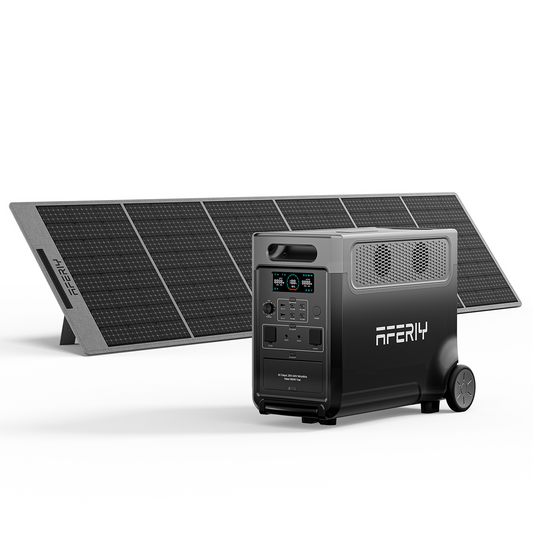
For households preparing for extended power cuts, the AFERIY P310 Portable Power Station provides 3840Wh of LiFePO₄ battery capacity and 3600W of continuous AC output. It can run compatible household appliances, including fridges, laptops, fans and essential medical equipment. Its capacity can also be expanded to 11,520Wh with additional batteries, providing more stored energy for longer outages.
With its 3840Wh capacity, the P310 offers considerable runtime for essential devices. It can power a 150W refrigerator for approximately 20 hours, a 60W CPAP machine for around 46 hours or a 100W laptop for nearly 30 hours. These are individual device estimates; actual runtime varies with power consumption, conversion losses and operating conditions.

The P310 also supports up to 2000W of solar input, allowing compatible solar panels to recharge the battery when mains electricity is unavailable. Its UPS function provides switching within 10ms, helping compatible connected equipment maintain power during an interruption. With its expandable capacity, high output and multiple charging options, the P310 offers a flexible backup power option for households preparing for extended power outages.
Creating an Emergency Plan for Your Household
Having supplies ready is only part of emergency preparation. Everyone in the household should know what to do if normal services are disrupted or evacuation becomes necessary.
Start by agreeing on a meeting point and an alternative way to contact family members if mobile services are unavailable. Write down important telephone numbers and keep a printed copy with your emergency documents.
Check local information sources to understand the risks in your area. The Met Office provides weather warnings, while the Environment Agency offers flood warnings for England. Residents in Scotland and Wales can consult SEPA and Natural Resources Wales respectively for relevant flood information.
It is also important to plan for people who may need additional support. Households with older relatives, young children or people who rely on powered medical equipment should identify alternative arrangements in advance.
Pet owners should consider how they would transport their animals and where they could stay if they needed to leave home. If local authorities issue evacuation instructions, follow their advice rather than attempting to remain in an unsafe property.
How to Keep Your Emergency Kit Up to Date
An emergency kit needs regular attention to remain useful. The UK government’s Be Ready guidance recommends checking supplies every six months.
Review food and medication expiry dates, replace used items and make sure important documents and contact details are current. Test torches and radios, and recharge power banks and portable power stations according to their manufacturers’ instructions.
You should also review your household’s needs when circumstances change, such as welcoming a new family member, adopting a pet or changing medication requirements.
Building an emergency kit does not need to happen all at once. Start with essential supplies and add items over time to make sure your household is better prepared for unexpected disruptions.
FAQs
1. How Often Should You Review Your Emergency Plan?
Review your plan at least twice a year. Check emergency contacts, essential supplies and evacuation arrangements, and update them when your household needs change.
2. What Should You Take When Evacuating During an Emergency?
Take essential medication, identification, important documents and necessary items for children or pets. Follow instructions from local emergency services.
3. How Should You Prepare Pets for an Emergency?
Keep enough pet food, bottled water and necessary medication at home. Also prepare identification details and a suitable carrier in case you need to evacuate.
4. Can Solar Panels Provide Power During a Power Cut?
Standard grid-connected solar systems may automatically shut down during a power cut unless they have compatible battery storage and backup functionality. A portable power station paired with compatible solar panels offers another way to store and use solar energy.
Conclusion
The UK’s Be Ready Campaign highlights the importance of preparing for everyday service disruptions. Keeping essential supplies ready, making a household emergency plan and arranging backup power can help your family manage unexpected situations. A portable power station such as the AFERIY P310 can provide additional support for essential devices when mains electricity is unavailable.