

How Long Do Lithium-Ion Batteries Last? A Complete Lifespan Guide
Lithium‑ion batteries power everything from mobile phones and laptops to electric vehicles, portable power stations and home energy storage systems. But how long can a lithium‑ion battery last?
There is no single lifespan that applies to every lithium battery. Chemistry, cycle depth, temperature, charging rate and storage conditions all affect how quickly a battery loses capacity.

How Long Does a Lithium‑Ion Battery Last?
A typical lithium‑ion battery lasts around 2–5 years or 300–500 charge cycles, although actual lifespan varies depending on the battery chemistry, usage, charging habits and operating conditions. This range is commonly associated with consumer lithium‑ion batteries, while batteries designed for energy storage can have considerably longer cycle lives.
However, reaching 300–500 cycles does not mean a lithium‑ion battery suddenly stops working. Instead, its capacity gradually decreases, so it stores less energy and provides shorter runtime than when it was new. The point at which a battery is considered to have reached the end of its useful life can also vary depending on the application and the capacity‑retention level specified by the manufacturer.
To understand how long does a lithium‑ion battery last, it is useful to consider both calendar life and cycle life. Calendar life refers to how a battery ages over time, including when it is not being used, while cycle life refers to the number of equivalent charge and discharge cycles it can complete before its capacity falls to a specified level.
How the battery is used also makes a difference. Frequent cycling, deeper discharges and exposure to high temperatures can accelerate capacity loss, while occasional use and suitable storage conditions can help preserve battery performance for longer.
For this reason, when comparing lithium‑ion batteries, it is better to look at the manufacturer’s cycle‑life rating, capacity‑retention level and test conditions rather than relying on a general lifespan in years.
What Is a Battery Cycle?
A battery cycle does not necessarily mean charging a battery from 0% to 100% once. Instead, one cycle generally represents the equivalent of using 100% of the battery’s available capacity, although manufacturers may use different methods when defining and testing cycle life.
For example, using 40% of a portable power station’s capacity and later using another 60% would add up to approximately one equivalent full cycle. This means several partial discharges can contribute to a single cycle over time.
Depth of discharge (DoD) is also important. It describes how much of the battery’s capacity is used during a discharge. Research and battery testing show that shallower discharge generally allows lithium‑ion batteries to complete more cycles before reaching a specified capacity threshold.
For portable power stations, this is why cycle life should always be considered alongside DoD and the manufacturer’s testing conditions rather than treated as a fixed number of uses.
What Determines Lithium Battery Lifespan?
1. Battery Chemistry
Lithium‑ion is a broad battery family rather than a single chemistry.
NMC (nickel manganese cobalt) batteries are commonly selected where high energy density and relatively low weight are important. LiFePO4 (lithium iron phosphate), also known as LFP, is widely used for energy storage because of its long cycle life and suitability for repeated charging and discharging.
There is no universal cycle‑life figure for either chemistry. Published results vary depending on depth of discharge, temperature, charging and testing methods. For example, one peer‑reviewed review reports substantially different cycle counts for NMC and LiFePO4 as DoD changes, illustrating why a cycle rating should always be read together with its test conditions.
For portable power stations, LiFePO4 is therefore often attractive when long‑term, repeated use is a priority.
2. Depth of Discharge
Depth of discharge describes how much of the battery’s available capacity is used.
A battery discharged from 100% to 20% has an 80% DoD. Repeated deep discharges generally cause more stress than shallower cycling.
Battery University reports significantly higher cycle counts for lithium batteries when the depth of discharge is reduced. Its data shows the general relationship clearly: using a smaller proportion of the battery during each cycle can increase the number of cycles before capacity reaches the specified end point.
This does not mean you should avoid using the battery’s full capacity when you need it. Rather, if maximum runtime is not necessary, avoiding unnecessary deep discharges can help reduce long‑term wear.
3. Temperature
Temperature is another major factor in lithium battery ageing.
High temperatures can accelerate chemical reactions inside battery cells and increase capacity degradation. Research on lithium‑ion ageing consistently identifies temperature as a significant factor alongside DoD, state of charge and charge/discharge rate.
Storage conditions matter as well. Battery University reports that lithium‑ion batteries stored at elevated temperatures, particularly at a high state of charge, can experience faster capacity loss.
For UK users, this is particularly relevant when storing a portable power station in a garage, shed, caravan or vehicle. Keep the battery within the manufacturer’s recommended operating and storage temperature range and avoid prolonged exposure to excessive heat.
4. Charging and Discharging Rate
The rate at which a battery is charged or discharged can also influence degradation.
High current can increase heat and place additional electrochemical stress on the cells. Research on lithium‑ion ageing identifies charge/discharge rate as one of the variables affecting capacity loss and useful life.
This is one reason a portable power station should be operated within its specified input and output limits. A Battery Management System (BMS) can also monitor operating conditions and provide protection against issues such as overcharging, over‑discharging, over‑current and abnormal temperatures.
How Long Does a Portable Power Station Battery Last?
For a portable power station, battery lifespan is closely related to how often the unit is cycled and how much energy is used during each cycle. A model used mainly for occasional power cuts or weekend camping may accumulate cycles much more slowly than one used every day for home backup or solar energy storage. This makes cycle life a more useful comparison point than simply asking how many years a power station will last.
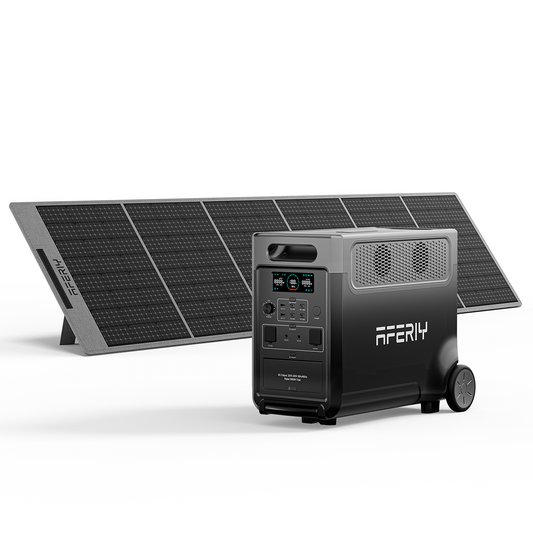
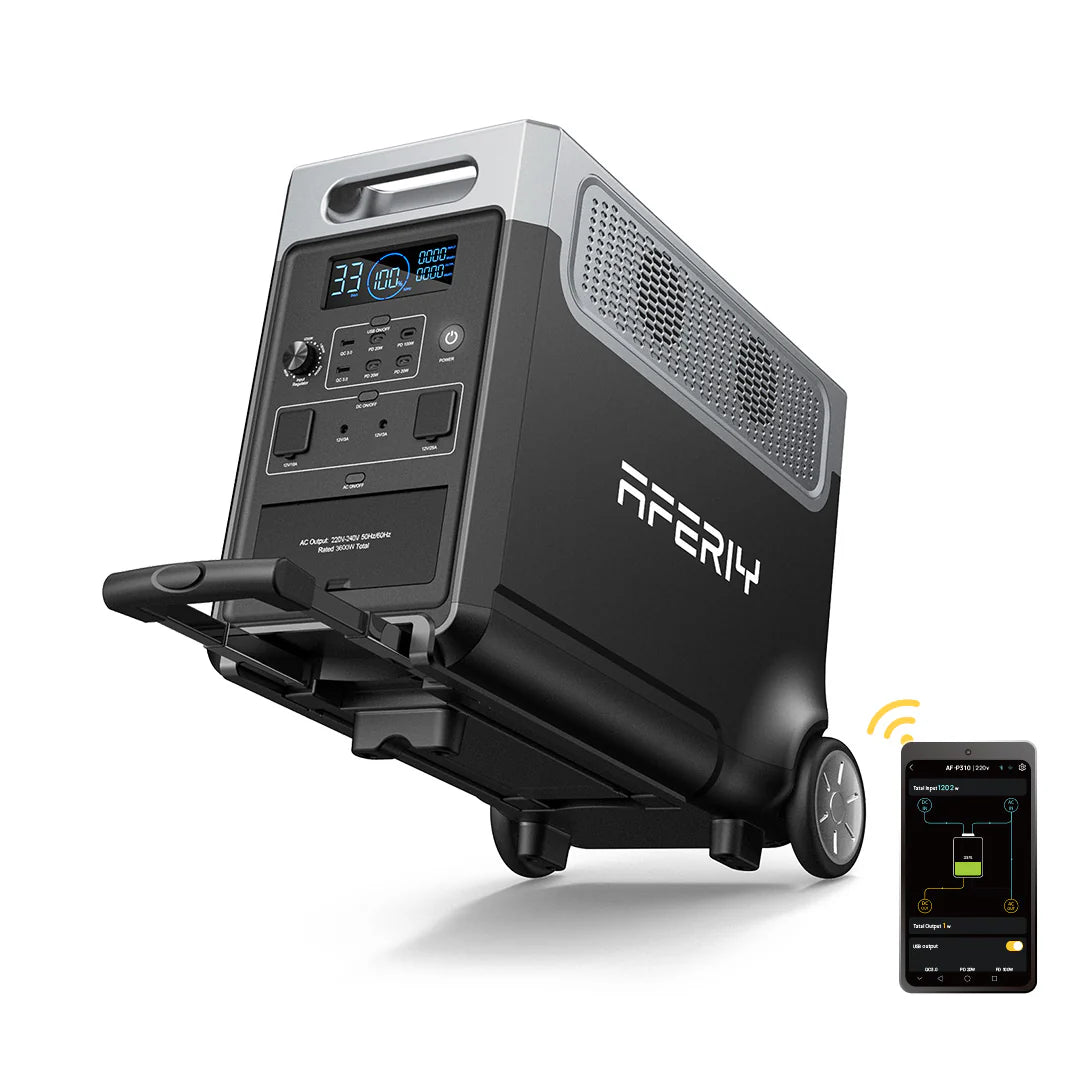
The AFERIY P280 Portable Power Station is designed for users who need substantial stored energy for home backup, camping, caravanning and other extended-use applications. It combines a 2048Wh LiFePO4 battery with 2800W of AC output, and its capacity can be expanded to 10,240Wh. The system is rated for 4000+ charge/discharge cycles to 80% capacity, providing a useful benchmark for evaluating its long-term battery performance.

The P280's expandable capacity is particularly relevant when power requirements change. The base 2048Wh capacity can suit shorter trips or essential backup loads, while a larger battery configuration can provide more stored energy for longer outages or higher daily consumption. This means users do not necessarily need to choose a much larger system from the beginning if their energy requirements may increase over time.
When comparing portable power stations, therefore, look beyond the headline cycle count. Consider battery chemistry, usable capacity, AC output, expandable capacity, cycle-life rating, capacity-retention threshold and your expected pattern of use. These specifications provide a clearer picture of whether a power station is suited to occasional outdoor use, regular backup power or more frequent energy storage.
How to Extend Lithium Battery Life
You cannot prevent normal battery ageing, but several practical habits can reduce unnecessary stress.
Avoid unnecessary deep discharges
If you do not need the entire battery capacity, shallower cycling can help extend cycle life.
Keep the battery at a suitable temperature
Avoid prolonged exposure to excessive heat, particularly when the battery is highly charged.
Follow the manufacturer’s charging instructions
Use the recommended charging equipment and stay within the specified input and temperature limits.
Store the battery correctly
If a portable power station will not be used for an extended period, follow the manufacturer’s recommended storage procedure rather than leaving it fully charged or completely empty indefinitely. Storage temperature and state of charge both affect calendar ageing.
Do not ignore the BMS
A properly designed Battery Management System helps keep the battery within safe operating limits and monitors important conditions during charging and discharging.
When Should a Lithium Battery Be Replaced?
Battery ageing is usually gradual.
Shorter runtime, reduced usable capacity and a noticeable decline in performance can indicate normal battery degradation. The most useful measurement is often remaining capacity compared with the battery’s original specification.
However, unusual symptoms such as swelling, physical damage, excessive heat or abnormal behavior should not simply be treated as normal ageing. Stop using a damaged battery and follow the manufacturer’s safety guidance.
FAQs
Can a lithium‑ion battery last 10 years?
It can, depending on the battery chemistry, application and operating conditions, but there is no universal 10‑year lifespan for all lithium‑ion batteries. Calendar ageing and cycle ageing both contribute to battery degradation, so actual service life varies between products.
Does using only part of a lithium battery improve its lifespan?
Generally, yes. Shallower discharge can increase the number of cycles a lithium‑ion battery can complete before reaching a defined capacity threshold. However, the exact improvement depends on chemistry and operating conditions.
How long will a lithium‑ion battery last if it is only used occasionally?
Occasional use can result in fewer charge cycles, but the battery still ages over time through calendar ageing. Storage temperature and state of charge can therefore matter even when the battery is rarely used.
What does “4000+ cycles to 80%” mean?
It means the manufacturer specifies more than 4,000 charge/discharge cycles before the battery reaches the stated 80% capacity level under its test conditions. It does not mean the battery will stop operating immediately after that point. The AFERIY P280 is specified at 4000+ cycles to 80% capacity.
Conclusion
So, how long does the lithium battery last? There is no single number that applies to every lithium‑ion battery.
Chemistry, depth of discharge, temperature, charging and discharging conditions, and storage all influence battery ageing. For portable power stations, LiFePO4 can provide the long cycle life needed for regular camping, caravan travel, home backup and energy‑storage use.
The most reliable way to judge a battery is to look beyond a headline lifespan and check its cycle rating, capacity‑retention level, operating conditions and manufacturer’s specifications.