

Best Power Banks for Camping UK: Reviews & Buying Guide
Camping is a great way to get away from a busy routine, but staying off-grid does not mean you have to give up everyday essentials. A phone, camping light, fan, laptop or portable fridge can all need reliable power when you are away from a mains connection.
For short trips, a compact power bank may be enough for phones and small devices. For longer camping trips or higher-power appliances, a portable power station offers more battery capacity, AC outlets and flexible charging options. In this guide, we compare the key features to consider when choosing the best power bank for camping in the UK, including capacity, output, portability and charging options.

How to Choose the Best Power Bank for Camping
The best camping power bank depends on what you need to run, how long you will be away and how you plan to recharge it. Instead of choosing the largest battery available, consider your devices, required capacity, output and portability.
Battery Capacity
Capacity, measured in Wh (watt-hours), indicates how much energy a power station can store. A smaller unit may be enough for phones, cameras and lights, while longer trips or devices such as portable fridges, fans and laptops require more capacity.
Estimate your expected energy use based on the devices you plan to run and how long you will use them. If you cannot recharge during the trip, leave some additional capacity rather than using the battery to its limit.
Remember that capacity and output are different. Capacity affects how long the power station can supply energy, while output wattage determines which appliances it can run.
Output Wattage
Check the rated power of your appliances before choosing a camping power station. Phones and small electronics need relatively little output, while appliances such as kettles, coffee makers and portable cookers require considerably more.
For equipment with motors or compressors, such as portable fridges, allow additional output headroom for startup power.
Output Ports
Choose a power station with the connections your devices require. USB-A and USB-C ports are useful for small electronics, while AC outlets support mains-powered appliances. A 12V car socket can also be useful for compatible camping fridges and coolers.
Rather than focusing on the number of ports, check their types and power ratings against your devices.
Charging Options
Consider how you will recharge the power station once you are away from mains electricity. Most models support AC charging, while some also offer car and solar charging.
Solar charging can be particularly useful for multi-day or remote trips, although actual charging performance depends on sunlight and weather conditions. For shorter trips, fully charging the unit before departure may be sufficient.
Size and Weight
Higher-capacity power stations are generally heavier, so consider how you will transport the unit. A larger model may be practical for car camping, RVs or motorhomes, while a lighter model is more convenient when you need to carry it to a remote campsite.
The best camping power bank should balance capacity, output and portability rather than simply offering the largest battery.
Battery Type and Safety
Many modern portable power stations use LiFePO₄ (lithium iron phosphate) batteries, which are designed for repeated charging and discharging.
Also check for battery management and protection features, and follow the manufacturer's instructions for operating, storing and using the power station outdoors.
Additional Features
Features such as an LED light, digital display, app control and UPS functionality can improve convenience, but they should come after capacity, output and portability.
A display can show battery and power information, while a built-in light can be useful around a campsite after dark.
Best Power Banks for Camping UK
If you're looking for the best power bank for camping in the UK, the right choice depends on how much power you need, how long you plan to stay off-grid and how easily you need to transport the unit. Smaller models can cover phones, lights and other everyday electronics, while larger portable power stations offer more capacity and output for camping fridges, laptops, fans and other appliances.
We compared several popular portable power stations based on battery capacity, AC output, weight, charging options and portability. The models below cover different camping setups, from short weekend trips to longer stays and higher-power off-grid use.
Jackery Explorer 500 v2
The Jackery Explorer 500 v2 is a compact option for weekend camping. With 512Wh of capacity and 500W of AC output, it is suited to phones, cameras, lights, laptops and other lower-power devices.
At around 6kg, it is considerably easier to transport than larger-capacity power stations, making it suitable when portability is more important than running high-power appliances. Current UK camping comparisons also position the Explorer 500 v2 toward shorter camping trips.

AFERIY P300 Portable Power Station
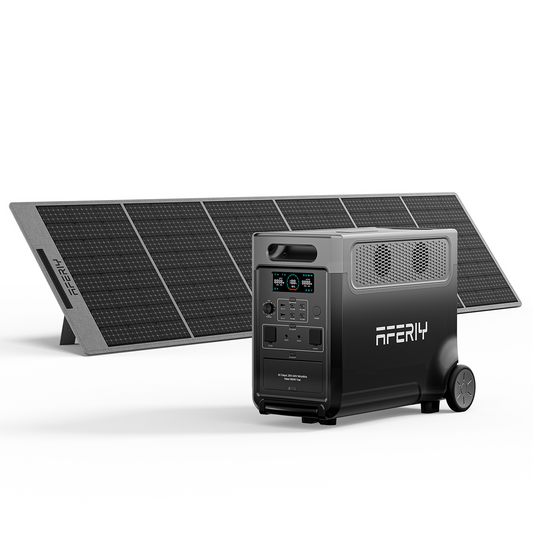
The AFERIY P300 Portable Power Station provides 2,048Wh of battery capacity and 3,000W of pure sine wave AC output, making it suitable for campers who need more power than a compact 500Wh–1,000Wh unit can provide.
Its capacity can be expanded up to 10,240Wh, with up to 1,200W of solar input. This gives campers more flexibility for longer trips, multiple devices and higher-power camping appliances.
At 21.6kg, the P300 is better suited to car camping, RVs and campsites where the power station does not need to be carried over long distances.

EcoFlow RIVER 2 Pro
The EcoFlow RIVER 2 Pro offers 768Wh of capacity and 800W of AC output, placing it between compact 500Wh-class models and larger 1,000Wh-class power stations.
It can suit weekend and short multi-day camping trips where you need to charge several devices, including phones, cameras, laptops and other small electronics. Its relatively compact design also makes it easier to transport than larger-capacity units. Current UK camping guides include the RIVER 2 Pro among their general camping options.

Anker SOLIX C1000 Gen 2
The Anker SOLIX C1000 Gen 2 provides 1,024Wh of battery capacity and 2,000W of AC output, giving it a higher output rating than many portable power stations in the same capacity class.
With a weight of around 11.3kg, it remains practical for car camping and campervan use while providing enough output for a wider range of appliances than smaller camping power stations.
It is particularly relevant for campers who want a 1,000Wh-class power station but still need substantial AC output. Recent UK portable power station comparisons list the C1000 Gen 2 at 1,024Wh, 2,000W and 11.3kg.

Jackery Explorer 1000 v2
For longer camping trips and campervan use, the Jackery Explorer 1000 v2 provides 1,070Wh of capacity and 1,500W of AC output.
The additional capacity provides more flexibility for equipment such as portable fridges, laptops and multiple smaller devices, while its 10.8kg weight keeps it considerably lighter than many 2,000Wh-class models. Current UK camping comparisons position it toward longer trips and campervan use.

AFERIY P310 Portable Power Station
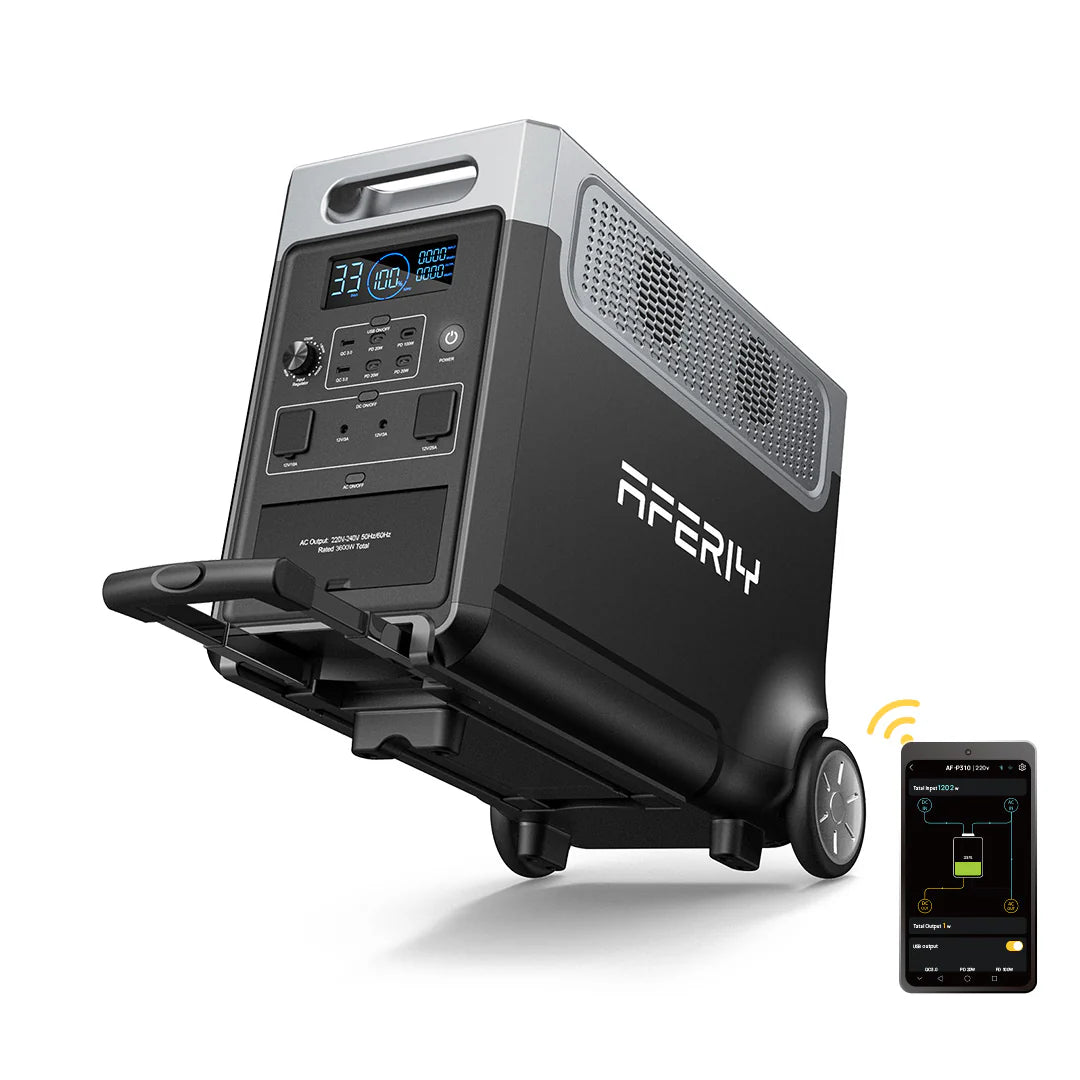
For extended camping trips and larger off-grid setups, the AFERIY P310 Portable Power Station provides 3,840Wh of battery capacity and 3,600W of pure sine wave AC output.
It supports up to 2,000W of solar input and can be expanded to 11,520Wh, providing substantially more stored energy for longer periods away from mains electricity.
At 40kg, the P310 is not intended for carrying to a remote campsite. Instead, its wheels and retractable handle make it better suited to campervans, motorhomes, car camping and extended off-grid stays, where capacity and output are more important than minimum weight.

Quick Comparison of Best Power Banks for Camping UK
After looking at each power station individually, it is useful to compare their key specifications side by side. The table below highlights the main differences in capacity, output, weight, charging and expandability to help you narrow down the options for your camping setup.
| Model | Capacity | AC Output | Weight | AC Recharge | Solar Input | Expandable | Battery | Best For |
|---|---|---|---|---|---|---|---|---|
| Jackery Explorer 500 v2 | 512Wh | 500W | 5.7kg | 1h | 200W | / | LiFePO4 | Weekend camping |
| AFERIY P300 Portable Power Station | 2,048Wh | 3,000W | 21.6kg | 1.5h | 1,200W | Up to 10,240Wh | LiFePO4 | High-power camping |
| EcoFlow RIVER 2 Pro | 768Wh | 800W | 7.8kg | 70min | 220W | / | LiFePO4 | General camping |
| Anker SOLIX C1000 Gen 2 | 1,024Wh | 2,000W | 11.29kg | 49min | 600W | No | LFP | Higher-output camping |
| Jackery Explorer 1000 v2 | 1,070Wh | 1,500W | 10.8kg | 1.7h | 400W | / | LiFePO4 | Longer trips / campervans |
| AFERIY P310 Portable Power Station | 3,840Wh | 3,600W | 40kg | ~2h | 2,000W | Up to 11,520Wh | LiFePO4 | Extended off-grid camping |
The comparison shows that there is no single size for every camping trip. Smaller models are easier to carry for weekend trips, while higher-capacity power stations are better suited to longer stays, campervans and higher-power appliances.
How Much Capacity Do You Need for Camping?
The capacity you need depends on your devices, trip length and whether you can recharge during the trip.
For a short weekend trip with phones, lights and cameras, 300–500Wh may be enough. If you also need a cooler, laptop or fan, 500–1,000Wh provides more flexibility. For longer trips, campervan use or several appliances, consider 1,000Wh or more. Current UK camping guides use similar ranges based on trip length and daily energy use.
To estimate your requirements, multiply each device's power consumption by its expected usage time:
Energy consumption (Wh) = Power (W) × Usage time (hours)
For example, a 40W camping cooler running for 10 hours would use approximately 400Wh. Actual consumption will vary, particularly for appliances that cycle on and off, and you should allow some capacity for conversion losses.
Solar charging can also extend runtime on longer trips. If you plan to camp for several days, choose a power station with compatible solar input and a suitable panel. In the UK, however, weather and available sunlight can significantly affect charging speed, so solar is better treated as a way to top up the battery rather than a guaranteed full recharge.
FAQs
Can a power bank run a camping fridge?
Yes. A portable power station can run a camping fridge or cooler as long as its AC or DC output meets the appliance's requirements. Check both the fridge's running power and starting or surge requirements before connecting it.
Can I use a power bank for camping without electricity?
Yes. A portable power station can provide stored electricity without access to a mains outlet. For multi-day trips, a model that supports solar or car charging can help replenish the battery while you are away from the grid.
How do I keep a power station charged while camping?
You can recharge a compatible power station from a car, solar panels or another supported charging source. For longer trips, solar charging can help extend runtime, although actual charging speed depends on sunlight, weather and the power station's solar input limit.
Conclusion
Choosing the right power bank for camping comes down to your trip length, power needs, portability and charging options. Smaller models can cover basic electronics, while higher-capacity power stations are better suited to longer trips and higher-power appliances.
Compare the available options based on your camping setup, and choose a reliable camping power bank that provides enough power without adding unnecessary weight.