

When Is the Next Emergency Alert Test in the UK?
Emergency Alerts are used in the UK to warn people about nearby, life-threatening emergencies such as severe weather, flooding and wildfires. The system has been tested nationwide, but it is also used when a real emergency occurs.
So, when is the next emergency alert test UK? The latest nationwide test took place on September 7, 2025, and no date has currently been announced for the next one. Here’s what to know about the next test, how Emergency Alerts work, and what to do when one appears on your phone.

When Is the Next Emergency Alert Test in the UK?
As of September 2026, the UK government has not announced another nationwide Emergency Alert test. The GOV.UK Service Tests page currently says there are no service tests.
The UK has held two nationwide public tests so far. The first took place on April 23, 2023, and the second on September 7, 2025. The 2025 test was sent across England, Northern Ireland, Scotland and Wales at around 3pm.
The gap between the two nationwide tests was just over two years. Based on that previous pattern, 2027 could be a possible timeframe for another nationwide test, but this is only an estimate, not an official schedule. The government has not announced a UK emergency alert test date for 2027, so the date should not be treated as confirmed until it appears on GOV.UK.
Alongside nationwide public tests, the system is also checked through operator tests. These are different from public nationwide exercises and are used to assess improvements to the service. Most phones and tablets will not receive them; if one does arrive, the message will identify itself as an operator test and confirm that no action is needed.
What Happens During a UK Emergency Alert Test?
A UK Emergency Alert test is designed to check that the system can reach compatible devices and to make people familiar with the alert format.
During the nationwide test on September 7, 2025, compatible phones and tablets vibrated and played a loud siren-like sound for roughly 10 seconds. A message also appeared on the screen. The alert could be received even when a device was set to silent.
Emergency Alerts use mobile broadcasting rather than standard text messages. They are sent through 4G and 5G mobile networks, so your phone or tablet does not need to be connected to Wi-Fi or mobile data. The alert is broadcast from mobile masts in the relevant area to compatible devices within range.
You also do not need to download an app or sign up for the service. Emergency Alerts are free to receive and are built into compatible devices.
During a test, the message will identify the alert as a test. The 2025 nationwide test message appeared on the device screen alongside the sound and vibration, giving users a chance to see what an Emergency Alert looks and sounds like.
Which Phones Can Receive UK Emergency Alerts?
Emergency Alerts work on compatible phones and tablets connected to the UK’s 4G or 5G networks.
Current GOV.UK guidance lists:
iPhones running iOS 14.5 or later
Android phones and tablets running Android 11 or later
Other devices may also support Emergency Alerts depending on their operating system and software
An earlier Android version may still receive alerts, so checking the emergency-alert settings on the device can be useful.
A device will not receive an alert if it is switched off, connected only to a 2G or 3G network, Wi-Fi-only, or not compatible. Airplane mode may also prevent an alert from arriving.
There is no app to install and no registration required. The government does not need your phone number to send an Emergency Alert, and it says that personal data about you, your device or your location is not collected or shared for this purpose.
What Should You Do When You Receive an Emergency Alert?
The first thing to check is whether the message identifies itself as a test.
If it is a test, there is nothing you need to do. You can read the message and dismiss it.
If it is a real Emergency Alert, follow the instructions in the message. The appropriate response depends on the emergency. You may be told to stay indoors, avoid a particular area, or take another specific precaution.
The August 2026 wildfire alert is a good example. People across England and Wales were warned about a very high wildfire risk and told not to undertake activities that could start a fire, including using disposable barbecues, firepits, garden incinerators or fireworks.
If an alert arrives while you are driving, do not read it while the vehicle is moving. UK government guidance says drivers should find somewhere safe and legal to stop before reading the message.
How Can You Prepare for an Emergency?
An alert can tell you that a serious situation is developing, but it cannot keep your phone charged or your home powered if the event causes an outage.
That is why basic emergency preparation should include more than knowing where to find government updates. Keep your phone charged, have a flashlight available, and consider having a backup way to charge essential devices.
The need becomes more obvious during severe weather. Past UK Emergency Alerts have warned about conditions that could cause power cuts and disruption to mobile phone coverage. During Storm Darragh in December 2024, for example, the government advised affected residents to gather torches, batteries and a mobile phone power pack because infrastructure could be damaged.
For a short outage, a power bank may be all you need. A longer outage is different. If you also need to keep lights, a router, several phones or other essential electronics running, a portable power station provides a much larger energy reserve.
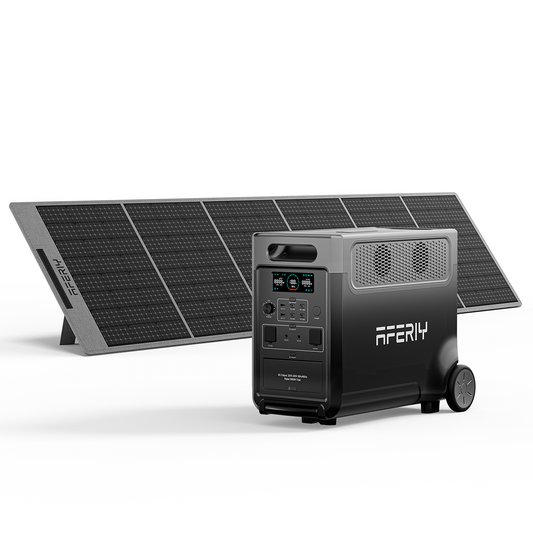
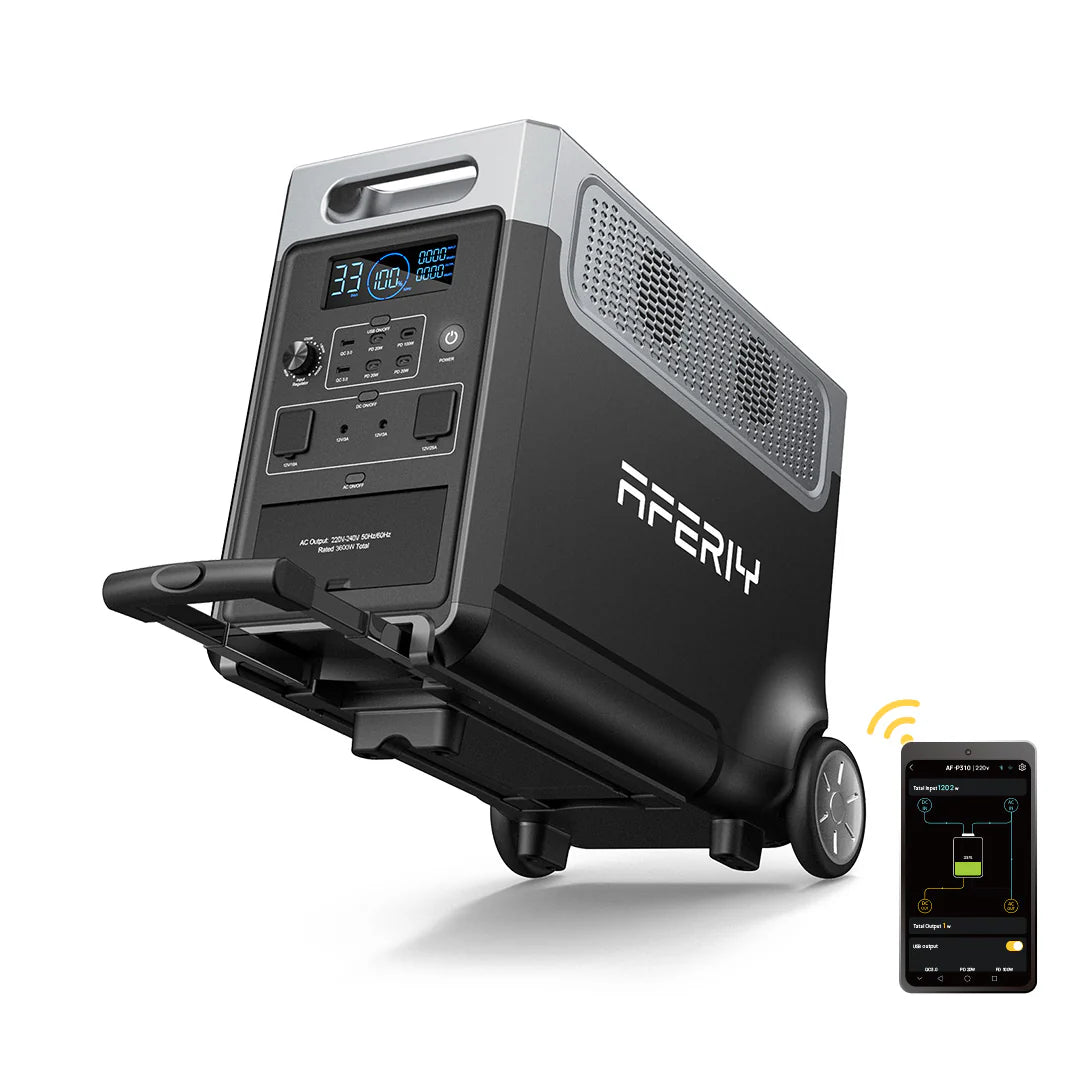
For example, the AFERIY P300 Portable Power Station has a 2,048Wh capacity and 3,000W AC output. That gives it enough capacity for more than phone charging alone, making it more suitable for a household that wants backup power for several essential devices during a prolonged outage. Its solar charging capability can also provide another charging option when grid electricity is unavailable.

The important point when choosing a backup power station is to match the battery to the actual loads you need to run. A phone and a few LED lights use relatively little energy, while a refrigerator, medical equipment or multiple appliances require considerably more. Capacity affects how long the battery can provide power, while output determines whether the station can handle the device in the first place.
What Is the Difference Between a Test and a Real Emergency Alert?
A test is scheduled in advance to check the system and familiarize people with the alert. A real Emergency Alert is sent when authorities need to warn people about an actual threat.
| Test Alert | Real Emergency Alert |
|---|---|
| Scheduled in advance | Triggered by an actual emergency or serious threat |
| Identifies itself as a test | Provides information about the situation |
| No action is required | Follow the instructions provided |
| Tests the alert system | Provides safety information |
The distinction is important because the system has been used for real emergencies several times since the first nationwide test. The January 8, 2026 alerts in Cornwall and the Isles of Scilly warned of dangerous winds, while the August 14, 2026 alert across England and Wales warned about a very high wildfire risk. Neither was a nationwide system test.
Where Can You Check for the Next Emergency Alert Test?
For the latest information about a future nationwide test, GOV.UK is the place to check. Its Emergency Alerts section includes current alerts, past alerts and service-test information.
The Service Tests page currently reports that there are no service tests.
It is also worth checking the government’s past alerts because this shows how the system has actually been used, rather than relying on predictions about when another test might happen.
Third-party websites may estimate when another nationwide test could take place based on previous testing. Those estimates are not the same as an official announcement, so they should not be treated as a confirmed UK emergency alert test date.
FAQs
Is there a UK Emergency Alert test date for 2026?
No nationwide test date has been announced for 2026. The UK has issued real Emergency Alerts during 2026, including warnings about severe wind and wildfire risk, but those were responses to actual threats rather than scheduled tests.
Do I need an app to receive an Emergency Alert?
No. Compatible devices can receive Emergency Alerts without an app, registration, Wi-Fi or mobile data. The device needs to support the system and be connected to a compatible 4G or 5G network.
Conclusion
There is currently no announced date for the next nationwide UK Emergency Alert test. The system was tested nationally in 2023 and 2025, but it has also been used for real emergencies, including severe weather and wildfire warnings in 2026.
For now, the most useful preparation is straightforward: know how Emergency Alerts work, keep your phone available and charged, and have a way to maintain essential power if an emergency also causes an outage.