

72-Hour Emergency Kit: A Practical Guide for UK Households
When Storm Éowyn swept across Northern Ireland and Scotland in January 2025, around a million homes across the UK and Ireland lost power at its peak. In Northern Ireland, roughly 285,000 customers — about 30% of households — were cut off, some for up to ten days. It was the strongest wind storm to hit the UK in over a decade, with gusts of 100mph recorded in Lanarkshire (Met Office, January 2025).
Six months of quiet later, preparedness became official policy. On 22 October 2026, the Cabinet Office launched its Be Ready campaign, asking every household to keep enough supplies to manage for three days if storms, floods or network failures disrupt essential services. Research behind the campaign found only 13% of people in the UK felt prepared, while 84% wanted clearer guidance (HCWS409, October 2026).
This guide turns that advice into something you can actually do this weekend: what the government’s checklist includes, how to assemble an essential kit without panic-buying, when it’s worth upgrading to deluxe-level backup power, and how to adapt the whole thing to your own household.

Why the Government Now Wants Every Home Ready for 72 Hours
The Be Ready campaign isn’t a warning about any specific threat — ministers were explicit about that. It’s an alignment with France, Ireland and the Netherlands, where 72-hour household preparedness has been standard advice for years. The logic is simple: after a major storm, emergency services and utility crews can’t reach everyone at once, and households that can manage for three days free up responders to help those in greatest need first.
What Be Ready Actually Asks You to Do?
The official advice is deliberately modest. Keep three litres of drinking water per person per day — nine litres each across three days. Store food that needs no cooking and no fridge. Keep a torch with spare batteries, a charged power bank, a battery or wind-up radio, some cash, and printed copies of key documents. Officials stress there’s no need to panic-buy or spend a lump sum: build supplies gradually during your normal shop.
Why Power Cuts Lead the List
Of all the disruptions Be Ready covers — storms, flooding, power cuts, water outages, phone and internet failures — losing electricity is the one UK households are most likely to face, and Storm Éowyn showed how long it can last. When the power’s out, so is everything that depends on it: the fridge, the router, the heating controls, the phones you’d use to check on family.
Your Essential Emergency Survival Kit, Item by Item
Think of the essential emergency survival kit in five groups. You probably own half of it already — the job this weekend is to gather it into one place.
| Category | What to keep for 72 hours |
|---|---|
| Water | 3 litres of drinking water per person per day, plus extra for pets |
| Food | 3 days of tinned and dried food needing no cooking — plus a tin opener |
| Light & warmth | Torch or headtorch per person, spare batteries, blankets, warm layers |
| Information & power | Wind-up or battery radio, charged power bank, charged torch |
| Health & documents | First aid kit, essential medicines, cash, printed documents, written contact list |
A few notes on the two categories people underestimate. Water first: nine litres per person sounds like a lot, but it covers drinking only — add more for washing if you can. And food: a 72-hour emergency survival food kit isn’t camp rations. It’s the tinned beans, soup and biscuits you’d happily eat cold, chosen so nobody goes hungry if the hob won’t light. If anyone takes regular medication, keep at least a week’s supply with the kit.
When the Power Cut Is the Emergency
Here’s a thought experiment most UK households haven’t done: the electricity fails at 6pm on a January evening and stays off for three days. What actually stops working? The fridge-freezer starts warming within hours. The router dies, and with it the broadband and every Wi-Fi calling setup. Phones become a resource to ration. For anyone working from home, the working day stops too.
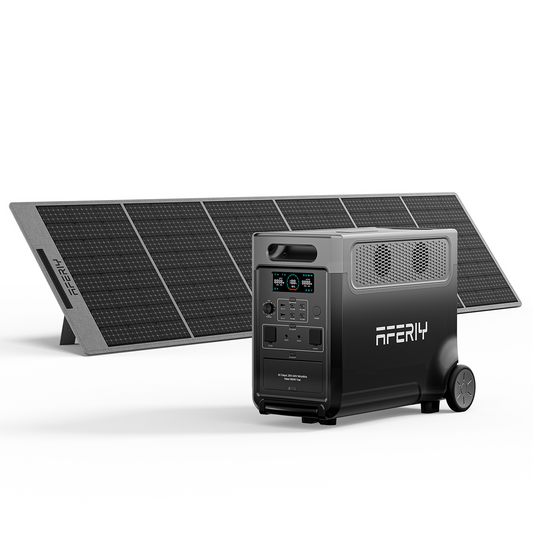
Small power banks stretch a phone a day or two, but they can’t run a fridge or a router for long. That’s the gap a portable power station fills. The AFERIY P210 Portable Power Station stores 2,048Wh of energy in a LiFePO4 battery and delivers 2,400W of pure sine wave AC output through thirteen output ports. In a power cut that covers the realistic essentials — fridge-freezer, router, lights, phones, laptops, and a CPAP machine for anyone who uses one. Its UPS function switches to battery within 10 milliseconds, so a desktop computer or router plugged into it rides through the interruption without shutting down. Pair it with a 200W solar panel and you can recharge from daylight rather than waiting for the grid.

The Deluxe Tier: Preparing for a Week, Not a Weekend
Be Ready’s target is 72 hours, but Storm Éowyn’s aftermath showed why some households plan beyond it — in parts of Northern Ireland, full restoration took up to ten days. Once you’re past three days, the maths changes: you need more stored energy and a faster way to refill it.
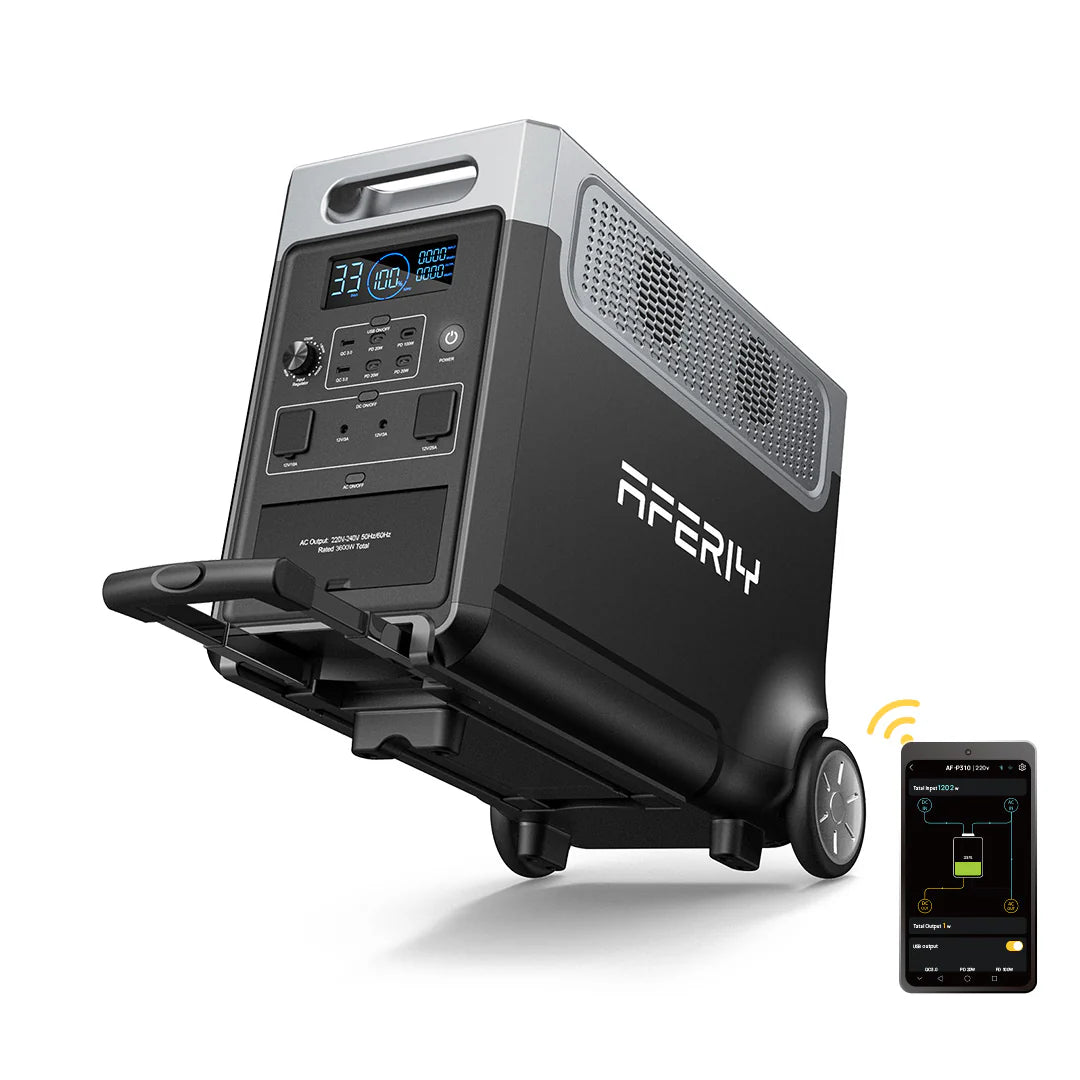
That’s where the deluxe emergency survival kit comes in, and the main difference is expandable power. The AFERIY P310 Portable Power Station starts at 3,840Wh — nearly double the P210 — with 3,600W of AC output, and can be extended to 11,520Wh with add-on batteries. It accepts up to 2,000W of solar input, so the battery can recover during daylight even while it’s powering the house. For a household running a fridge, heating controls, lights, devices and a microwave through a multi-day outage, the option to add capacity later is what makes a longer outage manageable.

Do you need it? If your area rarely loses power for more than a few hours, the essential kit with a P210 covers the government’s 72-hour target comfortably. If you’re rural, exposed to coastal storms, or someone at home depends on powered medical equipment, the deluxe tier is less about comfort and more about not gambling on restoration times.
Tailoring the Kit to Your Household
The standard list assumes an average adult, and no household is average:
Babies and toddlers: formula, nappies, wipes, and a few comfort items — pack a spare set of everything.
Pets: three days of food and water, a lead, and keep vaccination records with your documents, as emergency shelters may ask for them.
Older relatives: spare glasses, hearing-aid batteries, and a written copy of key instructions — the Be Ready guidance assumes phones may not work.
Anyone on regular medication: the government advises ordering repeat prescriptions up to five working days before you’ll run out, so a storm can’t catch you at the bottom of the box.
Households dependent on powered medical equipment: join the free Priority Services Register (PSR) through your energy supplier. Registered households get priority notice during outages and extra support from their network operator.
Where to Keep It, and Keeping It Ready
Store the kit somewhere you can reach in the dark with no hands free — a hallway cupboard or the space under the stairs beats the loft, where you’d need a ladder and daylight. Keep everything in one or two boxes with the torch on top.
Twice a year, run through the kit: check tinned food dates, swap in fresh water, test torches and batteries, and top the power station up. Tying the check to the clock changes is an easy hook. Once a quarter, give the power station a partial recharge so it’s never sitting flat — batteries left empty for months age faster, and a flat unit is no use at 6pm on a dark evening.
FAQs
Is a 72-hour emergency kit really necessary in the UK, or is this an overreaction?
It’s standard advice across much of Europe — France, Ireland and the Netherlands have recommended it for years — and the government is explicit that Be Ready isn’t a response to any specific threat. Most of what it covers is ordinary disruption: a storm taking out power for a weekend, a burst water main, a broadband outage. A kit turns those from ordeals into inconveniences.
How is this different from just keeping cupboards stocked?
A stocked kitchen helps, but a kit adds the things cupboards don’t hold together: water in a known quantity, torches that work, a charged power bank, a radio, cash in small notes, and printed documents. The point is having it gathered in one place you can find in the dark — not owning more stuff.
Who qualifies for the Priority Services Register?
It’s free to join through your energy supplier if you, or someone in your household, relies on powered medical equipment, is of pensionable age, has a disability, or has young children. Registration means your network operator knows your situation and can prioritise updates and support during an outage. It takes a few minutes to sign up, and worth doing well before any storm season.
What’s the single most useful first purchase?
If you’re starting from nothing: water and a torch, this weekend — both cheap and immediately useful in any power cut. After that, a portable power station tends to be the most useful larger purchase for most households, because it also gets used for camping, days out and car journeys, which keeps its battery exercised between emergencies.
Conclusion
The government’s message is refreshingly undramatic: no one is predicting catastrophe, and no one needs to panic-buy. Three days of water, food, light and power is simply the difference between managing a storm and being managed by it. Start with the essential kit, be honest about your household’s needs, and add the deluxe power tier only if your circumstances justify it. The next named storm will feel very different from a home that’s ready for it.