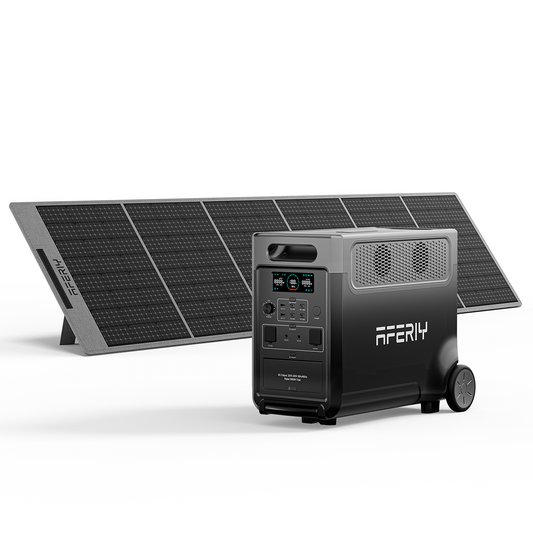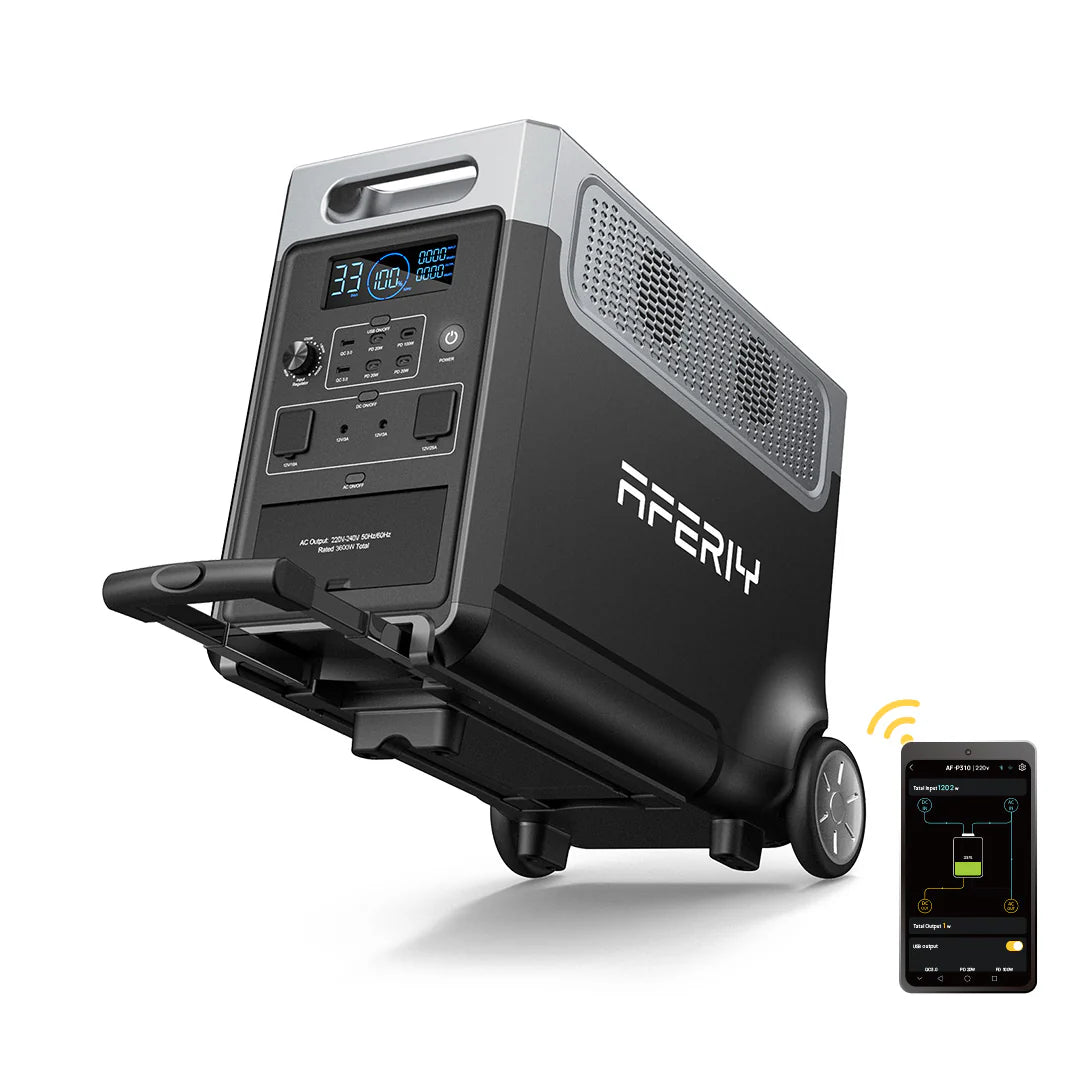


4 Popular Ways to Recharge a Portable Power Station
A portable power station can be recharged in several ways, depending on where you are and what charging equipment you have available. AC outlets are usually the most convenient option at home, while car charging and solar charging are useful for travel and off-grid situations.
In this guide, we’ll explain how to charge a portable power station using four common methods, how long each method may take, and what to consider for safe and efficient charging.
Understand Your Portable Power Station
Before charging, check your power station’s charging inputs and the maximum input power supported by each method. Different models may use different connectors and have different AC, solar, or car charging limits.
Also check the user manual for the compatible voltage, current, cable, and charging temperature range. Using a suitable charging source helps the power station charge safely and prevents the charging system from limiting or stopping the input.
How to Charge a Portable Power Station
The right charging method depends on where you are and how quickly you need to recharge. AC charging is generally the most predictable option, while car and solar charging provide more flexibility when you are traveling or away from the grid. Some models can also combine AC and solar input to reduce charging time.

Charging with an AC Outlet
AC charging is the most common way to recharge a portable power station at home or anywhere with access to a compatible wall outlet. Connect the supplied AC charging cable to the power station’s AC input and then connect it to the wall outlet.
Charging time depends mainly on the battery capacity and the station’s maximum AC input power. Larger batteries generally require more energy to reach 100%, while a higher supported input power can significantly reduce charging time. Use the display or companion app, if available, to monitor the charging progress.
For example, the AFERIY P300 Portable Power Station has a 2048Wh battery and supports up to 1800W AC input, allowing it to recharge in about 1.5 hours under the specified conditions.

Charging with a Car Outlet
A car outlet provides a convenient way to recharge a portable power station while travelling, camping, or staying somewhere without access to a wall outlet.
Connect a compatible car charging cable to the power station’s car input and your vehicle’s 12V outlet. Start the vehicle before charging if recommended by the vehicle and power station manufacturers.
Car charging is generally slower than AC charging because the available input power from a standard 12V outlet is much lower. The actual charging time depends on the vehicle, power station, battery capacity, and available charging power.
For longer trips, car charging can be useful for gradually topping up the battery while driving rather than relying on it as the primary way to recharge a large-capacity power station.

Charging with Solar Panels
Solar charging allows you to recharge a portable power station without relying on a wall outlet or vehicle. Connect compatible solar panels to the station’s solar input and place the panels where they receive direct sunlight.
Charging speed depends on the power station’s maximum solar input, the panels’ rated output, sunlight intensity, panel angle, temperature, and other outdoor conditions. The panel’s voltage range and connector must also be compatible with the power station.
For example, the AFERIY P180 Pro Portable Power Station supports up to 500W of solar input and has a manufacturer-rated solar charging time of about 2 hours under the specified conditions.

Charging with AC and Solar Panels Together
Some portable power stations can accept AC and solar input simultaneously. This allows the station to draw power from both sources at the same time and can significantly reduce the total charging time when both inputs are available.
The maximum combined input varies by model, so check the manufacturer's specifications before connecting multiple charging sources. For example, the AFERIY P300 supports up to 2000W of combined AC and solar input and can recharge in about 1.7 hours under the specified conditions.

Comparison of 4 Charging Methods
To compare the four methods using one consistent example, the AFERIY P310 Portable Power Station provides charging specifications for AC, car, solar, and combined AC and solar input.
| Charging Method | Input | Approx. Charging Time* |
|---|---|---|
| AC | Up to 2200W | ~2.5 hours |
| Car | 120W | ~32 hours |
| Solar | Up to 2000W | ~2.5 hours |
| AC + Solar | Up to 3500W combined | ~1.3 hours |
*The charging times above are based on AFERIY P310 specifications under specified conditions. The listed AC and solar charging times are based on approximately 1500W input, rather than the maximum 2200W AC or 2000W solar input. Actual charging time can vary with input power, battery level, temperature, sunlight, and other conditions.
The comparison shows why charging method matters. AC charging provides predictable input from the grid, car charging is significantly slower because of its lower input power, and solar charging varies with outdoor conditions. Combined charging can provide a shorter charging time on compatible models.
How Long Does It Take to Charge a Portable Power Station?
There is no single charging time for every portable power station. The time depends mainly on battery capacity, charging input power, the charging method, and real-world conditions.
For a rough estimate, you can compare the battery capacity with the available charging input:
Charging time ≈ Battery capacity (Wh) ÷ Charging input power (W)
In practice, the actual time may be longer because charging power can vary during the charging process, especially as the battery approaches full capacity. Solar charging can also vary significantly with sunlight and weather conditions.
For example, the AFERIY P300 has a 2048Wh battery and supports up to 1800W AC input, with a manufacturer-rated charging time of about 1.5 hours. Its 1200W solar input takes about 2.5 hours under the specified conditions.
Best Practices for Charging a Portable Power Station
Use Compatible Charging Equipment
Use the charging cable, adapter, and other equipment recommended for your specific power station. Check the supported voltage, current, connector, and maximum input power before charging.
Keep the Power Station Dry and Well Ventilated
Charge the unit on a firm, dry surface with adequate airflow. Avoid direct sunlight, enclosed spaces, water, and sources of excessive heat.
Monitor the Charging Process
Check the display or app to confirm that charging is working normally. If the power station becomes unusually hot, produces an unusual smell, or shows a fault warning, stop charging and follow the manufacturer's instructions.
Avoid Frequent Deep Discharges
Modern rechargeable batteries do not need to be fully discharged before every recharge. Avoid routinely running the power station to 0% unless the manufacturer specifically recommends a full discharge for calibration.
Follow the Manufacturer's Storage Instructions
If the power station will not be used for an extended period, follow the recommended storage charge level and check the battery periodically rather than leaving it completely discharged for months.
FAQs
How long does it take to recharge a portable power station?
Charging time depends on battery capacity, input power, and charging method. AC charging is generally predictable, while car and solar charging can take longer depending on the available input and outdoor conditions.
Can you leave a portable power station plugged in all the time?
Whether a portable power station can remain connected after reaching full charge depends on the model and its charging management system. Check the manufacturer's instructions rather than assuming that continuous connection is necessary.
Is it normal for a portable power station to get warm while charging?
Some warmth during charging can be normal. However, unusually high temperatures, an unusual smell, visible damage, or repeated fault warnings should not be ignored. Stop charging and follow the manufacturer's safety instructions if any abnormal condition occurs.
Can you charge a portable power station while using it?
Some portable power stations support pass-through charging, which allows the unit to recharge while powering connected devices. However, availability and performance vary by model, so check the manufacturer's specifications before relying on this feature.
Conclusion
A portable power station can be recharged through an AC outlet, car outlet, solar panels, or, on compatible models, combined AC and solar input. AC charging is convenient when you have access to the grid, car charging is useful while traveling, and solar charging provides an off-grid option when suitable sunlight is available.
Before charging, check your power station’s input limits, use compatible charging equipment, and follow the manufacturer's instructions. Choosing the charging method based on your available power source and required charging time can help keep your power station ready for its next use.