

How to Choose the Best Portable Power Station for Camping
Summer is a great time to get outdoors, whether you're spending a weekend at a campsite, hiking to a remote spot or taking a road trip. Phones, cameras, lights and portable fans all need power, and a portable power station can keep them running when you're away from a mains outlet. If you also plan to use a fridge, projector or other appliances, choosing the right capacity and output becomes even more important. This guide explains what to look for in a portable power station for camping, how to estimate your power needs.

What Is the Best Portable Power Station for Camping?
A portable power station is a rechargeable battery system that supplies electricity through AC outlets, USB ports and DC outputs. At a campsite, it can charge phones and cameras, power LED lights, run compatible portable fans and support appliances such as a 12V fridge, provided their power requirements fall within the unit's limits.
Unlike a conventional fuel generator, a battery power station produces no exhaust fumes during operation. It can be useful at campsites where fuel generators are restricted, although campsite rules and local requirements still apply.
The best portable power station for camping depends on how you travel and what you need to power. A small unit may be enough for phones and lights on a short trip, while car camping with a fridge or CPAP machine may call for a larger battery and higher AC output.

How to Choose the Right Portable Power Station for Camping
Choosing a camping power station starts with your devices, trip length and charging options. Once you know your energy needs, compare capacity, output, weight and other features to find the right fit.
Match the Battery Capacity to Your Camping Trip
The capacity you need depends on what you plan to power and how long you'll camp without recharging. Use these ranges as a starting point.
|
Camping setup |
Suggested capacity |
Typical equipment |
|---|---|---|
|
Day trips and minimalist camping |
200–500Wh |
Phones, cameras and LED lights |
|
Weekend tent camping |
500–1,000Wh |
Lights, fans and laptops |
|
Car camping with a fridge |
1,000–1,500Wh |
Camping fridge, lights and devices |
|
Multi-day off-grid camping |
1,000–2,000Wh+ |
Refrigeration and multiple appliances |
|
Camping with a CPAP machine |
500–1,500Wh+ |
CPAP, lights and phone charging |
These ranges are estimates, not runtime guarantees. Actual needs depend on device consumption, usage time and charging opportunities. For CPAP machines, check the power requirements of your specific model, including heated humidification if used.
Check Rated Output Before Choosing Capacity
Battery capacity, measured in watt-hours (Wh), determines how much energy is stored, while output power, measured in watts (W), determines which appliances the station can run.
For example, the AFERIY P210 has a 2,048Wh battery and 2,400W rated AC output. Check the combined running wattage of your devices and allow for the higher starting power some fridges and other motor-driven appliances require.
Consider Size, Weight and Portability
For car camping, a heavier power station may be practical if you need more capacity. For walk-in campsites, a lighter model is easier to carry.
Check the unit's weight, dimensions and handle design before buying, and make sure you have enough space for the station and any charging accessories.
Compare Charging Options and Recharge Time
AC charging is convenient before departure, vehicle charging can help during road trips, and solar charging is useful for longer stays without mains electricity.
Before choosing a solar panel, check the station's maximum solar input, supported voltage and connector compatibility. Actual charging times depend on sunlight, weather and the charging conditions.

Check Output Ports and Device Compatibility
USB ports suit phones and compatible laptops, AC outlets power conventional appliances, and DC outputs can support compatible 12V devices such as camping fridges.
Check the available ports, individual port limits and total rated output to ensure your devices can run safely within the station's specifications.
Consider Noise Level and Budget
Battery power stations are generally quieter than fuel-powered generators, although cooling fans may run under heavy loads. If noise matters, check whether the manufacturer publishes measurements.
Set your budget around your actual power needs. Compare the cost of the station, compatible solar panels and accessories, as well as battery cycle life and warranty coverage. A larger battery is worthwhile only if you need the extra capacity.

How to Calculate Power Needs and Runtime for Camping
Before choosing a portable power station, estimate how much energy your devices will use and how long the battery needs to last. These calculations help you choose a suitable capacity without paying for more power than you need.
Calculate Your Camping Power Requirements
Check each device's wattage and estimate how many hours you'll use it per day.
Energy consumption (Wh) = Power (W) × Usage time (hours)
For example, a typical camping setup might use the following amount of energy:
|
Device |
Power |
Daily use |
Energy per day |
|---|---|---|---|
|
LED lights |
5W |
6 hours |
30Wh |
|
Laptop |
60W |
3 hours |
180Wh |
|
Portable fan |
20W |
4 hours |
80Wh |
|
Phone charging |
15W equivalent |
2 hours |
30Wh |
|
Total |
320Wh |
In this example, the devices consume approximately 320Wh per day, or 640Wh over two days without recharging.
Since some energy is lost during power conversion, the battery capacity should be higher than the estimated energy requirement. A useful planning formula is:
Required battery capacity (Wh) = Energy requirement (Wh) ÷ Assumed usable-energy factor
If your devices need 640Wh and you assume 85% of the rated battery capacity is usable, you'll need approximately 753Wh. This is an estimate rather than a guaranteed efficiency figure, so allow additional capacity for unexpected use.
Estimate Your Portable Power Station Runtime
Once you know the battery capacity, you can estimate how long a power station will run your equipment.
Estimated runtime (hours) = Battery capacity (Wh) × Usable-energy factor ÷ Total load (W)
For example, a 2,048Wh power station with an assumed usable-energy factor of 85% provides around 1,741Wh of usable energy. At a continuous load of 200W, the estimated runtime is approximately 8.7 hours.
Actual runtime depends on the connected devices and operating conditions. A fridge's compressor cycles on and off, so its average consumption may be lower than its rated running wattage. CPAP power use also varies with settings and features such as heated humidification.
Use these calculations as a starting point, then check your devices' actual energy consumption to choose a suitable power station.

Best Portable Power Station for Camping
The best portable power station for camping depends on what you plan to power, how long you'll stay off-grid and how easily you can transport your equipment. For weekend trips with everyday electronics, a lighter unit may be all you need. Longer stays with a portable fridge, cooking appliances or several devices call for more battery capacity and output power.
For Weekend Camping and Everyday Essentials
For a weekend at a campsite, you might need to keep phones and laptops charged, light your tent or awning after dark, and run a fan or other small appliances. The AFERIY P180 Pro Portable Power Station combines a 1,024Wh LiFePO₄ battery with 1,800W of rated AC output, providing a practical balance of capacity and portability for these everyday camping needs.
Weighing 11.64kg, it is easier to move between your car and pitch than a larger-capacity unit. If your trips become longer or you add more equipment, its capacity can be expanded to 5,120Wh with compatible expansion batteries. Solar input of up to 500W also gives you another way to recharge at campsites with suitable sunlight and compatible panels. Before travelling, estimate your devices' daily energy use to check whether the base capacity will last for your trip.
For Extended Camping and Power-Hungry Appliances
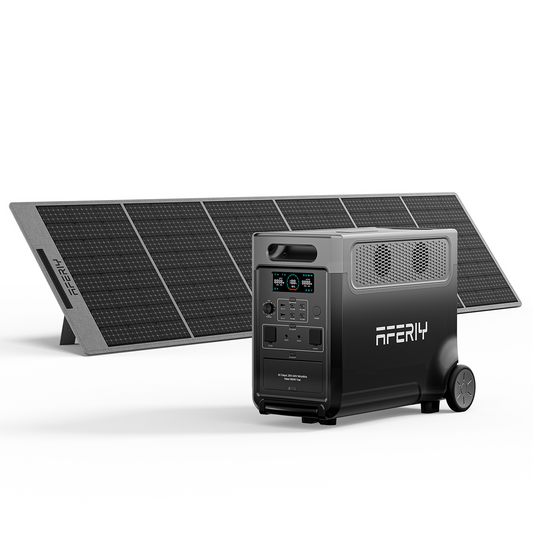
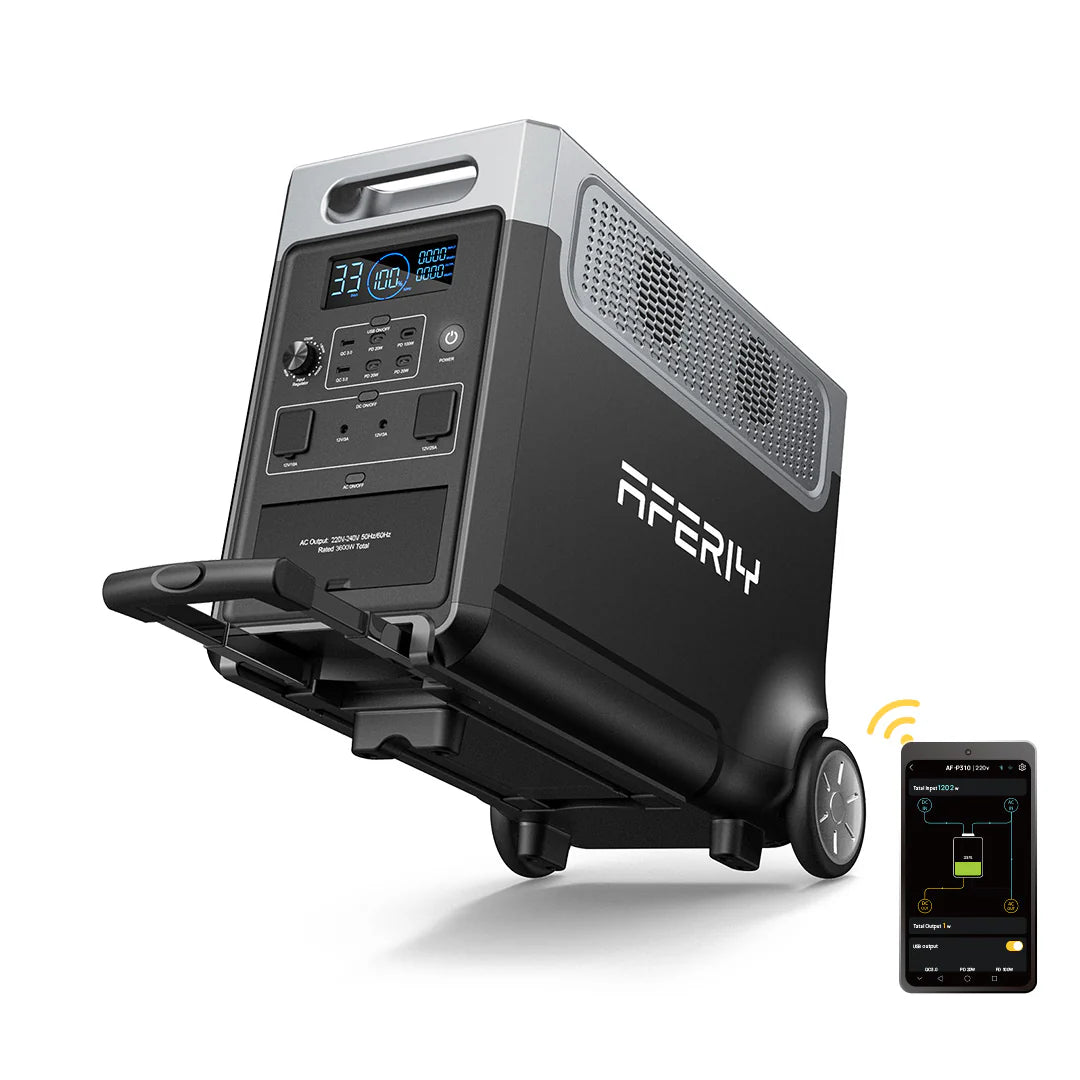
If your camping setup includes a portable fridge, coffee maker, electric cooking appliances and several devices, the AFERIY P310 Portable Power Station offers more capacity for demanding power needs. With a 3,840Wh battery and 3,600W of rated output, it suits car camping and extended off-grid stays where reliable power for multiple compatible appliances is important.
The capacity can be expanded to 11,520Wh, and the unit supports up to 2,000W of solar input for recharging with compatible panels in suitable conditions. Its wheels and handle make it easier to move around a campsite, despite its substantial size. Before use, check each appliance's running and starting wattage, and remember that high-power cooking appliances can consume battery energy quickly.

FAQs
What Size Portable Power Station Do I Need for Camping?
A 200–500Wh power station may suit short trips with phones and lights. Weekend camping with laptops or a portable fridge may require 500–1,500Wh or more, depending on daily energy use.
How Long Will a Portable Power Station Last While Camping?
Runtime depends on battery capacity and device consumption. For example, a 2,048Wh power station with 85% assumed usable energy can power a continuous 200W load for approximately 8.7 hours.
Can I Recharge a Portable Power Station with Solar Panels While Camping?
Yes. Use compatible solar panels and check the station's maximum solar input. Actual charging depends on sunlight, shading and weather.
Which Portable Power Station Is Better for Camping?
The AFERIY P180 Pro Portable Power Station suits weekend trips with everyday electronics, while the AFERIY P300 Portable Power Station is better for longer car-camping trips with more devices and higher power needs.
Conclusion
The best portable power station for camping depends on your devices, trip length and recharging options. The AFERIY P180 Pro Portable Power Station suits everyday camping essentials, while the AFERIY P300 Portable Power Station offers greater capacity and output for extended trips. Estimate your energy needs before choosing.